

The people elected this November will have a major say in whether Raleigh makes room for more neighbors, expands housing choices, and grows into a more affordable welcoming city.
For the first time ever, half of Raleigh’s City Council will be elected to four-year terms. The next Council will help shape Raleigh’s new Comprehensive Plan, the document that guides how and where our city grows over the next 30 years.
And the Comprehensive Plan is only part of why who is on Council matters. Councilors also vote regularly on housing rezonings, zoning reforms, affordable housing investments, and the rules that determine how difficult or expensive it is to build new homes.
That’s why CITYBUILDER publishes Housing Report Cards.
We believe housing is the measure of whether Raleigh’s leaders are ready to welcome growth and build a more affordable future. So, we’ve evaluated candidates based on their voting records, public statements, housing questionnaire responses, and participation in our candidate forum. We’re looking at whether candidates understand the need for more housing and whether they support the policies and projects that make it possible.
Below, you’ll find report cards for each race, explanations of each candidates housing positions, links to their full questionnaire responses, and videos from our candidate forum so you can hear directly from them.
Housing is on the ballot. Know where your candidates stand.
Here is our deeper look at each candidate and why they earned their grade.
Candidates for Mayor
Janet Cowell
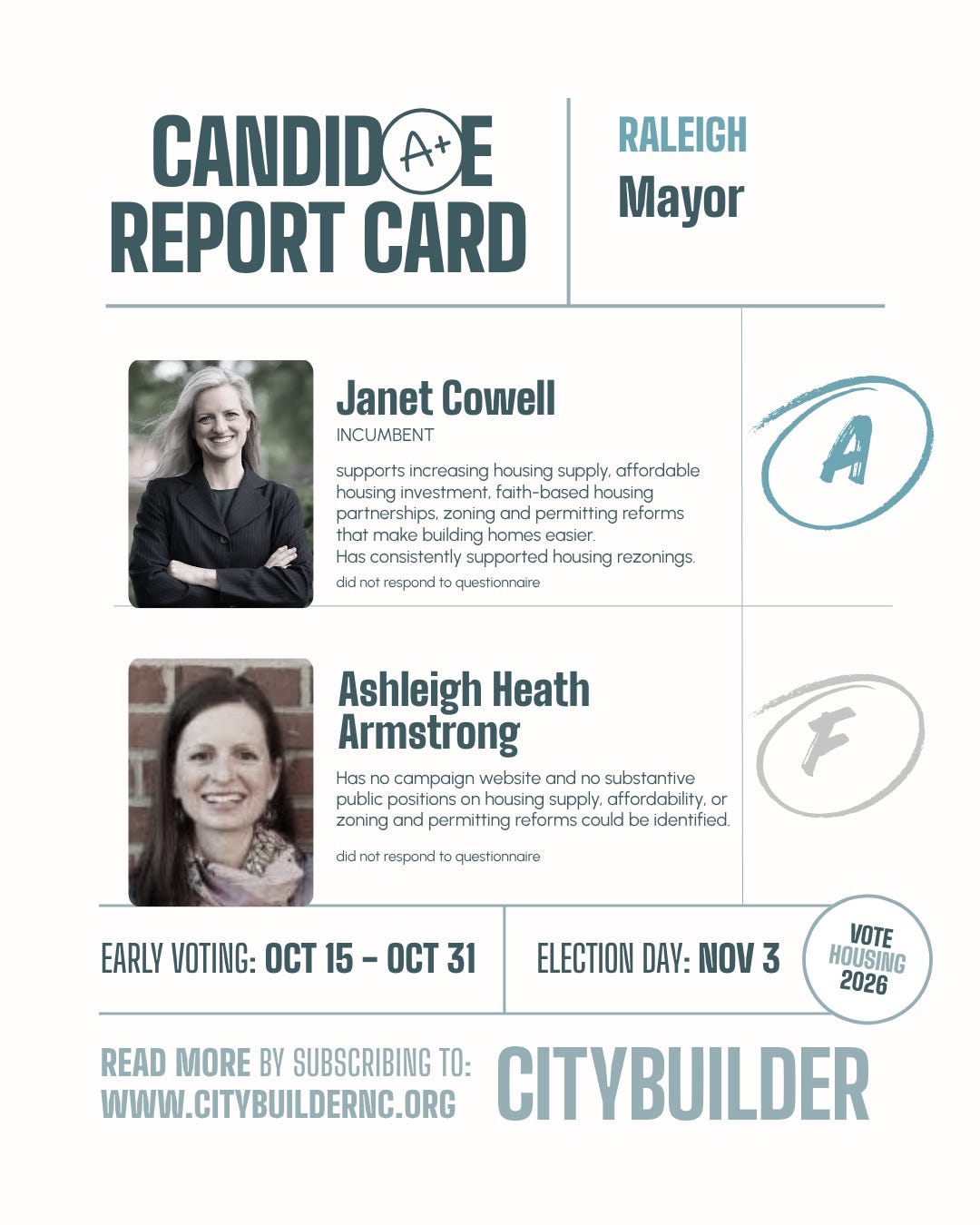
Janet Cowell gets an A grade. She supports increasing housing supply, affordable housing investment, faith-based housing partnerships, and zoning and permitting reforms that make building homes easier. As mayor, she has consistently supported housing rezonings. Cowell did not respond to CITYBUILDER’s housing questionnaire, but her voting record and public positions provide a clear picture of her approach to housing.
Ashleigh Heath Armstrong
Ashleigh Heath Armstrong gets an F grade. She has no campaign website and we could not identify substantive public positions on housing supply, affordability, or zoning and permitting reforms. She did not respond to CITYBUILDER’s housing questionnaire and withdrew from our candidate forum after initially confirming her attendance.
Candidates for City Council At-Large
Clark Rinehart
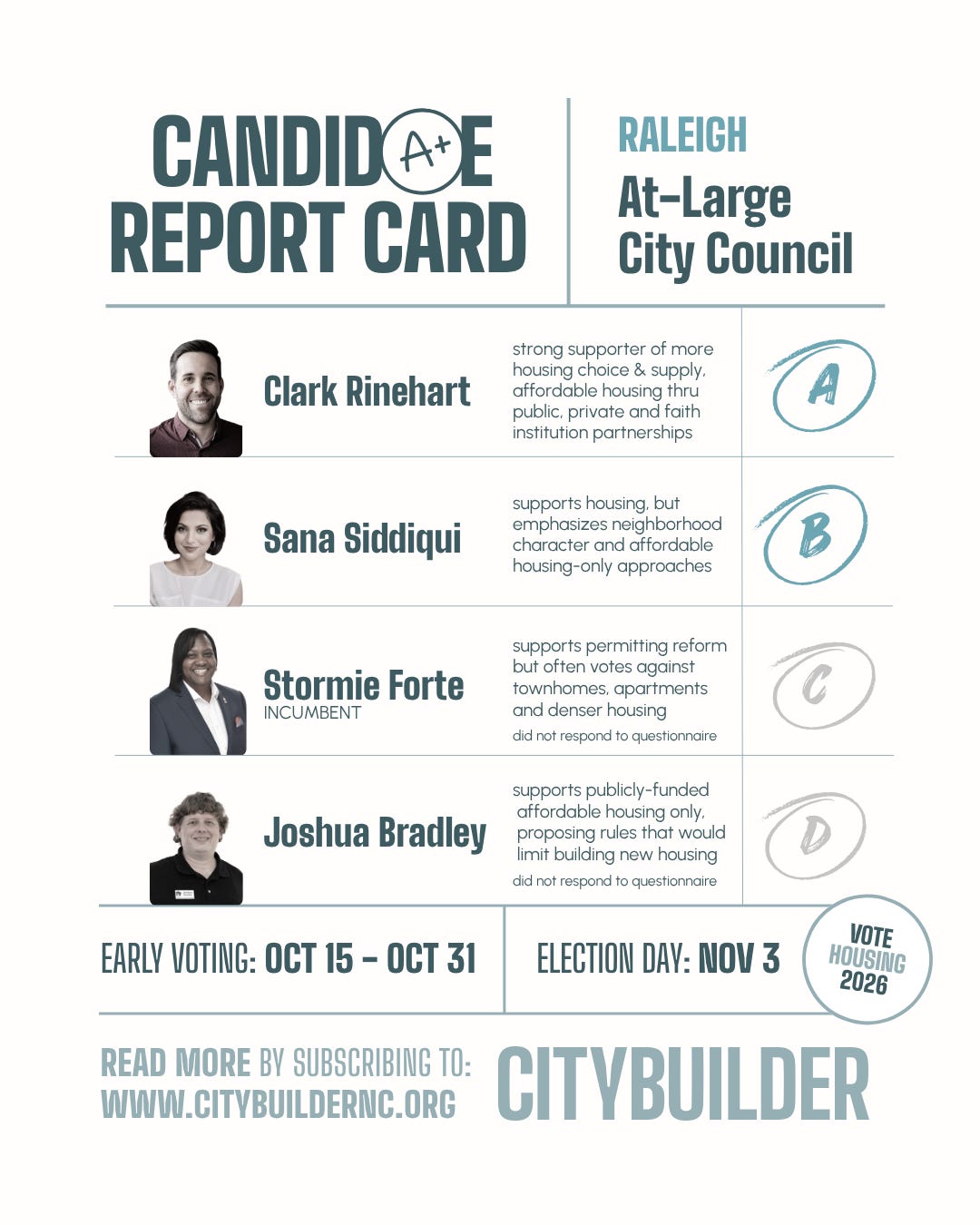
Clark Rinehart gets an A grade. He supports increasing housing supply and expanding housing choices for Raleigh residents. He supports affordable housing through public investment, private partnerships, and collaboration with faith institutions to create more homes across the city.
Read his full questionnaire answers here.
You can watch him at our Candidate Forum answer what pro-housing means to him below:
Sana Siddiqui
Sana Siddiqui gets a B grade. She supports additional housing but emphasizes neighborhood character and policies focused specifically on affordable housing. Her approach prioritizes affordability and neighborhood compatibility when considering where and how Raleigh should allow more homes.
Read her full questionnaire answers here.
Sana did not attend our candidate forum.
Stormie Forte
Stormie Forte gets a C grade. She supports permitting reforms that could make building homes easier, but her voting record includes opposition to townhomes, apartments, and other proposals for denser housing. Forte did not respond to CITYBUILDER’s housing questionnaire.
Stormie did not respond to our questionnaire.
You can watch her at our Candidate Forum answer a question about particular rezonings. In this case she defends voting against a rezoning for higher density on Trailwood Dr (Z-45-25 passed 5-3 with Councilors Forte, Harrison and Silver voting against and includes a condition for 60% AMI affordability rather than 30%).
Joshua Bradley
Joshua Bradley gets a D grade. He advocates for publicly funded and publicly built affordable housing rather than expanding housing supply through a mix of public and private construction. His proposed restrictions on private housing construction could make building new homes more difficult and limit the number of homes Raleigh can add.
Joshua did not respond to our housing questionnaire.
You can watch him at our Candidate Forum answer what pro-housing means to him below:
Candidates for City Council District A
Mitchell Silver
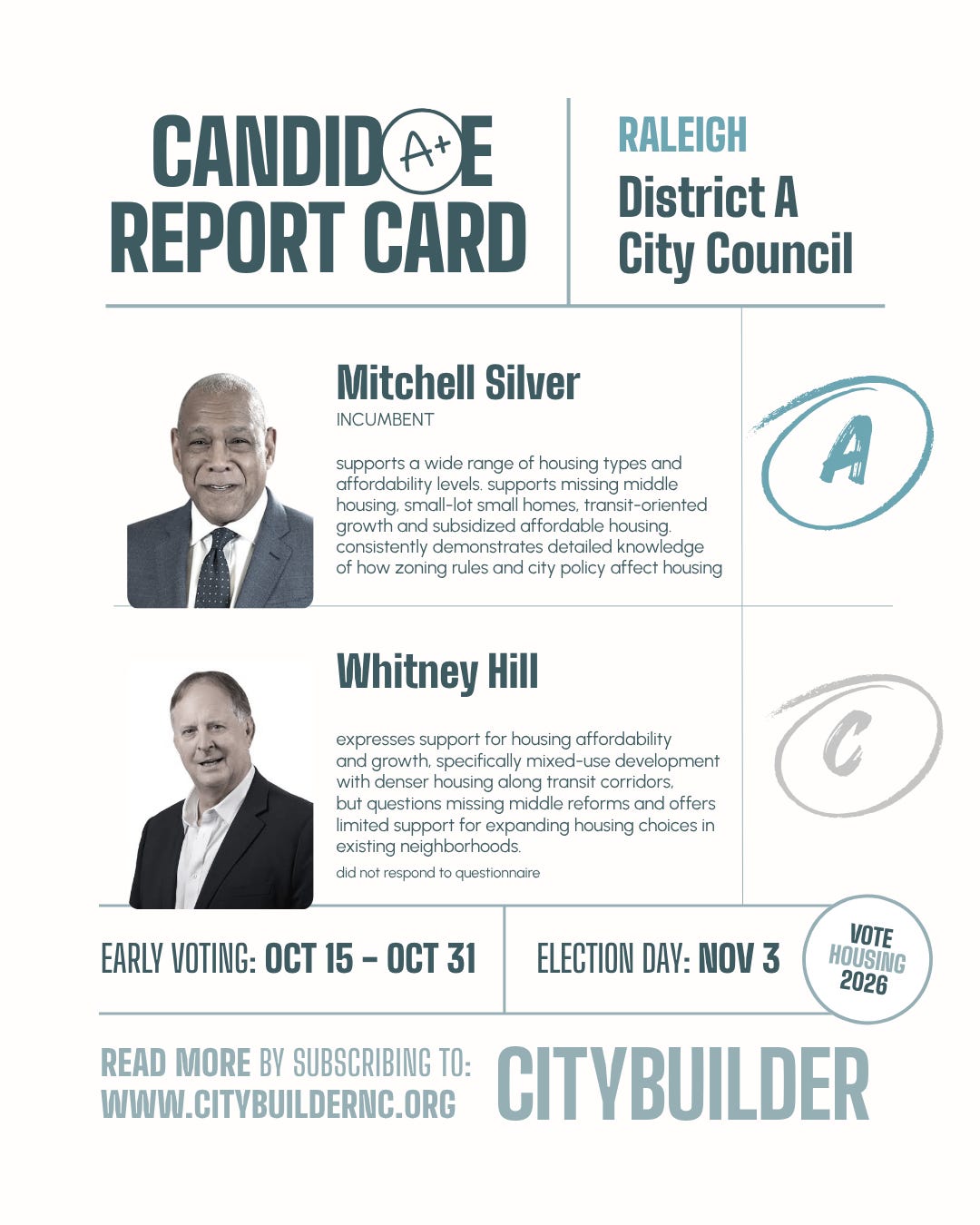
Mitchell Silver gets an A grade. He supports a wide range of housing types and affordability levels, including missing middle housing, small-lot homes, transit-oriented growth, and subsidized affordable housing. He consistently demonstrates detailed knowledge of how zoning rules and city policy affect housing supply, including the reforms needed to make building more homes easier.
Read his full questionnaire answers here.
You can watch him at our Candidate Forum answer what pro-housing means to him below:
Whitney Hill
Whitney Hill gets a C grade. He expresses support for housing affordability and growth, particularly mixed-use projects with denser housing along transit corridors. However, he questions Raleigh’s missing middle reforms and offers limited support for expanding housing choices in existing neighborhoods.
Whitney did not respond to our questionnaire.
You can watch him at our Candidate Forum answer a question about particular rezonings. In this case he discusses how he would approach high density rezonings like North Hills and Peace/West St.
Candidates for City Council District B
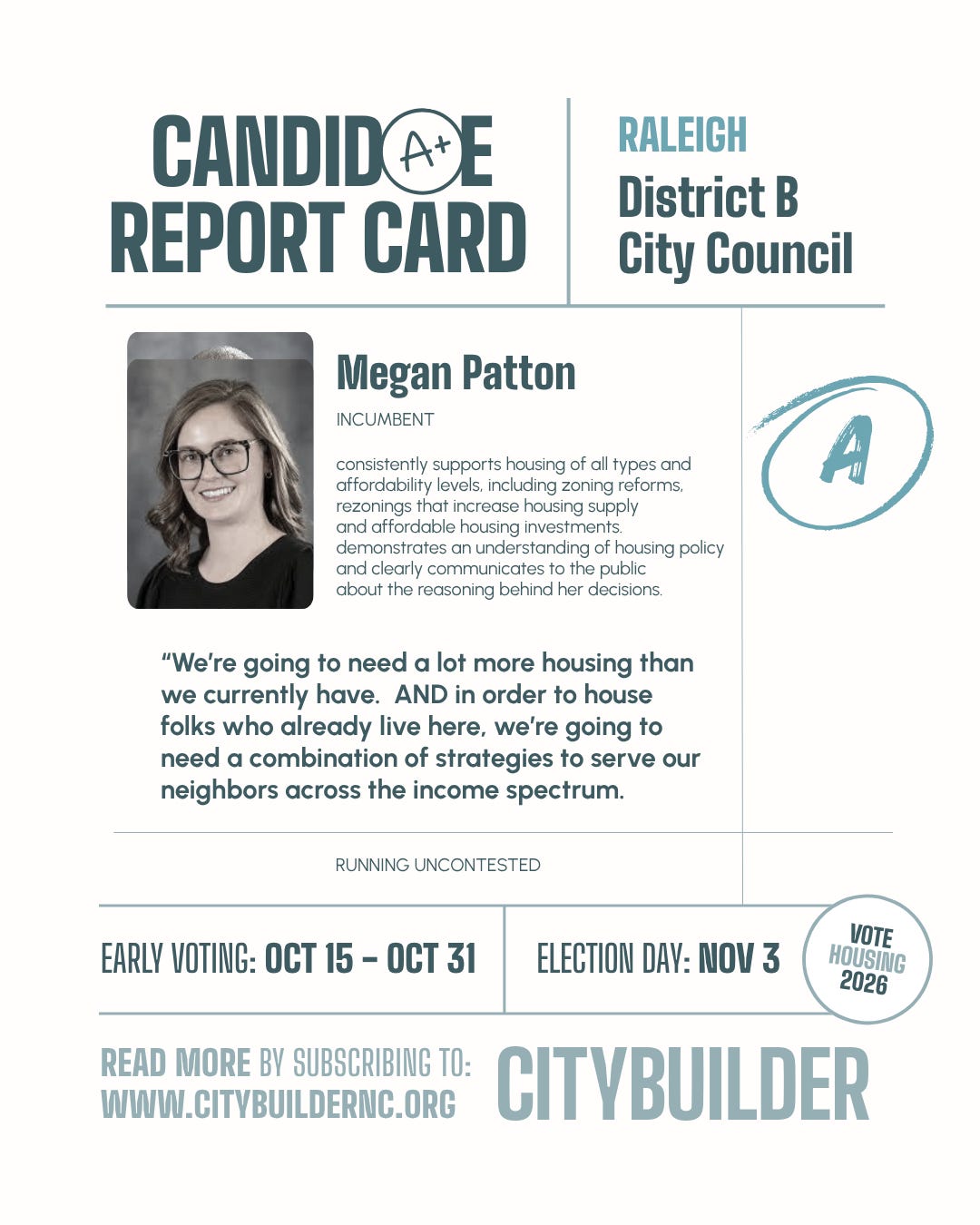
Megan Patton
Megan Patton gets an A grade. She consistently supports housing of all types and affordability levels, including missing middle housing, zoning reforms, housing rezonings, and affordable housing investment. As a City Council member, she has demonstrated a strong understanding of housing policy and clearly communicates the reasoning behind her decisions. Her voting record reflects consistent support for expanding housing choices and increasing Raleigh’s housing supply.
Megan is running unopposed. She did not respond to our questionnaire.
You can watch him at our Candidate Forum answer what pro-housing means to her below:
Candidates for City Council District C
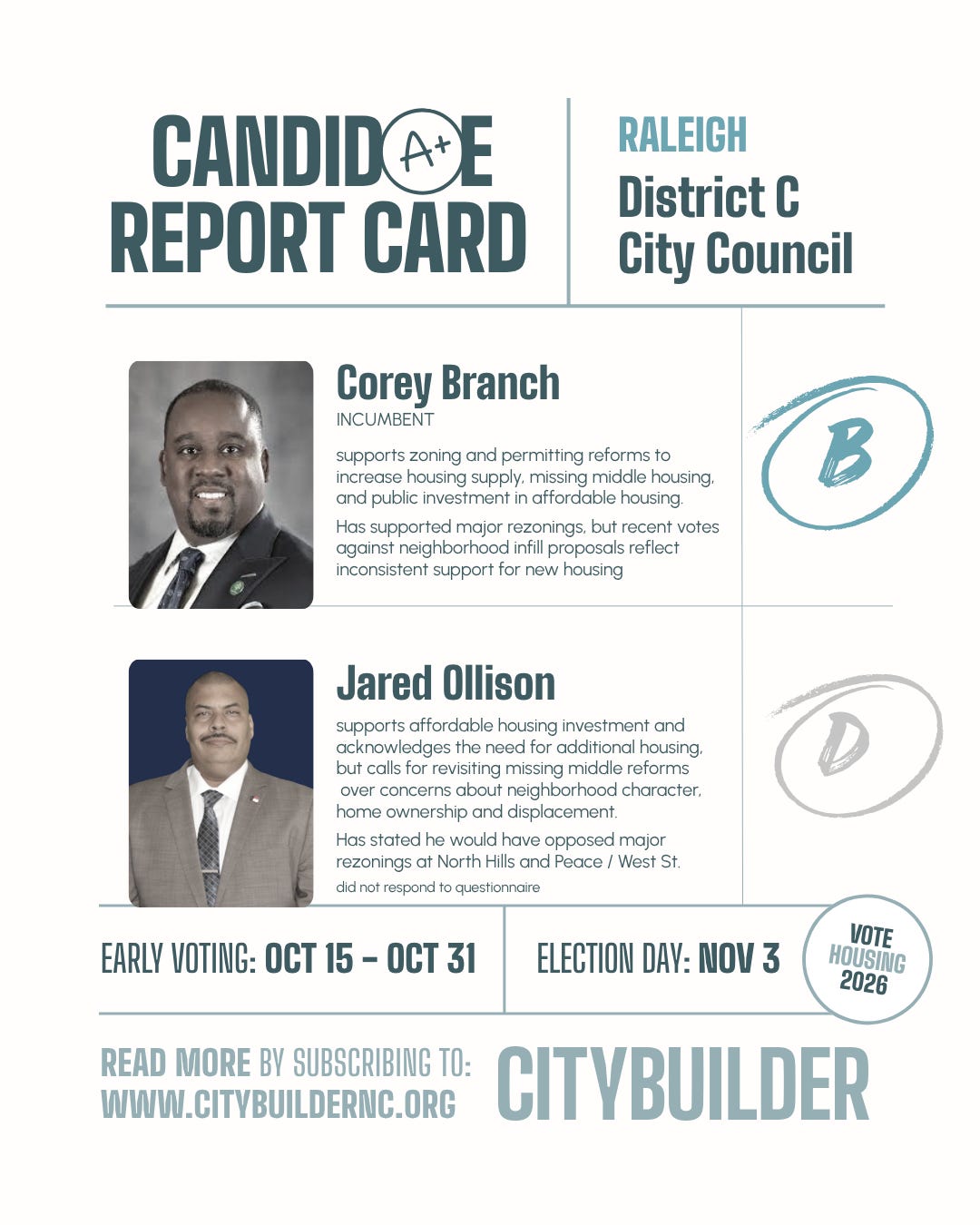
Corey Branch
Corey gets a B grade. He supports zoning and permitting reforms to increase housing supply, missing middle housing, and public investment in affordable housing. As a City Council member, he has supported major housing rezonings, but his recent votes against neighborhood infill proposals show a mixed record when it comes to allowing more homes in existing neighborhoods.
Read his full questionnaire answers here.
You can watch him at our Candidate Forum answer what pro-housing means to him below:
Jared Ollison
Jared gets a D grade. He supports affordable housing investment and acknowledges Raleigh’s need for additional housing. However, he has called for revisiting missing middle reforms because of concerns about neighborhood character, homeownership, and displacement. He has also stated that he would have opposed major housing rezonings at North Hills and Peace and West Streets.
Jared did not respond to our questionnaire or attend our candidate forum.
Candidates for City Council District D
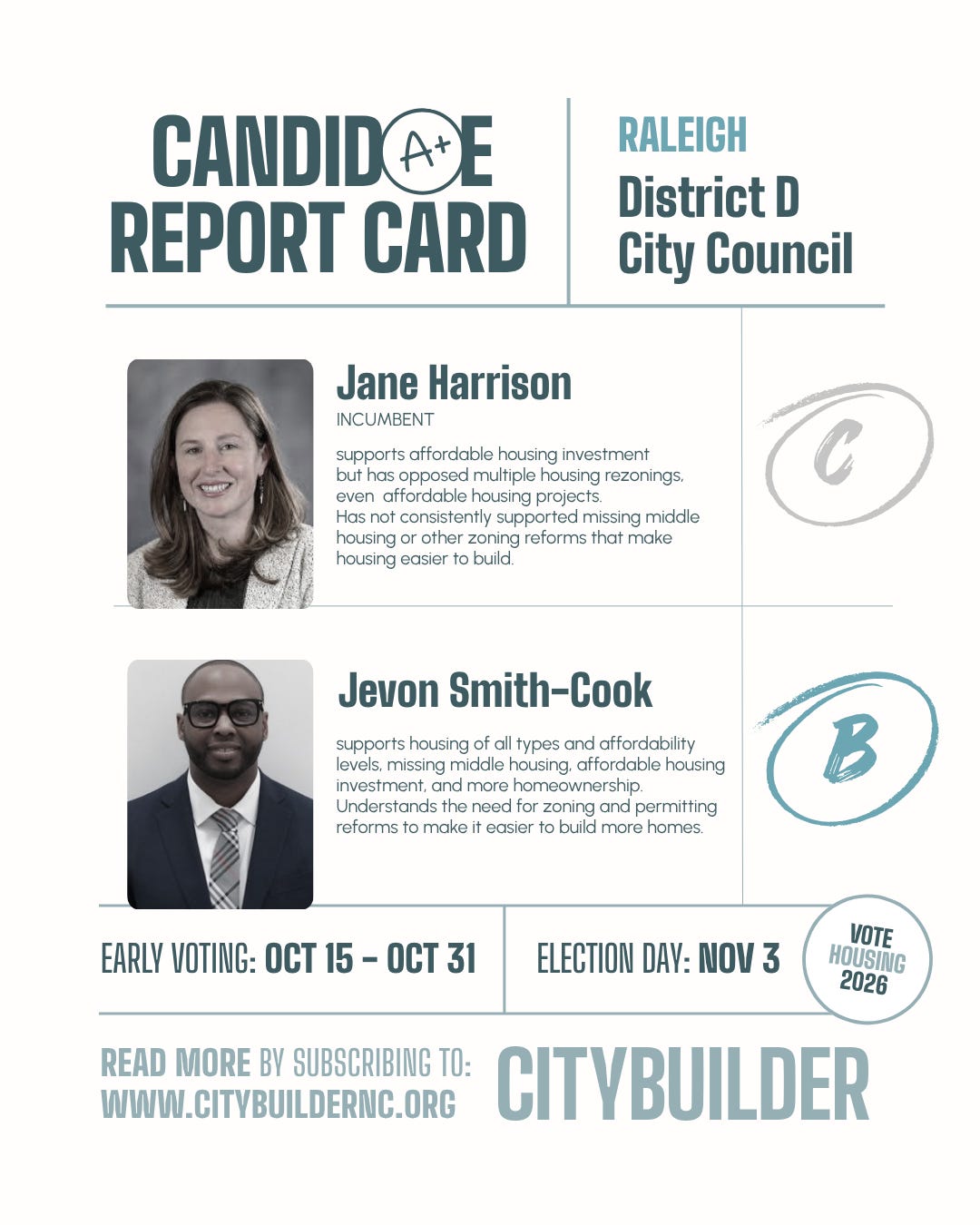
Jane Harrison
Jane Harrison gets a C grade. She supports affordable housing investment but has opposed multiple housing rezonings, including proposals for affordable housing. During her time on City Council, she has not consistently supported missing middle housing or additional zoning reforms that would make it easier to build more homes. Her voting record reflects a more restrictive approach to increasing Raleigh’s housing supply.
Read her full questionnaire answers here.
You can watch her at our Candidate Forum answer a question about particular rezonings. In this case she defends voting against cases based on a desire for more conditions. With the specific example of a rezoning for higher density on Trailwood Dr (Z-45-25 passed 5-3 with Councilors Forte, Harrison and Silver voting against and includes a condition for 60% AMI affordability rather than 30%).
Jevon Smith-Cook
Jevon Smith-Cook gets a B grade. He supports housing of all types and affordability levels, including missing middle housing, affordable housing investment, and expanded opportunities for homeownership. His questionnaire responses identify lengthy permitting timelines, complicated site plan requirements, and discretionary reviews as barriers to building more homes. He supports zoning and permitting reforms to reduce those barriers and increase housing supply.
Read his full questionnaire answers here.
You can watch him at our Candidate Forum answer what pro-housing means to him below:
Candidates for City Council District E
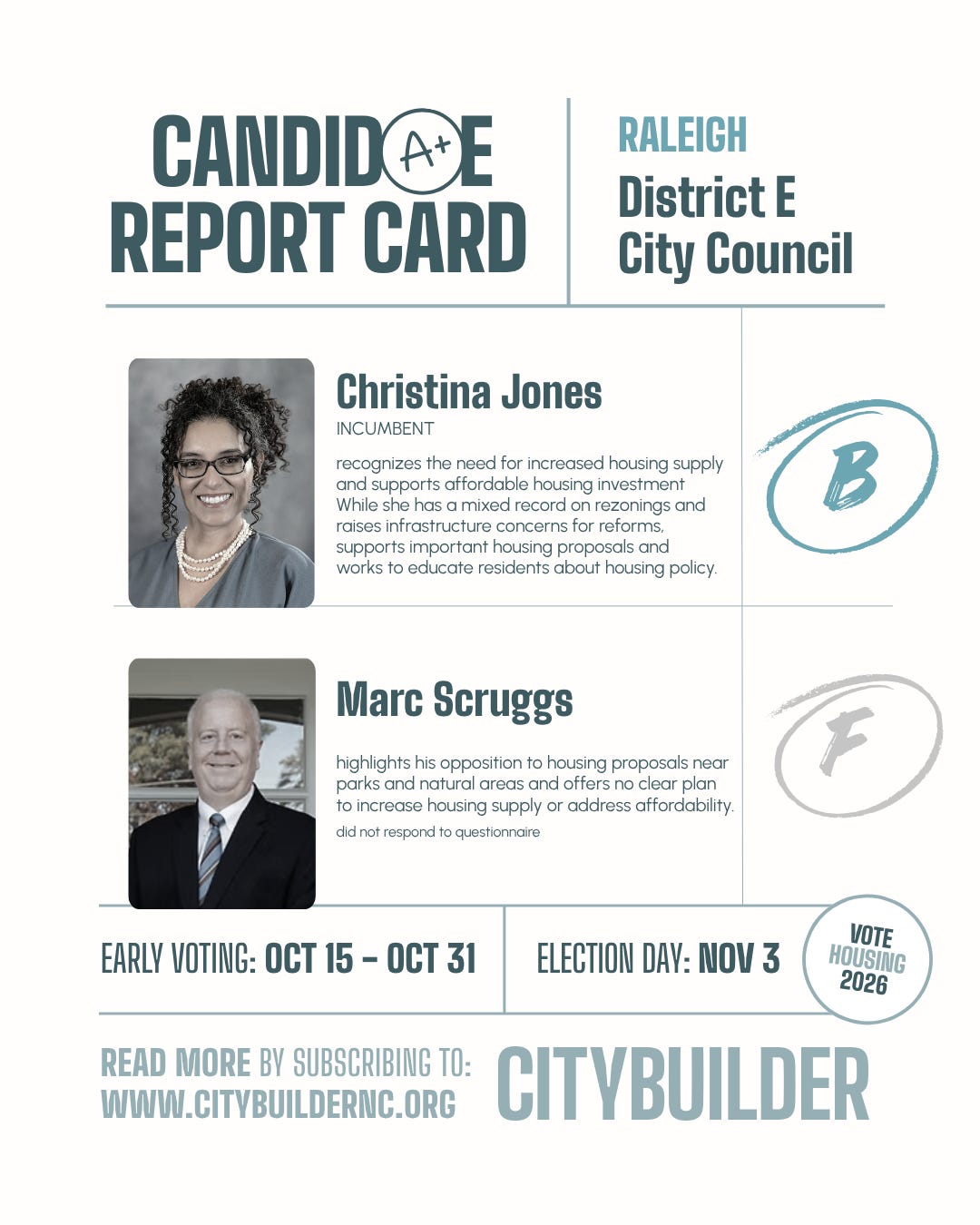
Christina Jones
Christina Jones gets a B grade. She recognizes the need for increased housing supply and supports affordable housing investment. While she has a mixed voting record on housing rezonings and has raised infrastructure concerns about zoning reforms, she has also cast important votes in support of new housing, including affordable housing proposals. Jones regularly works to educate residents about Raleigh’s zoning rules, housing policies, and the need for reform.
Read her full questionnaire answers here.
You can watch her at our Candidate Forum answer a question about particular rezonings.
In this case she defends voting for and against Trailwood Dr cases, she voted yes for Z-45-25 which passed 5-3 with Councilors Forte, Harrison and Silver voting against and includes a condition for 60% AMI affordability rather than 30%).
Marc Scruggs
Marc Scruggs gets an F grade. He highlights his opposition to housing proposals near parks and natural areas, presenting those efforts as environmental protection. His campaign materials offer no clear plan for increasing Raleigh’s housing supply or addressing housing affordability.
Marc did not respond to our questionnaire or attend our candidate forum.
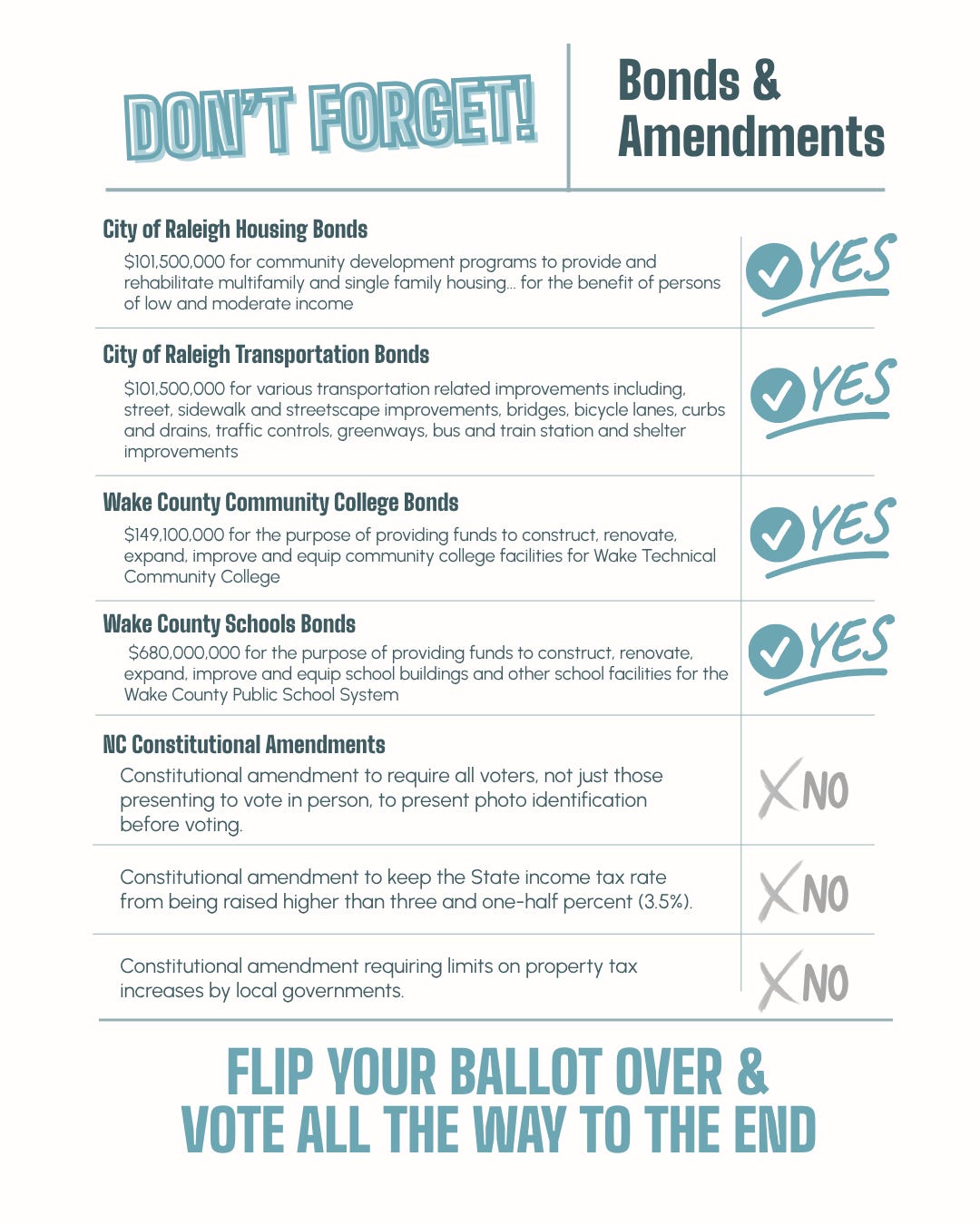
Housing isn’t the only thing on the ballot that shapes how our communities grow.
Raleigh and Wake County voters will also consider bonds to fund affordable housing, transportation improvements, public schools, and community college facilities. These investments help determine whether our growing region has the homes, infrastructure, and public services it needs.
The Raleigh housing bond would fund programs to build and preserve affordable housing. The transportation bond would support sidewalks, bike lanes, transit facilities, and street improvements that make neighborhoods more connected and walkable. Investments in schools and community colleges also matter as our region welcomes more families and workers.
There are also three proposed North Carolina constitutional amendments addressing voter identification, state income taxes, and local property taxes.
The two tax amendments could make it harder for state and local governments to fund the services growing communities need. North Carolina already relies heavily on counties to help fund public schools, while cities and towns maintain roads, parks, and other essential services. Limiting state revenue could increase pressure on local governments to fill funding gaps, while restricting local property taxes would make that harder too.
These decisions affect everything from affordable housing and transportation to schools, parks, and trash collection. As our region grows, the need for these services will grow too. Don’t stop at the candidate races!
Flip your ballot over, review the bonds and amendments, and make sure you vote all the way to the end.
If we want a Raleigh that says yes to homes, yes to neighbors, and yes to abundance, we need to show up.
The report cards tell that story at a glance. Read the grades. Share them with a friend or neighbor who cares about affordability and growth. Ask candidates where they stand.
Early voting is October 15–31. Election Day is November 3.
Every vote builds a city.
These assessments are based on candidate questionnaire responses to our housing questionnaire, other published questionnaires and public forums. Our pro-housing questionnaire was developed collaboratively with RDU New Liberals, Yes! in My Triangle YIMBYaction chapter, RaleighForward, and Strong Towns Raleigh Local Conversation. Each group may also share candidate recommendations or endorsements.