
A City Built for Cars Isn’t Equitable
Transit Equity Day underscores why Durham must legalize more housing near transit.

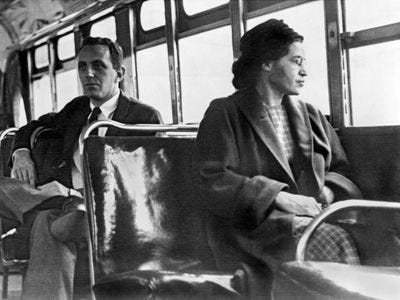
Transit Equity Day is about more than commemorating Rosa Parks’ birthday; it’s about asking whether our transportation systems actually serve everyone who relies on them. In most of our modern communities, if you aren’t getting around by car, you aren’t a priority. To truly reflect our values, our budgets and infrastructure need to change, from bus shelters to bike lanes. Durham’s new UDO is a prime opportunity to support an equitable transit system.
As part of a Bike Durham campaign on MLK Day, I helped prep materials for a bus stop bench with friends and neighbors. It was cold, busy, and energizing. These are the kinds of small infrastructure improvements that can take years to wind through formal processes, if they happen at all. Instead of waiting, a large group of community volunteers came together to build something real, right now. That is the power of tactical urbanism.
Transportation equity starts with a basic truth: not everyone drives. Some people cannot drive because of a disability. Others cannot afford a car, insurance, gas, and maintenance. Some forgo driving because it is unsafe or stressful for them, while others are too young or too old. Regardless of the reason, these neighbors still need to get to work, school, medical appointments, grocery stores, and community spaces.

For many households, transportation is the second biggest expense after housing. That is not a coincidence. When our cities are built around cars, the cost of participating in society goes up. Owning a vehicle becomes a requirement, not an choice. This burden falls hardest on people who are already stretched thin, placing additional obstacles in the way of our most vulnerable neighbors.
Transit is one of the most effective tools we have to lower that burden. Reliable buses, safe stops, and comfortable connections make it possible to live a full life without owning a car. But transit alone is not enough if it’s isolated from where people can actually afford to live.
This is where housing enters the conversation.
Affordable housing is essential, but location matters just as much as price. If affordable homes are built far from transit, residents are effectively forced into car ownership. That undermines the affordability we are trying to create.
Housing and transportation costs rise together, and the promised savings disappear.

If we care about transportation equity, we need housing options near transit. Not just one kind of housing, and not only large corporate apartment buildings. We need a wide range of choices: Small apartments, duplexes, townhomes, ADUs, single-stair, and mixed-use buildings that allow people to live near frequent bus routes and future transit corridors. We need housing that works for different incomes, family sizes, and stages of life. All within walkable, bike-able, and transit accessible neighborhoods.
Making that happen requires policy change. In Durham, the Unified Development Ordinance rewrite (now known as the Land Development Code) is a once in a generation opportunity to get this right. Zoning should encourage housing near transit by default, not treat it as an exception that requires special approvals. The new UDO/LDC should allow more homes in more places where transit already exists or is planned. It should make it easier to build everyday housing types that fit naturally along corridors and near stops.
This is not about forcing density everywhere. It’s about aligning our rules with our values. If we say transit matters, then our zoning should support people living close enough to use it. If we say equity matters, then our policies should not require car ownership as the price of entry to the city.

The bus stop benches built by volunteers will not solve transportation inequity on their own. But they point in the right direction. They show what happens when we center people who rely on transit and act with urgency. They demonstrate that small interventions can change how a place feels and who it serves.
Transit Equity Day is a reminder that equity is built through choices. Choices about where we invest. Choices about what we allow to be built, and who our city is designed for.
We should keep building bus stop benches. We should keep improving transit services. And we should legalize more housing to make sure that people can live near that transit without needing a car to survive. When transportation and housing work together, we build a city that is more affordable, more accessible, and more just for everyone.
Chris Perelstein is a coder and everyday cyclist in Durham. He’s passionate about multimodal transit and building better cities.

