

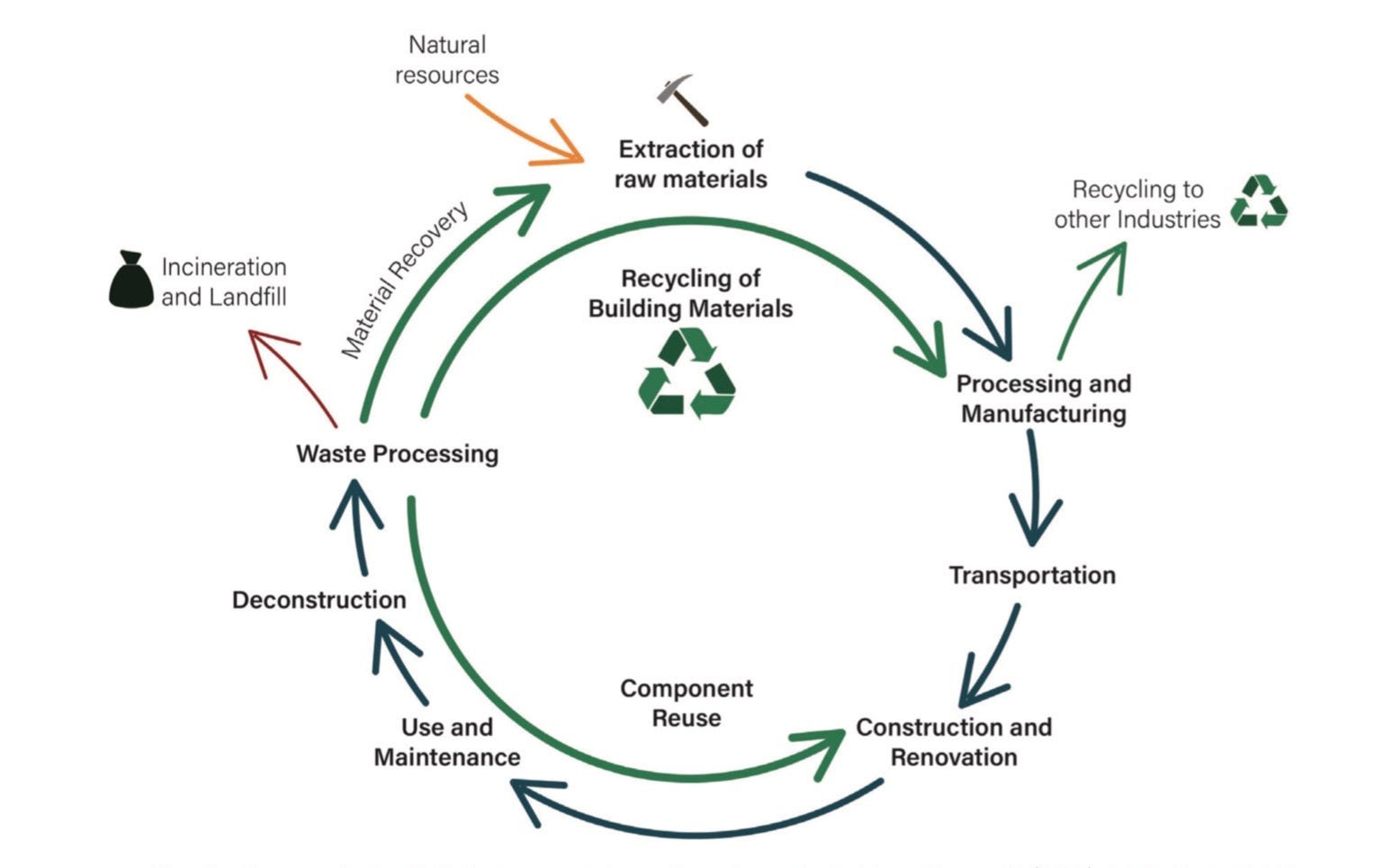
The United States has a waste problem.
Each year, our country generates approximately 292 million tons of municipal solid waste (MSW). That’s about 4 pounds per person, per day.
But what our cities and towns pick up from your curb is just one piece of the picture.
An even larger waste stream comes from the built environment. According to the Environmental Protection Agency, more than 600 million tons of construction and demolition waste (CDW) are generated each year.
CDW are the materials generated during the construction, renovation, repair, and demolition of buildings, roads, and other structures. That includes a whole bunch of stuff: concrete, asphalt, lumber, drywall, metal, brick, glass, plastics, roofing materials, and even organic matter like trees and vegetation cleared during development. Globally, construction and demolition activities account for about one third of all waste generated. Demolition activities alone account for over 90 percent of that total.
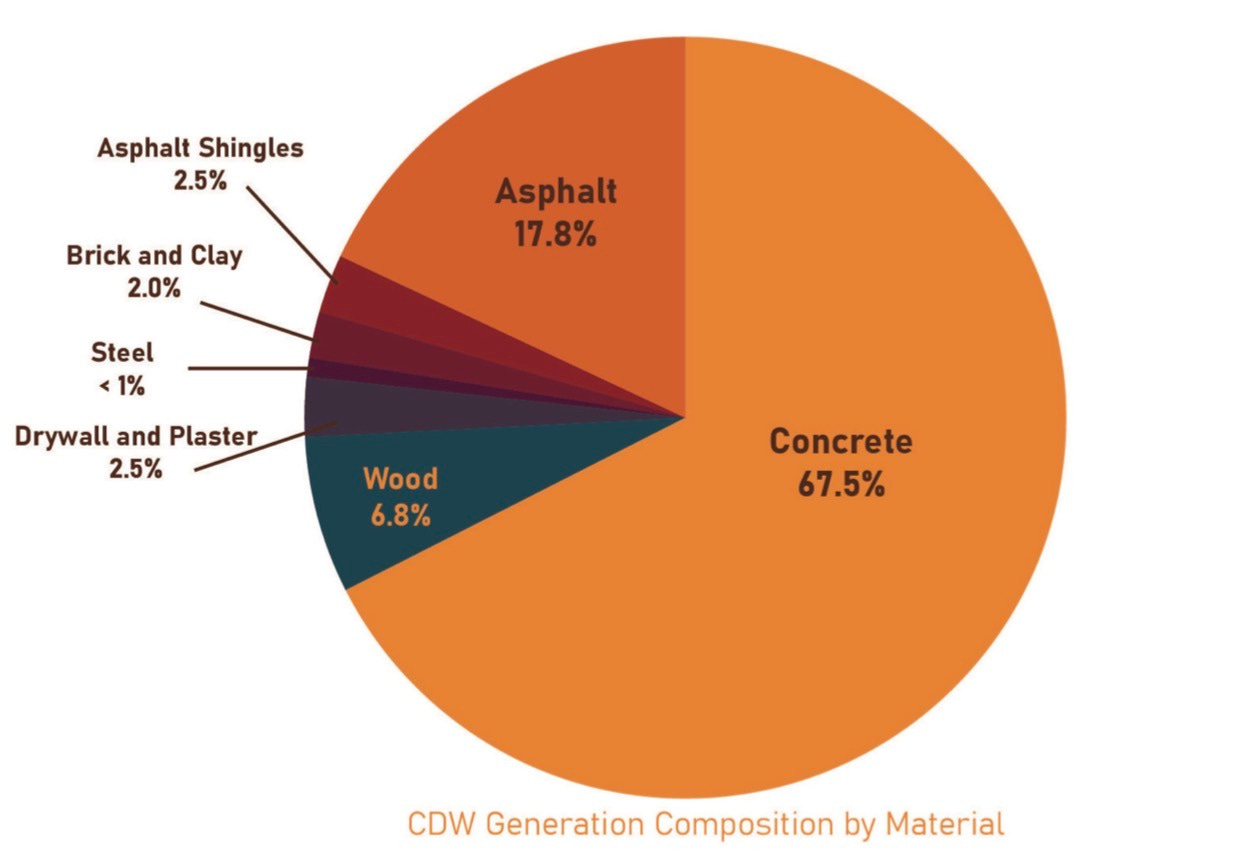
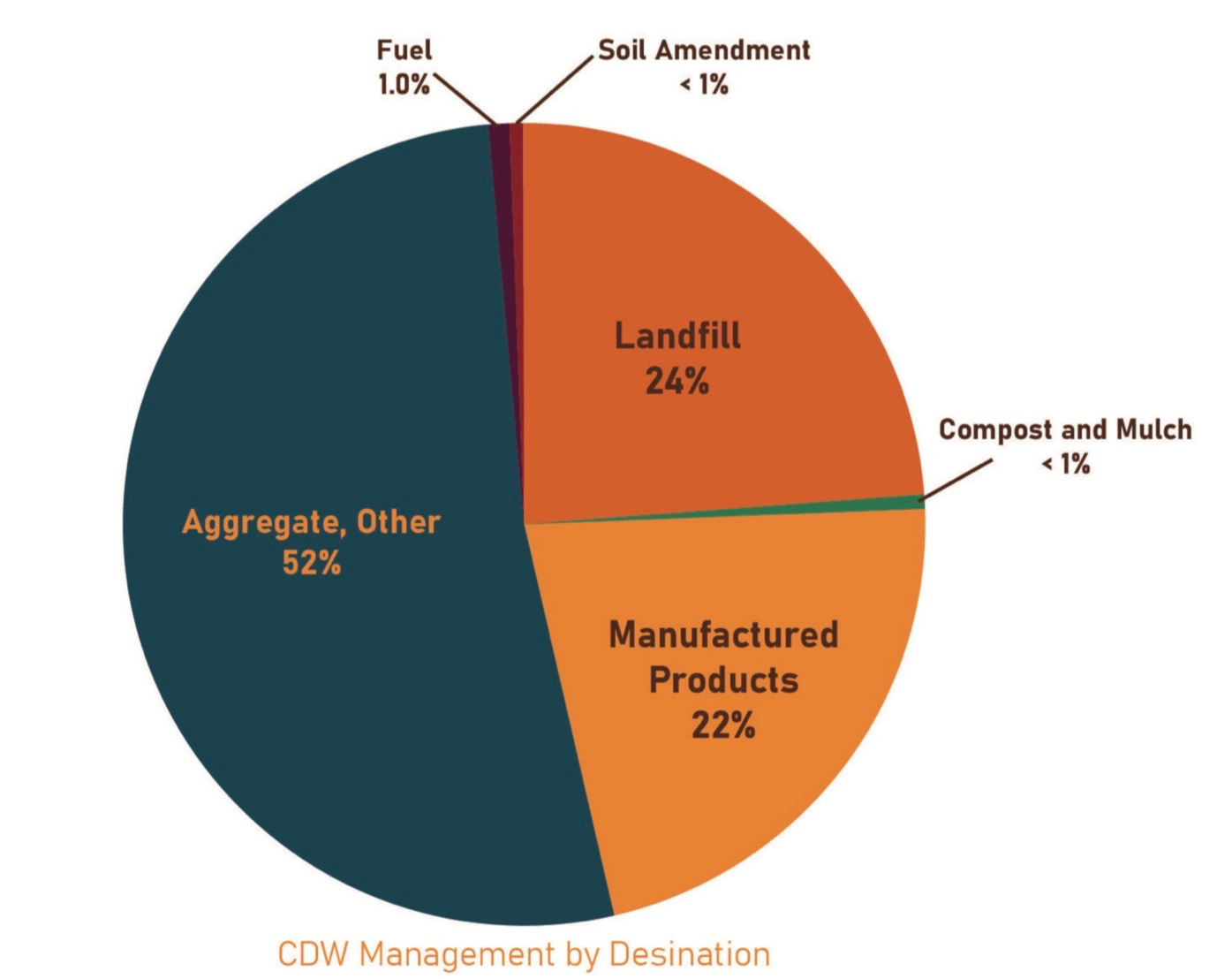
While some of these materials are recycled, much of their value is lost. Concrete is frequently crushed into aggregate, wood is chipped or burned for fuel, and many reusable materials are simply buried in landfills. Although some components are directed toward a “next use,” true material reuse remains relatively uncommon, and millions of tons of valuable resources continue to be discarded every year. The result is increased pressure on landfill capacity, continued demand for virgin raw materials, and avoidable greenhouse gas emissions associated with manufacturing replacement products.
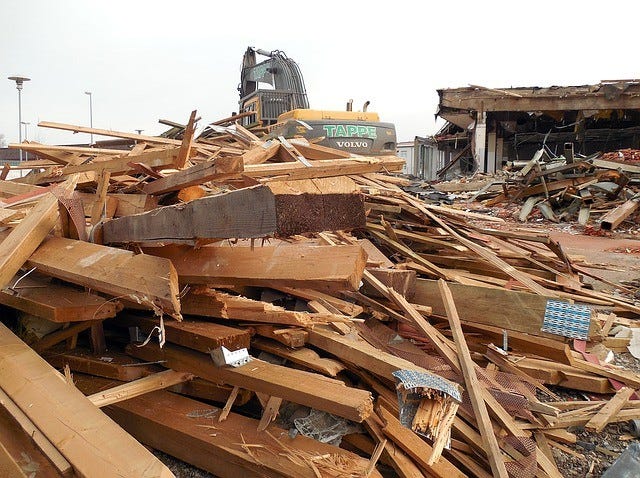
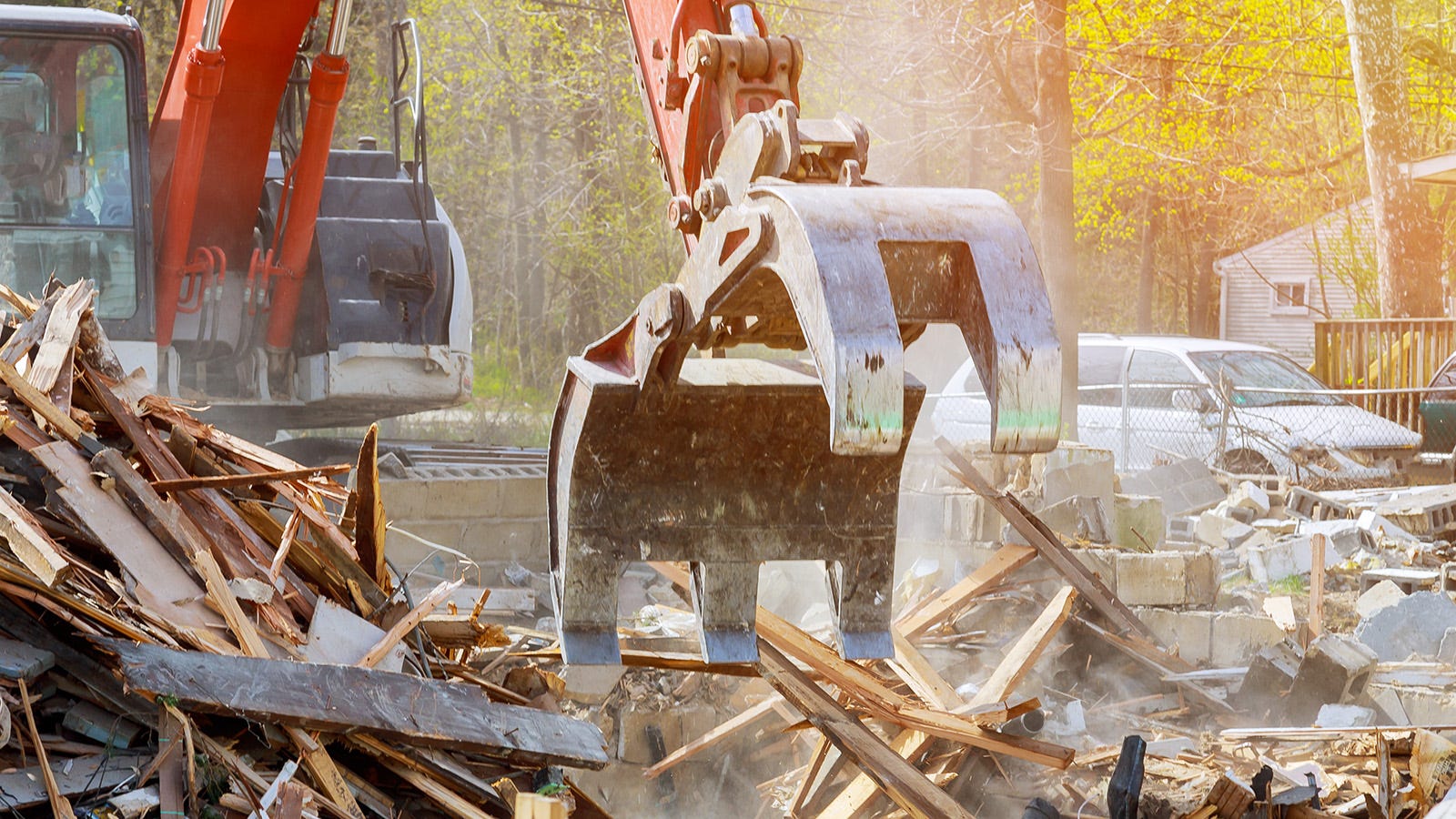
A major reason for this wasteful outcome lies in how buildings are typically removed at the end of their service life. Conventional demolition prioritizes speed and short-term cost savings. Heavy machinery can reduce a building to rubble in a matter of hours, but the process is inherently destructive. Materials become mixed together, contaminated, or broken beyond repair. Valuable lumber, architectural elements, doors, windows, fixtures, and structural components that could have been reused are ruined in the process.
Demolition also creates significant environmental and community impacts. Dust, noise, truck traffic, and debris can affect surrounding neighborhoods for days or weeks. Once materials have been crushed and mixed together, separating them for recycling or reuse becomes labor-intensive and expensive, creating a strong economic incentive to simply landfill the debris.
Deconstruction offers a fundamentally different approach.
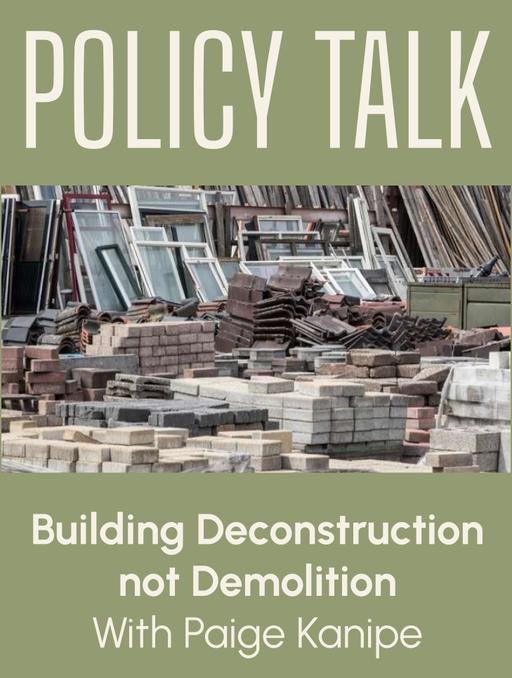
Rather than tearing a building down as quickly as possible, deconstruction carefully dismantles structures piece by piece to maximize the recovery of reusable materials. Often described as “construction in reverse,” the process prioritizes salvage before disposal. Doors, windows, flooring, cabinetry, dimensional lumber, fixtures, bricks, and even structural elements can be removed intact and prepared for reuse in future projects.
The environmental advantages of deconstruction are substantial. Each salvaged material represents resources that do not need to be extracted, processed, manufactured, and transported again. Reusing existing building materials preserves their embodied carbon (the emissions already invested during their production) and helps reduce the climate impact of new construction. Deconstruction also significantly reduces the volume of waste sent to landfills, extending landfill lifespan and reducing the ecological impact associated with waste disposal.
The benefits extend beyond environmental gains. Because deconstruction relies on skilled labor rather than heavy machinery, it creates more local jobs than traditional demolition. Material recovery, sorting, resale, and reuse industries all generate economic activity while supporting the growth of a circular economy.
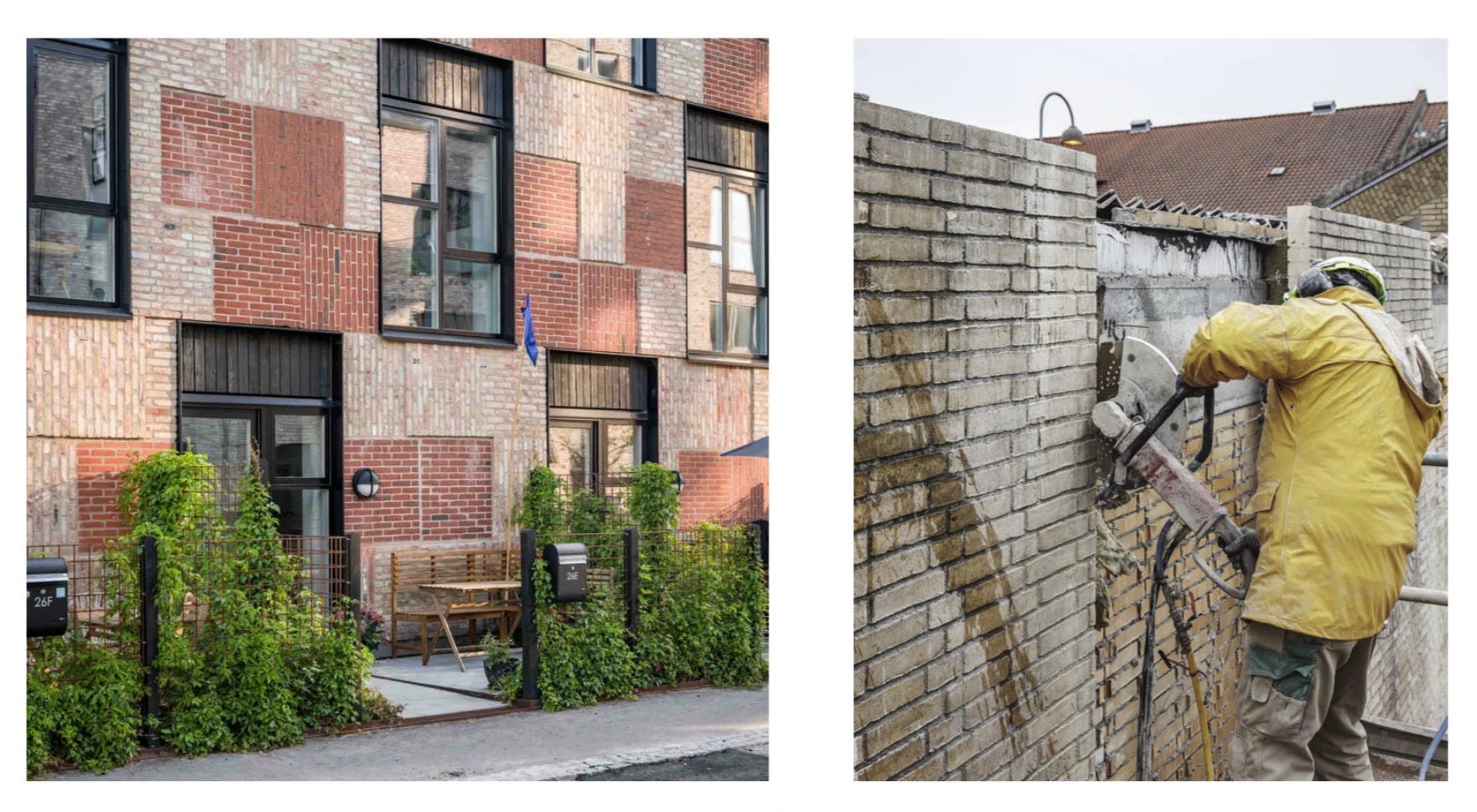
Recognizing these benefits, a growing number of cities are beginning to require deconstruction and stronger construction waste diversion practices. One of the most ambitious examples can be found in Boulder, Colorado. In 2020, Boulder adopted a deconstruction ordinance that applies to both residential and commercial buildings slated for removal. The ordinance requires buildings to be deconstructed rather than conventionally demolished, establishes a minimum diversion target of 75 percent of building materials by weight, and requires extensive documentation of material quantities. Since implementation, the program has diverted millions of pounds of material from landfills and has become a national model for circular construction practices.
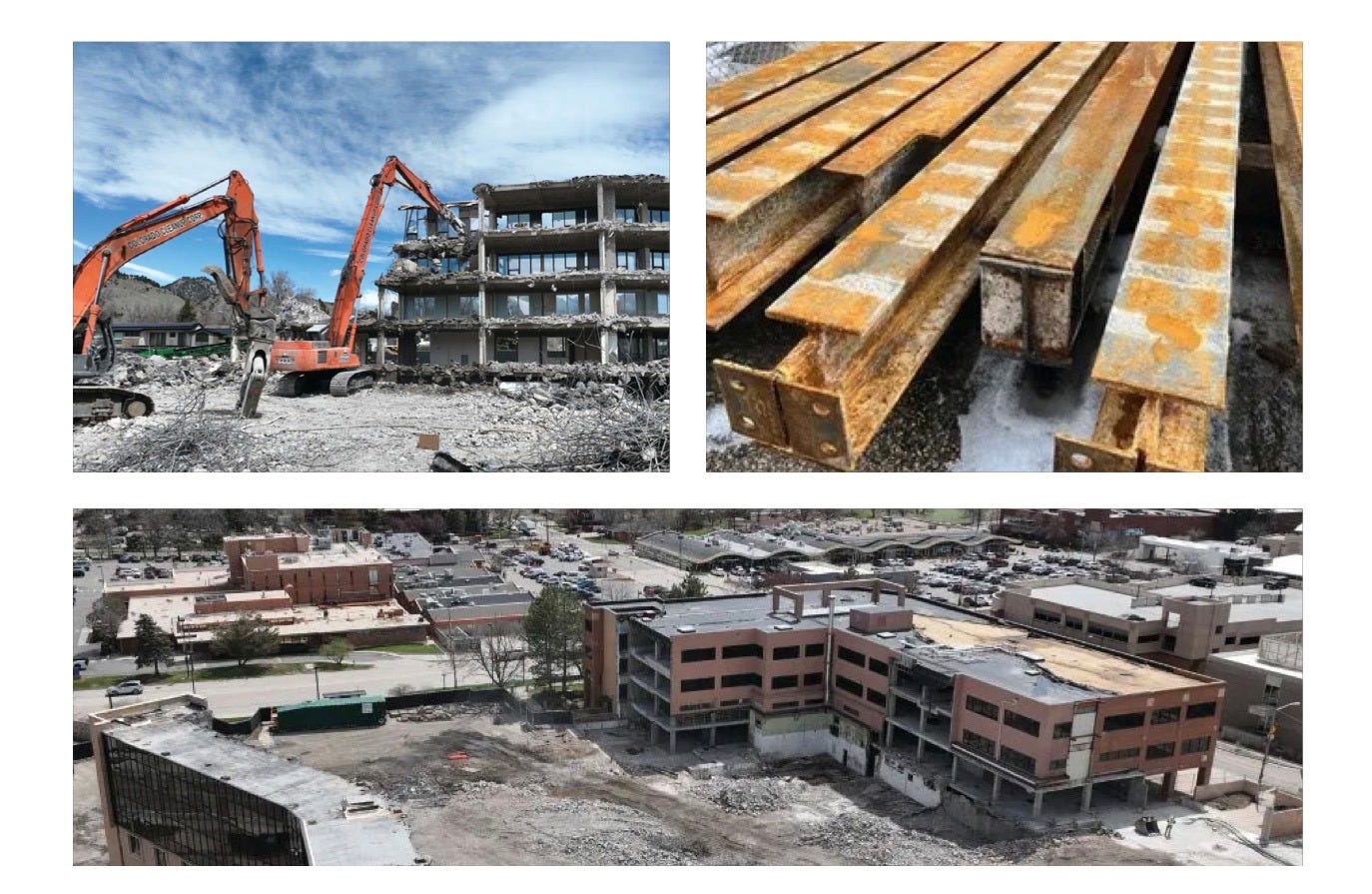
Other cities across the country, including Portland, Palo Alto, Pittsburgh, and San Antonio, have implemented similar requirements that prioritize deconstruction and material recovery over demolition.
These requirements exist in North Carolina, though not to the same degree. Statewide CDW is required to be source separated, meaning that waste must be sorted by material prior to disposal at a licensed CDW management center or landfill.

Chapel Hill and Orange County have some of the most intense municipal CDW recycling requirements in the state. Their Regulated Recyclable Material Ordinance requires that every demolition project have a waste management plan in place, and structures larger than 500 square feet must be assessed for material recyclability and reuse potential in order to get a demolition permit issued.
This ordinance also requires that all clean wood, scrap metal, and corrugated cardboard be recycled, and increases landfill tipping fees (the actual cost to throw things away) for mixed demolition waste.
The biggest barrier to large scale building deconstruction is how buildings are currently designed. Many of the most common construction details are extremely difficult or nearly impossible to efficiently deconstruct.
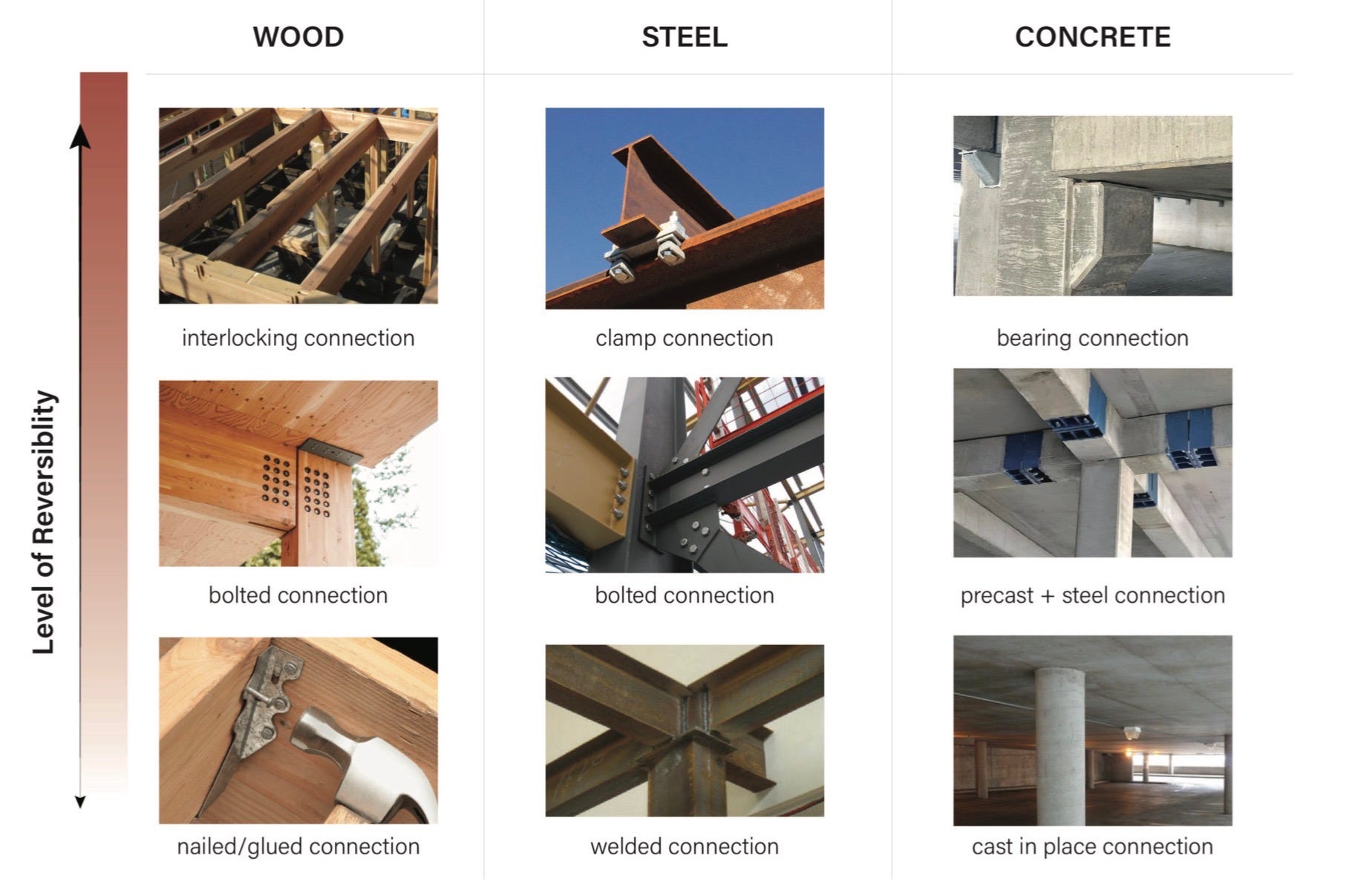
In commercial construction, this challenge is particularly evident in the widespread use of cast-in-place reinforced concrete. Cast-in-place concrete is valued for its strength, durability, and flexibility in design, but these same characteristics make it extremely difficult to recover for reuse. Once concrete is poured around reinforcing steel, the two materials become permanently integrated. During demolition, the concrete is typically broken apart using heavy machinery and the embedded rebar becomes bent, damaged, and contaminated. While the resulting material can often be crushed and used as aggregate, the original structural components are lost forever.
Alternative construction methods can significantly improve deconstructability without sacrificing structural performance. Precast concrete systems, for example, consist of individual components manufactured off-site and assembled using mechanical connections. These components can usually be removed intact, repaired, and reused in future projects. In addition to improving material recovery, precast construction can reduce construction waste, improve quality control, and shorten on-site construction schedules. Similar opportunities exist with modular construction systems, bolted steel framing, and other assembly methods that prioritize reversibility rather than permanence.
Residential buildings present a different set of challenges. Although wood-framed houses contain many materials with high reuse potential, they are often assembled using nails, adhesives, sealants, and composite products that make separation labor-intensive. Structural lumber may remain in excellent condition after decades of service, but extracting it without damage can be difficult when framing members are tightly nailed together. Engineered wood products, laminated materials, and modern composite assemblies further complicate recovery because individual layers cannot easily be separated for reuse or recycling.
These challenges have led architects, engineers, and sustainability advocates to promote a concept known as Design for Deconstruction (DfD). Rather than treating a building’s end of life as an afterthought, DfD incorporates future disassembly into the design process from the very beginning. Buildings are designed using standardized components, mechanical fasteners, accessible connections, and modular systems that allow materials to be removed, repaired, replaced, and reused.
The idea is simple: buildings should be viewed not as disposable products but as temporary assemblies of valuable materials. Just as manufacturers increasingly design products for repair and recycling, the construction industry can design buildings for eventual disassembly and material recovery. By considering a building’s entire lifecycle, from construction to deconstruction, communities can dramatically reduce waste generation, preserve valuable resources, and move closer to a truly circular built environment.
Join Our Policy Talk
📅 Tue Jun 16th 12:00pm - 1:00pm
📍 Virtual on Google Meet
Come for the ideas. Stay for the people who want to build a Triangle where everyone has a place to live. We’ll see you there.
Paige Kanipe is an architectural designer and recent graduate of the North Carolina State University Master of Advanced Architectural Studies program. Her research focuses on sustainability, circular construction, and the integration of Design for Deconstruction principles into the built environment.
