
Durham Halted Zoning Reform, Here’s Why.
The unlikely coalition of a gas station developer and a neighborhood group paused the proposed Land Development Code that would reshape housing across Durham.

Durham is in the middle of rewriting the rules that shape how the city grows.
Those rules are called the Unified Development Ordinance, or UDO. The new version is now being referred to as the Land Development Code, or LDC. Whichever acronym you use, it is the same thing: the zoning code that decides what can be built, where it can be built, and what kinds of neighborhoods Durham makes possible.
Most people never read a zoning code. But everyone lives inside the decisions it makes. Zoning quietly determines whether a neighborhood can add new homes, whether a corner store can open, whether a church can build housing, or whether an apartment building is allowed. As such, zoning directly shapes housing affordability, neighborhood change, and who is able to live in a growing city.
Durham’s current UDO was adopted in 2006 to implement the city’s 2005 Comprehensive Plan. The city that code was written for is not the Durham we live in today. In 2023, Durham adopted a new Comprehensive Plan with clear goals around housing affordability, walkable neighborhoods, and accommodating growth.
The proposed LDC is the set of rules meant to implement that vision.
CITYBUILDER has been following Durham’s zoning rewrite for more than a year. In a series of articles last year, Dave Olverson explored many of the ideas that good zoning reform can unlock, including neighborhood commercial spaces and small-scale housing options that allow cities to grow incrementally. Those pieces looked at what Durham’s new code could improve upon, and many of Dave’s ideas have shown up in the current LDC draft.
Overall, the draft code represents a serious effort by Durham’s planning staff and their consultants, Code Studio, to modernize the city’s zoning framework. It incorporates many best practices for form based zoning codes. And it builds on the pro-housing reforms Durham has implemented in recent years, including policies that allow more small-scale housing and more flexibility in residential neighborhoods.

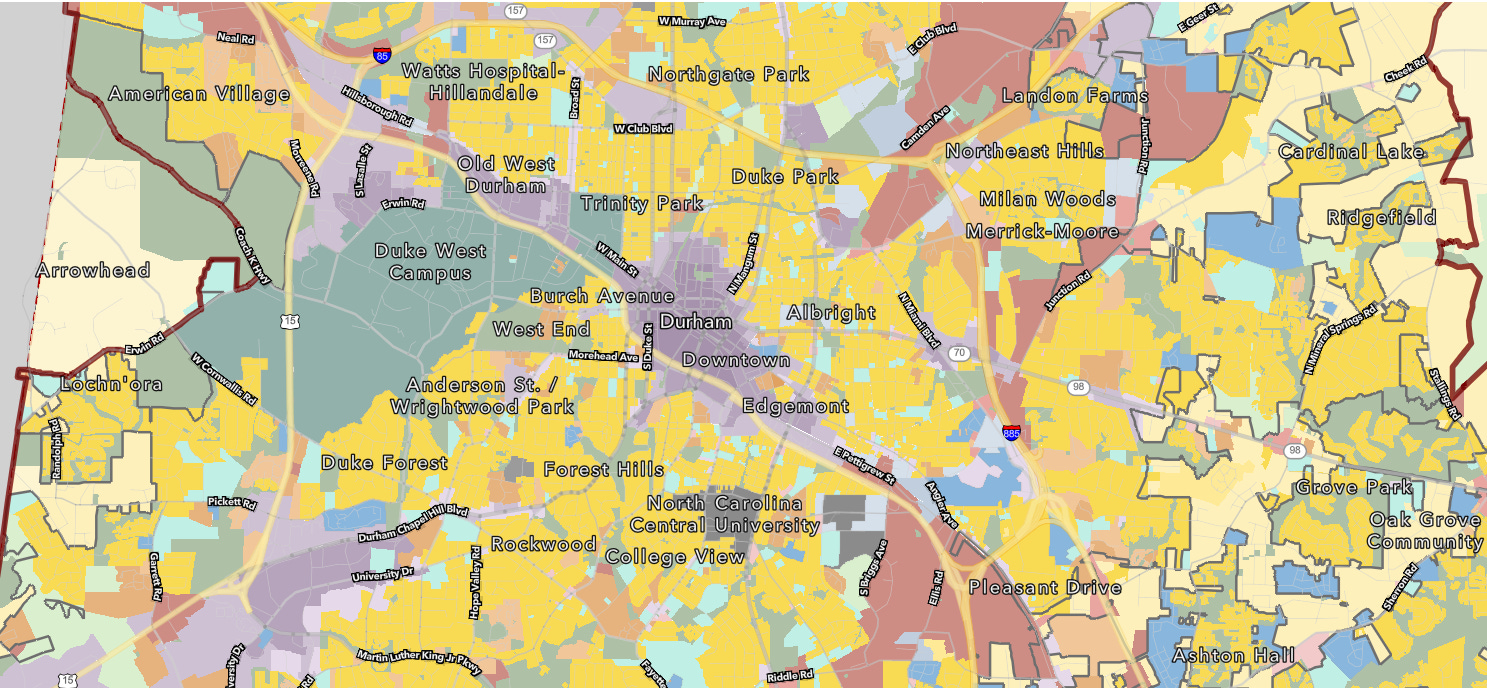
One of the most significant changes in the draft is the proposed R-D residential zoning district. R-D would replace many of Durham’s existing residential zones and allow a broader mix of housing options by right across much of the city. Instead of locking neighborhoods into single-family-only rules, R-D allows both traditional large-lot homes and smaller, more compact forms of housing.
In practical terms, that means duplexes, townhomes, and small-lot homes can be built in more places without years of rezoning fights. These are the kinds of incremental housing options that allow neighborhoods to evolve over time while still maintaining their character. Durham has already started moving in this direction with reforms like Expanding Housing Choices (EHC) and Simplifying Codes for Affordable Development (SCAD). The draft LDC attempts to carry that progress forward.
If Durham wants more housing choices and more attainable homes, rules like this need to exist and they need to be usable in the real world.
At the same time, a code rewrite this large will always contain provisions that deserve improvement, clarification, or debate. That is exactly what the public review process is supposed to do: surface the parts that work well, fix the parts that do not, and refine the final product through open discussion.
But just as the public conversation was about to start, and people were finally preparing to weigh in, the timeline changed.
Public hearings on the draft code were scheduled to begin on February 24th. Those hearings were intended to be the first opportunity for residents, neighborhood groups, builders, and advocates to weigh in on the full proposal.
Shortly before those hearings began, lawyers sent strongly worded letters to Durham’s government, concerned about potential downzoning.
And before you start guessing who favors upzoning and downzoning in the new code, here’s where it gets weird.
One letter was from the owners of several Family Fare convenience stores and related commercial properties. Their attorney argues that portions of the proposed code would constitute illegal “downzonings” under North Carolina law. The claim centers on a state statute that restricts when local governments can reduce development rights on property without written consent from the affected owners. We talked about the potential ramifications of such a sweeping state preemption last year.
Just a day earlier, the InterNeighborhood Council of Durham sent a letter raising the same downzoning concern as the gas station owners. The very same InterNeighborhood Council that has consistently fought every upzoning and zoning reform to increase density is now suddenly concerned about downzoning, and is emphatically asking that the new code process be paused while the legal issue is reviewed.
And the City responded by doing just that, pausing the whole process.
In response to the letters, city officials cancelled the LDC hearing schedule and have not placed any further public meetings on the calendar for Durham Planning Commission or City Council.
Instead of conversations about the new zoning code taking place in the public realm, legal debates deciding whether the code can move forward are (presumably) occurring behind closed doors.
It’s an unusual moment, and one that deserves attention.
Neighborhood groups that often oppose new housing development are walking in step with commercial property owners who want to protect development rights. Right now they’re aligned around the same legal argument. The similarities between their letters, and the timing of their complaints being sent one day apart should be pointed out (as the INDY did).
The public process meant to debate Durham’s next zoning code has been stopped without ever starting.
There is no scheduled public hearing, and we don’t know when there will be. For us at CITYBUILDER, this is frustrating because we believe truth and transparency are essential to public discourse. A zoning rewrite of this scale deserves a full and open public process. Residents should have the opportunity to hear the proposal, debate its merits, and suggest improvements. That robust public process is what should guide council as they ultimately decide what kind of growth Durham welcomes.
No single interest, whether a neighborhood organization or an individual property owner, should be able to short‑circuit the public conversation before it even begins. Durham’s draft code deserves scrutiny, debate, and improvement. What it does not deserve is for the public process itself to be shut down.
For most Durham residents, this might sound like insider baseball. Zoning acronyms. Legal letters. Planning Commission hearings. It can all feel far away from everyday life.
But these are the rules that quietly decide whether Durham can add more homes, whether neighborhoods can evolve, and whether new people can afford to live here. In other words, even if the process feels technical, the outcome is very personal.
Recent reforms like EHC and SCAD have already helped produce hundreds of new homes across Durham. The proposed LDC attempts to incorporate many of those ideas into a clearer and more consistent zoning framework. Because zoning codes tend to stay in place for many years, the decisions made in this rewrite will shape development patterns for a long time. That is why public engagement in the process matters. The code will ultimately reflect the voices that show up and participate.
For now, the hearing schedule is paused while the legal questions are being reviewed. People who were ready to show up, comment, and participate don’t yet know when that moment will come. While the pause is frustrating, it’s clear that the conversation about Durham’s zoning future is far from over.
At CITYBUILDER, we will continue following the LDC process closely.
Over the past year we’ve explored many of the ideas that zoning reform can unlock. In the coming weeks, we will publish a series explaining key parts of the draft zoning code, highlighting what we think will work and where improvements are needed for more and better housing to be possible. These policy choices matter for housing affordability and everyday life in Durham.
The public process will come back. Whenever it does, Durham residents deserve a real opportunity to weigh in.
We’ll keep you posted as the process moves forward and the hearing schedule comes back into view. And when the moment comes to participate, we’ll make sure you know when and where to show up.
Jenn Truman is a designer with experience in architecture, civil engineering, and interior design. She has worked in the Triangle for small, local architecture and civil engineering firms for over a decade, bringing to life some of Raleigh and Durham’s favorite retail and restaurant projects.
Jenn has a passion for designing experiences and places, and believes in building things together. As a young designer, leader, and advocate based in Raleigh, she is embedded in the local community through her professional and volunteer work. Jenn is the Founder of CITYBUILDER.


