


Housing policy in North Carolina is often framed as a purely local issue. It’s easy to see why: cities, towns, and counties each control zoning, development approvals, parking requirements, and other rules that shape what gets built in our communities.
But the reality is that local governments operate inside a framework heavily shaped by state law. The North Carolina General Assembly determines which tools local governments are allowed to use, what restrictions they can impose, and how development regulations are structured in a Dillon’s Rule state. Recently, the legislature has started to identify where statewide standards could and should override fragmented local rules that make housing harder to build.
Over the past several years, some North Carolina municipalities have begun experimenting with reforms aimed at allowing more housing choices, supporting infill development, and modernizing outdated development standards. A few places have legalized missing middle housing, removed parking mandates, allowed ADUs, and encouraged mixed-use districts and faster approval processes.
Progress built this way is naturally uneven.
In many places, even small-scale housing is still burdened by overlapping regulations, excessive parking requirements, complicated approval systems, infrastructure limitations, and development standards that make incremental housing financially difficult to deliver. Communities that want to allow more housing still struggle to navigate these layers of conflicting rules and procedural barriers.
That is why state-level housing reform matters.
Done well, statewide reforms can simplify the rules, expand local flexibility, reduce unnecessary barriers, and create a more predictable environment for homeowners, housing developers, and community growth.
To the NC legislature: we have some housing reform goals for this 2026 short session.
The session may be “short,” but legislators still have plenty to accomplish. As lawmakers continue negotiating the state budget and broader policy priorities through the coming months, active conversations around major issues, including housing, are happening behind the scenes.
Bills that crossed over remain eligible to move. Existing legislation can still be amended. Policy ideas that never passed as standalone bills can still become part of larger negotiations as the session continues.
As housing advocates, local leaders, and community members, it’s important to stay engaged and continue pushing for reforms that make it easier to build more homes across North Carolina.
Here are our CITYBUILDER state-level housing priorities:
Pass Practical Parking Reform (HB369)
HB369 is one of the most important housing reform bills still moving this session.
At its heart, this bill is both a housing affordability bill and an anti-flooding bill.
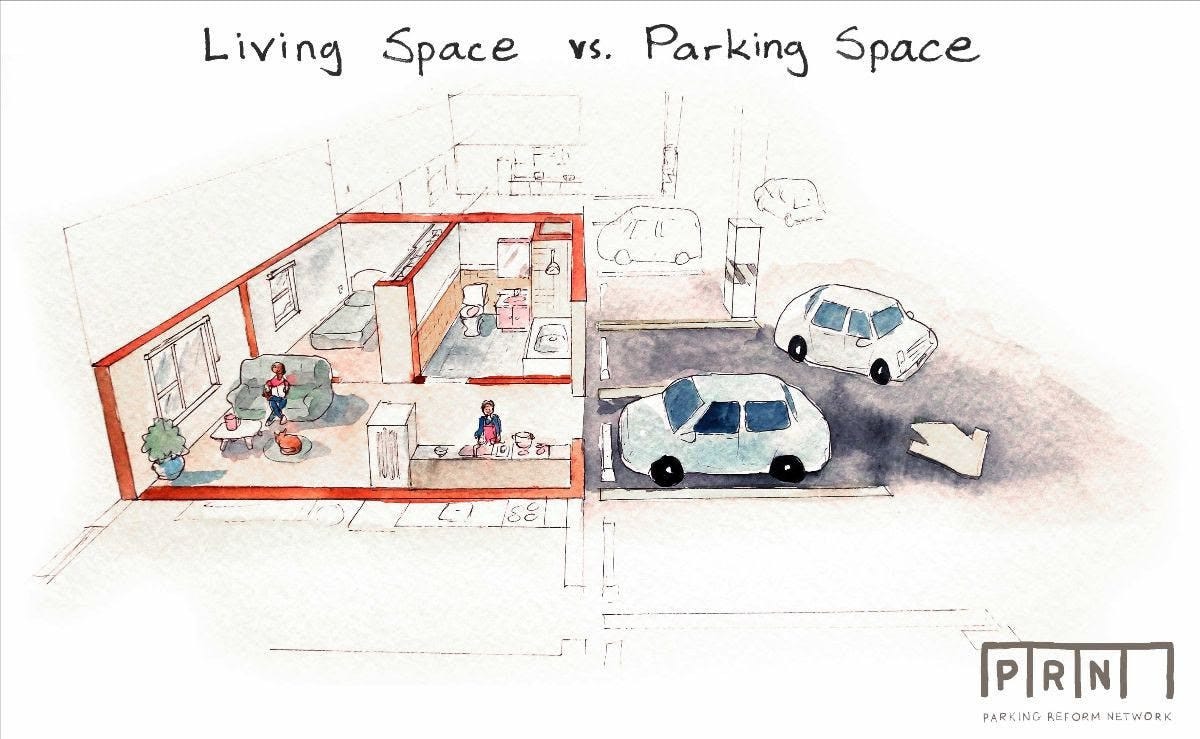
Across North Carolina, small developers, churches, business owners, and property owners are routinely forced into impossible site design tradeoffs. Local parking mandates require large amounts of paved surface area, while stormwater and impervious surface regulations simultaneously penalize excessive pavement coverage. The result is often fewer homes, smaller buildings, more expensive projects, or small commercial projects that never move forward at all.
HB369 would begin to address that imbalance by reducing excessive parking mandates while encouraging stronger stormwater outcomes on development projects. While the bill may continue evolving through committee discussions and amendments, the overall direction is good for housing affordability, small businesses, incremental development, and community growth across North Carolina. We explored this bill in more detail in our parking piece last year, and organizations like the Parking Reform Network continue to document how excessive parking mandates raise costs nationwide.
📧 Now is the time to email, call and talk to members of the Senate State and Local Government Committee and ask them to support HB369.
Legalize Taller Single-Stair Buildings
Single-stair reform is one housing policy we remain especially excited about advancing in North Carolina.
CITYBUILDER has partnered with Single Stair NC over the past year to advance conversations around modernizing NC’s building code to allow taller single-stair apartment buildings with updated life safety standards. These building types are increasingly being explored across the United States because they allow more flexible apartment layouts, more family-sized units, and smaller-scale apartment buildings on urban infill sites.
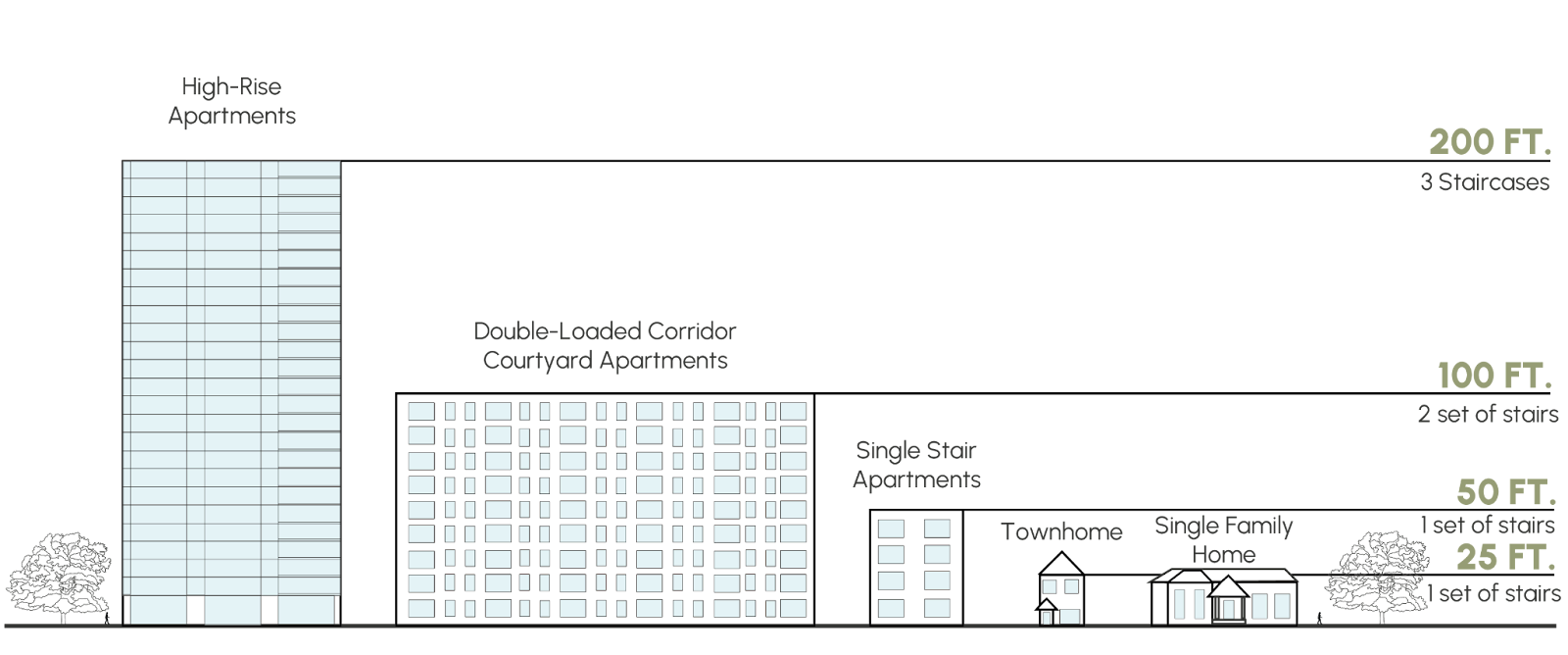
During last year’s long session, SB492 from Senators Moffitt and Mayfield directly proposed modifying North Carolina’s building code to allow taller single-stair apartment buildings. While the bill did not ultimately cross over, we hope lawmakers continue looking for opportunities to incorporate similar provisions into broader housing and code reform discussions this session. The bipartisan federal Road to Housing Act also touches upon single-stair reform, reflecting growing national momentum around building code modernization and small-scale apartment housing.
Allow Housing Near Jobs (By-Right in Commercial Areas)
In many North Carolina communities, it is still illegal to build housing in areas zoned for commercial activity, even when those sites already have roads, utilities, and infrastructure in place.
Many aging commercial corridors and oversized parking lots are well positioned for homes, apartments, and mixed-use neighborhoods, yet outdated zoning rules still separate housing from jobs, retail, and daily life. Allowing housing by-right in these areas would support corridor revitalization, reduce approval uncertainty, and create more opportunities for incremental development and mixed-use communities.
Last year’s SB499 proposed allowing housing by-right in many commercial zones across North Carolina. We hope lawmakers continue advancing similar reforms this session.
Allowing more housing on commercial corridors and underutilized parking lots would help communities grow gradually while making better use of existing infrastructure that we’ve already built and paid for.
Expand Small Lot Freedom
Many communities say they want more housing choices, incremental growth, and opportunities for homeowners to add small-scale housing. But in practice, minimum lot sizes, minimum home size requirements, infrastructure limitations, and other technical barriers still make that difficult to accomplish.
Lawmakers and local governments alike should continue simplifying these barriers by:
removing unnecessary minimum lot size requirements for ADUs
removing minimum primary home size requirements
reducing barriers to cottage courts and small-lot housing
allowing private water and sewer connections across property lines through easements
These kinds of reforms make it easier for homeowners, small builders, and families to gradually add housing within existing communities instead of forcing growth outward.
Expand By-Right and Administrative Approvals
If housing is legal to build, it should be possible to actually get approved.
Too many communities still rely on lengthy discretionary approval systems that create delays, uncertainty, and unnecessary costs, especially for small-scale housing and infill projects. Large national developers may be able to absorb years of delay and carrying costs. Oftentimes, small local builders cannot.
Communities and lawmakers should continue modernizing development approval systems by:
expanding administrative approvals for code-compliant projects
creating clearer review timelines
reducing duplicative approval processes
expanding exempt plat and minor subdivision allowances
creating more predictable pathways for small-scale infill development
When local approval systems become too complicated, expensive, or unpredictable, pressure for broader state-level intervention will continue to grow. Simpler and more predictable rules benefit everyone.
Continue Supporting Affordable Housing Funding
Housing reform is not only about reducing barriers and modernizing regulations.
Communities across North Carolina also need continued investment in affordable housing production and financing tools.
There are several housing funding bills moving this session that would help expand affordable housing construction and close financing gaps for projects across the state, including workforce housing, affordable rental development, and homeownership opportunities. We appreciate our friends at NC Housing Coalition for leading on these efforts.
We are encouraged by the ongoing bipartisan conversations around housing affordability and production. North Carolina’s housing challenges are too large for any single policy solution, and long-term progress will require both regulatory reform and strategic housing investment.
Carolina Forward recently highlighted several of these housing funding bills.
Housing policy work does not happen all at once, and it rarely happens at only one level of government.
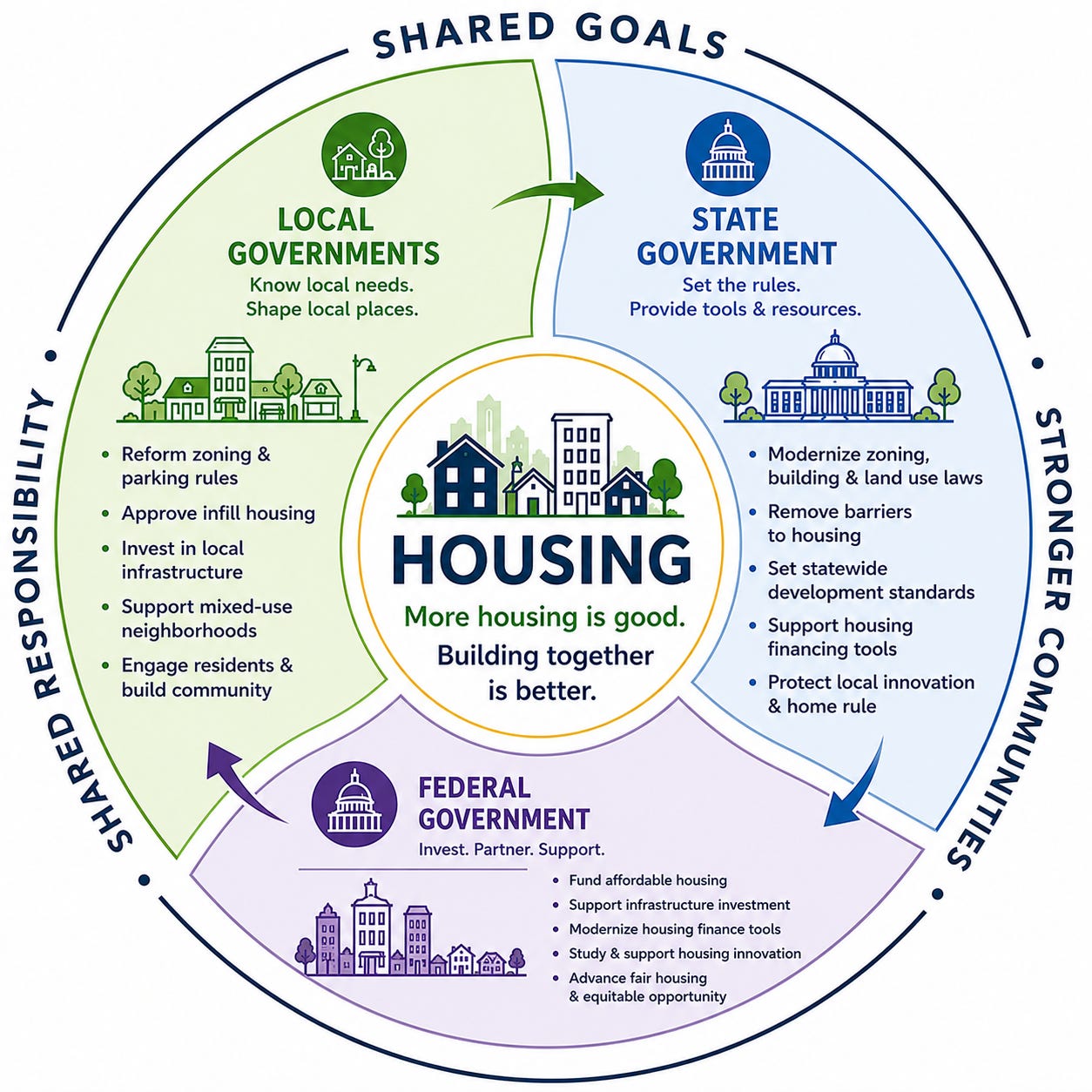
Some of the ideas above are active legislation already moving through the General Assembly. Others are policy concepts we believe lawmakers, local governments, and advocates should incorporate wherever possible. Meaningful housing reform is often incremental, built piece by piece through zoning changes, code updates, infrastructure policy, funding tools, and development process reforms working together over time.
And honestly, that’s part of why I keep pushing on this work.
There is no single bill that “solves” housing. There is no one city that gets everything right. The work is continuous and layered.
Local governments need to keep modernizing their policies, and the state needs to keep stepping in where outdated rules and fragmented systems are making it unnecessarily difficult to build homes, support small businesses, and grow communities incrementally. If we want stronger and more affordable communities across North Carolina, housing policy has to keep moving forward at every level at once.
Jenn Truman is a young designer, leader, and advocate based in Raleigh, she is embedded in the local community through both her professional and volunteer work. Jenn is a regular contributor to and Founder of CITYBUILDER.