

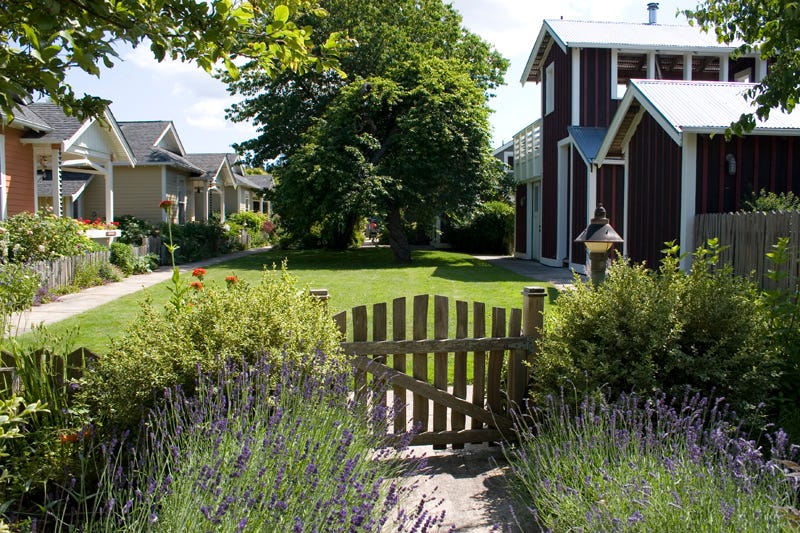
Over the past three months, CITYBUILDER has been hosting our Summer Film Tour across the Triangle. Among the six films we’re screening, one stands out for revealing the origins of a residential development movement that has spread across the country. In the Pocket Neighborhoods film, architect Ross Chapin walks us through two Seattle area neighborhoods built at human scale, with small clusters of homes gathered around a shared garden. This style of residential living is a documented, replicated model, and the story behind it starts with eight small cottages in a town of eleven hundred people.
The project that started it all
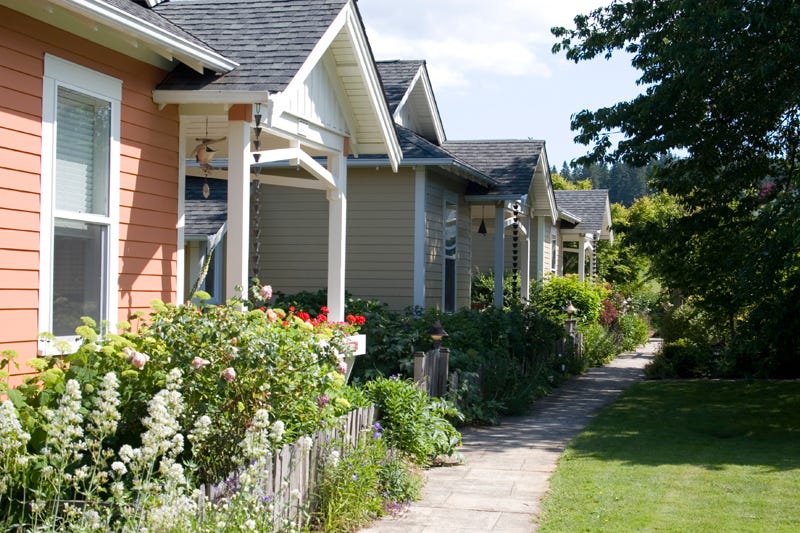
In 1996, Chapin partnered with developer Jim Soules to build the Third Street Cottages in Langley, on Whidbey Island north of Seattle. The site was zoned for four large single family houses. Instead, working under Langley’s new Cottage Housing Development ordinance, which allowed double the underlying density if homes were kept under 975 square feet, Chapin and Soules built eight cottages, ranging from 650 to 1,600 square feet, arranged around a shared garden with a commons building and a tool shed.
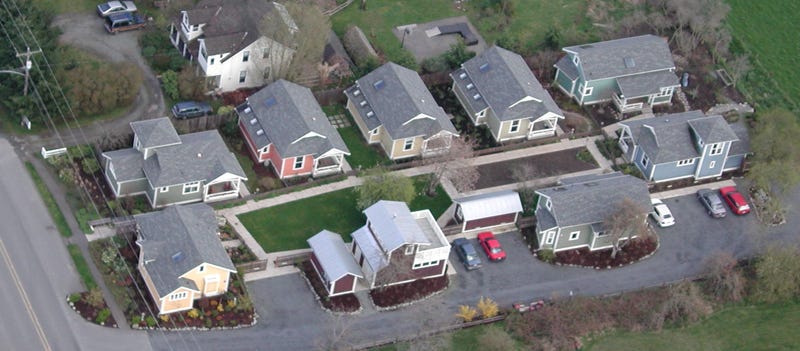
The project sold out almost immediately. The local paper covered it, and the story was picked up by the national press, eventually appearing in more than two hundred newspapers, magazines, and television programs. Planners, developers, and architects from around the country started calling, asking the same three questions: what zoning made this possible, who’s actually living here, and how could this fit into our town.
Chapin and Soules answered by building more of these developments. Danielson Grove in Kirkland. Greenwood Avenue Cottages in Shoreline. Conover Commons in Redmond. Each one tested the model in a different setting: urban, suburban, larger homes, smaller homes. No matter what, every home sold. Chapin went on to write the book that gave this burgeoning movement its name, Pocket Neighborhoods: Creating Small Scale Community in a Large Scale World. The term has since become shorthand for a housing type that keeps reappearing because it keeps working.
Pocket neighborhoods changed the game
It would be easy to file this under “small houses are cute” and move on. That misses the point. Chapin’s design principles are specific, and they are the reason these communities function the way they do.
The five layers of threshold
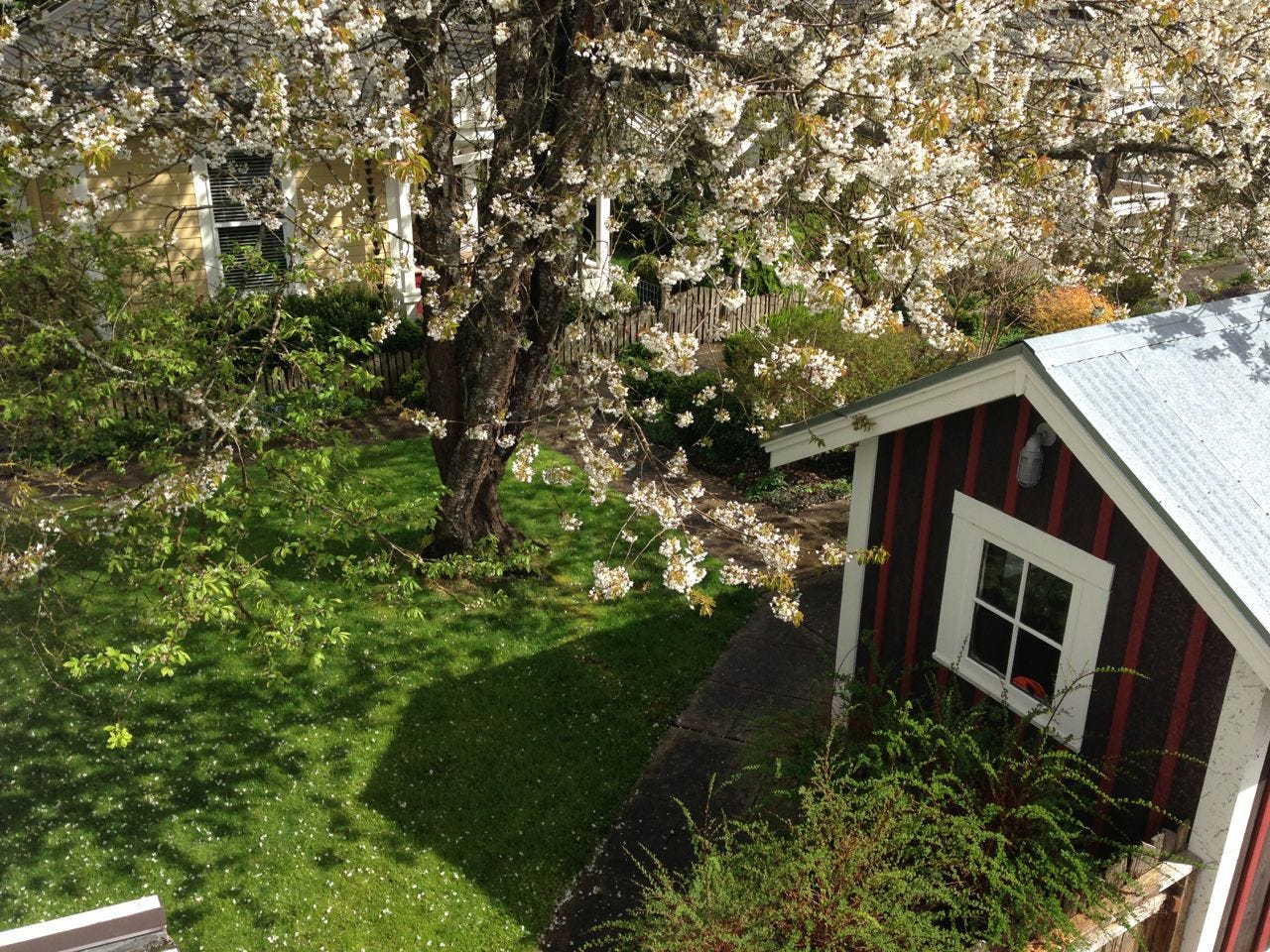
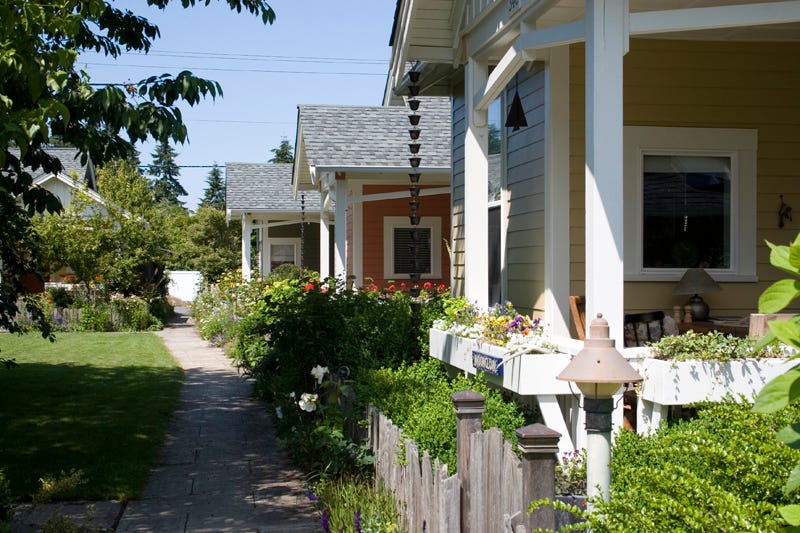
Chapin designs a graduated sequence of space between the shared courtyard and each front door: a border of plantings at the sidewalk, a low fence, a private front yard, a covered porch frame with a low railing and flower boxes, and the porch itself. All of it happens within about eighteen feet. The effect is that residents can see into the common space from home, while people in the common space cannot see into the house. That’s the whole trick of privacy and community coexisting on a small lot.
A scale of sociability
Chapin’s own description is that a pocket neighborhood is small enough that a six year old can wander past the garden gate and the parents are comfortable with it. This isn’t simply a design metaphor; it’s a literal test of whether the shared space is legible and safe enough for people to actually use it, which is the difference between a courtyard that gets photographed and a courtyard that gets lived in.
Cottages, not just smaller houses
These are one and a half story cottages, not two story houses shrunk down. Chapin is explicit that the difference matters for how the building reads to its neighbors, not just how it functions inside.
Individuality inside a shared pattern
At Third Street Cottages, every cottage got a different exterior color (twenty four colors total) and homeowners named their own homes. Small moves, but that’s what turns a set of identical units into a neighborhood with an identity.
Underneath all of it sits a demographic argument that Chapin makes plainly. Almost 30% of American households are single-person households, and 35% percent are two-person households. A large lot with a large house does not fit a large share of the market anymore, in cost, in space, or in upkeep. Pocket neighborhoods are Chapin’s answer to a household pattern that the standard subdivision was never built for.
Join our film tour and discuss!
Third Street Cottages is not a grand statement about density in the abstract. It is a case study about a specific ordinance in a town of eleven hundred people that made a specific project legal, and a market that showed up for it immediately. That’s the same conversation we’re having in the Triangle right now around missing middle housing and zoning reform. This film sits comfortably alongside the LA’s Forbidden City spotlight, which traces how the duplexes and bungalow courts Angelenos love became illegal to build, one setback requirement at a time. Chapin’s cottages are the other half of that story: proof that when the code allows it, people will build the small scale, community oriented housing that the market has been asking for all along.
We had a blast talking about all of this in Durham and Cary, but it doesn’t stop there. Our Summer Film Tour continues closes out on August 26 at Trophy Brewing in Raleigh, and we want to see you there. Tickets are ten dollars.
Brought to you by our Gold Sponsor
Sponsorship opportunities
We are grateful to Rocket Shop Design, our Gold level sponsor for the Summer Film Tour, for helping make screenings like this one possible across all three cities.
All sponsorship levels are currently open for Raleigh:
Presenting, $3,000. Logo on the website event page, eblasts, event Substack articles, social media, attendee handouts, and recognition during welcome remarks. Five complimentary tickets to each showing.
Gold, $2,000. Logo on the website event page, eblasts, event Substack articles, social media, attendee handouts, and recognition during welcome remarks. Three complimentary tickets to each showing.
Silver, $1,000. Logo on the website event page, eblasts, social media, and attendee handouts. Two complimentary tickets.
Bronze, $500. Logo on the website event page, eblasts, and attendee handouts.
Sponsorship is paid as a donation through our 501(c)(4), CityBuilder NC. For organizations that would like their contribution to be tax deductible and publicly recognized, we also accept donations through our 501(c)(3) partner, Southern Urbanism. Reach out and we will work with whatever structure fits your organization best.
Hannah Moell is a Raleigh-based visual artist and housing advocate. As Development & Partnerships Director at CITYBUILDER. She leads sponsorship, fundraising, and partnerships, with a current focus on YIMBYtown 2026 at the Raleigh Convention Center.
Her art practice spans encaustic fractals, large-scale watercolor florals, and natural pigment on linen, all rooted in neuroaesthetics — the science of how pattern and the natural world trigger beauty and awe. She holds a BFA from East Carolina University and teaches through Durham Art Guild and the Makery.
Whether building coalitions or paintings, she’s drawn to systems that hold meaning and work that moves people.