

As Raleigh continues to grapple with growth, affordability, and identity, a new wave of developers is testing what “missing middle” housing looks like on the ground. One of the most compelling recent case studies comes from Steven Wilk’s Loft3 development: a boutique condo building near downtown Raleigh that’s pushing the boundaries of small-scale housing in the Southeast. On April 23rd, we’ll be livestreaming a Q&A with Steven as we tour his groundbreaking development; RSVP for that here.
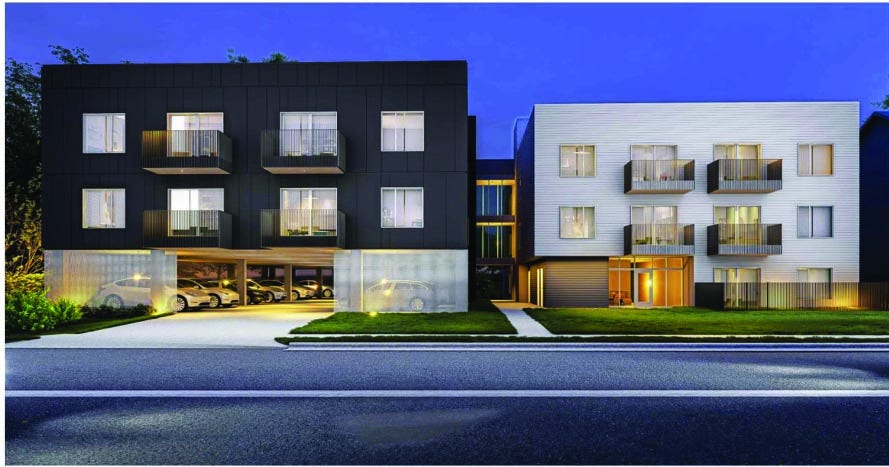
Steven’s project is foremost an experiment shaped by lessons from Europe and Asia, where single-stair buildings and compact condo living are far more common, and provide much-needed density in growing urban areas. What emerged from Loft 3 is a set of grounded, practical insights about how to make middle housing work in Raleigh today.
Here are five of the most important takeaways:
1. Create a Great, Versatile Floorplan
At the heart of Loft3 is a simple idea: the floor plan must be versatile.
Because units are smaller and more efficient, they must accommodate a wide range of lifestyles. The layouts were intentionally designed to be flexible, appealing to young professionals, roommates, students, and even small families. A second bedroom might double as a home office or a nursery, or a resident could rent out the room to offset costs.
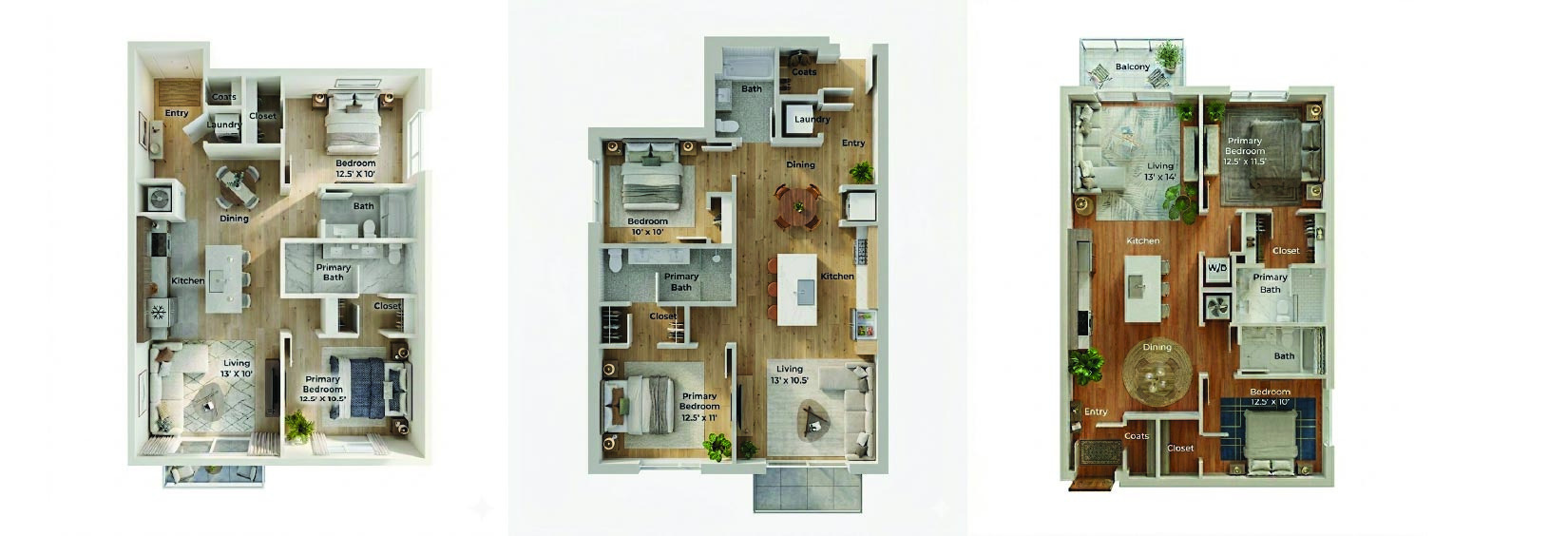
In many ways, the success of these units comes down to restraint. There’s very little wasted space. Mechanical and electrical systems are consolidated among the units on each floor. Even the building’s form, tight to the property lines with small courtyard separations, ensures that every unit receives light while maximizing efficiency.
The result is a layout that’s designed with resident experience in mind, rather than just financially optimized.
2. Elevators and Parking Are Major Cost Drivers
If there’s one lesson that came through clearly, it’s this: cost is everything. Elements like elevators and parking can be the biggest roadblocks in the affordability equation.
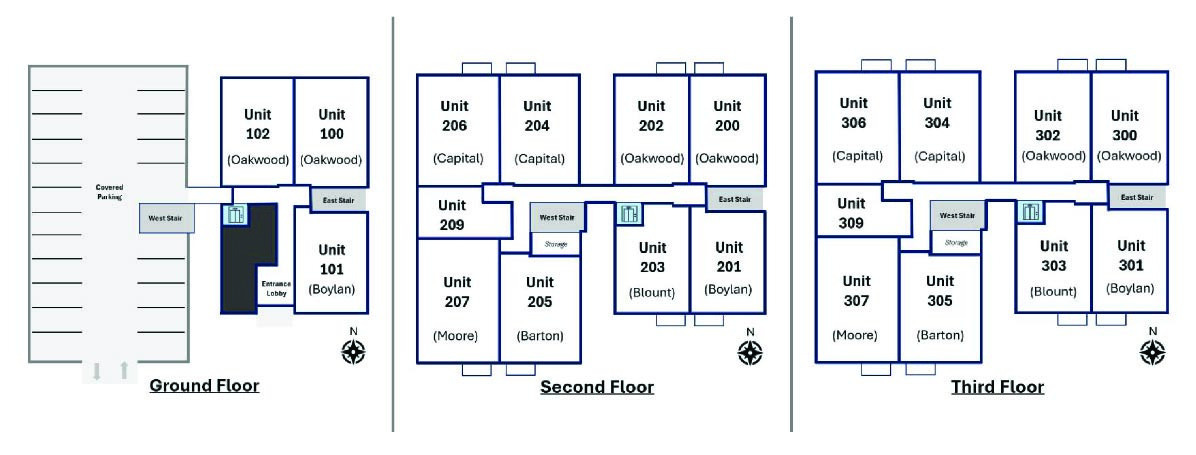
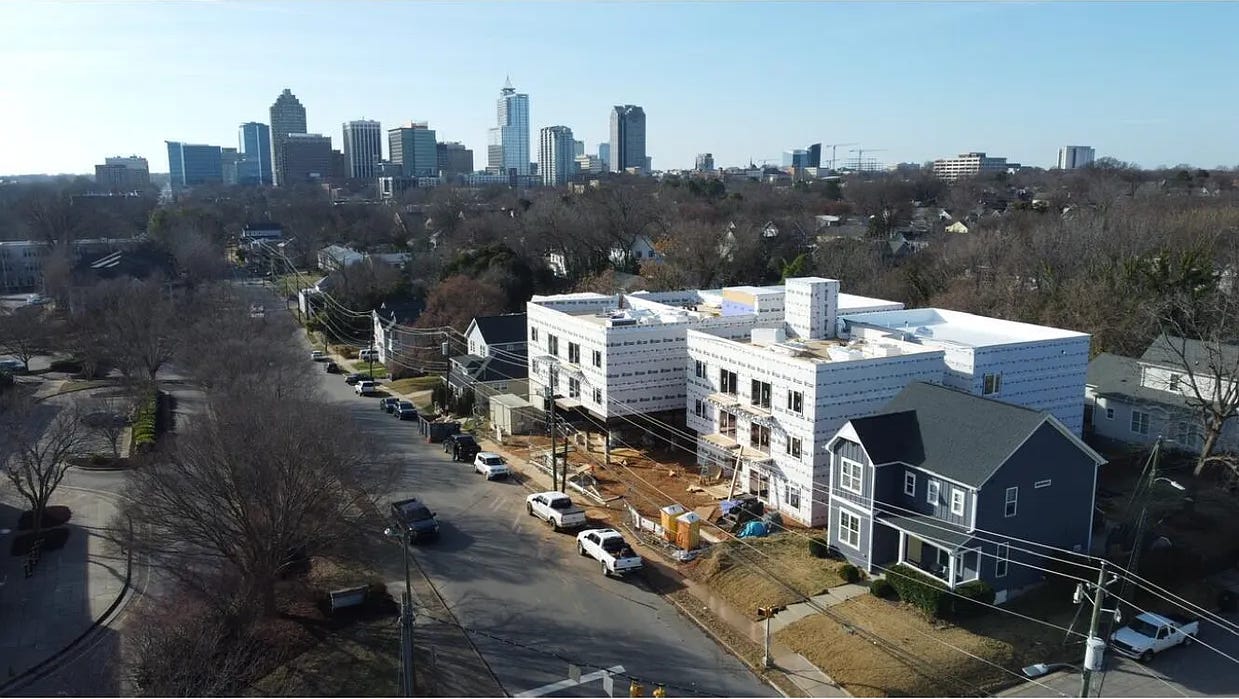
At Loft3’s scale, adding an elevator would increase costs by roughly $20,000 per unit for ownership models, plus ongoing maintenance. ADA requirements add even more cost, in the case of specialized elevator car dimensions or turn radii in the hallway spaces. The Loft3 development makes use of one elevator shared by all units, maximizing its spatial and economic efficiency.
“The project was not without a lot of headache for just everything being so unknown.” - Steven Wilk
Parking can be even more dramatic, often exceeding $30,000 per space. These numbers fundamentally shape what’s possible for affordable housing developments. The team initially explored townhomes with surface parking, but quickly realized the costs didn’t make sense. That pushed them toward a higher-density condo model, and eventually to a more efficient parking strategy with a podium located on one side of the building. Even then, trade-offs were unavoidable. Including a required second stair for fire egress on the east side of the building added another $10,000–$15,000 per unit, despite rarely being used in practice.
The broader takeaway is that affordability is about eliminating unnecessary building components, in addition to reducing material and labor expenses. Every added feature raises construction costs, and if we rethink what’s truly essential in a building, we can unlock more attainable pathways to affordable housing.
3. Safety Starts with Design Choices
One of the most misunderstood aspects of single-stair and small-scale buildings is safety. But as the Loft3 team emphasized, safety isn’t just about adding more systems, it’s about designing smarter buildings from the start.
For example, Loft3 uses cold-formed steel rather than wood framing. This dramatically reduces the risk of structural fire. While a unit fire is always possible, the building itself is far less likely to ignite compared to typical wood-frame construction. Modern building systems such as fire-rated assemblies, sprinklers, and compartmentalization are already highly effective at containing fires. The data shows that newer mid-rise buildings rarely experience catastrophic fire spread, but public perception hasn’t yet caught up.
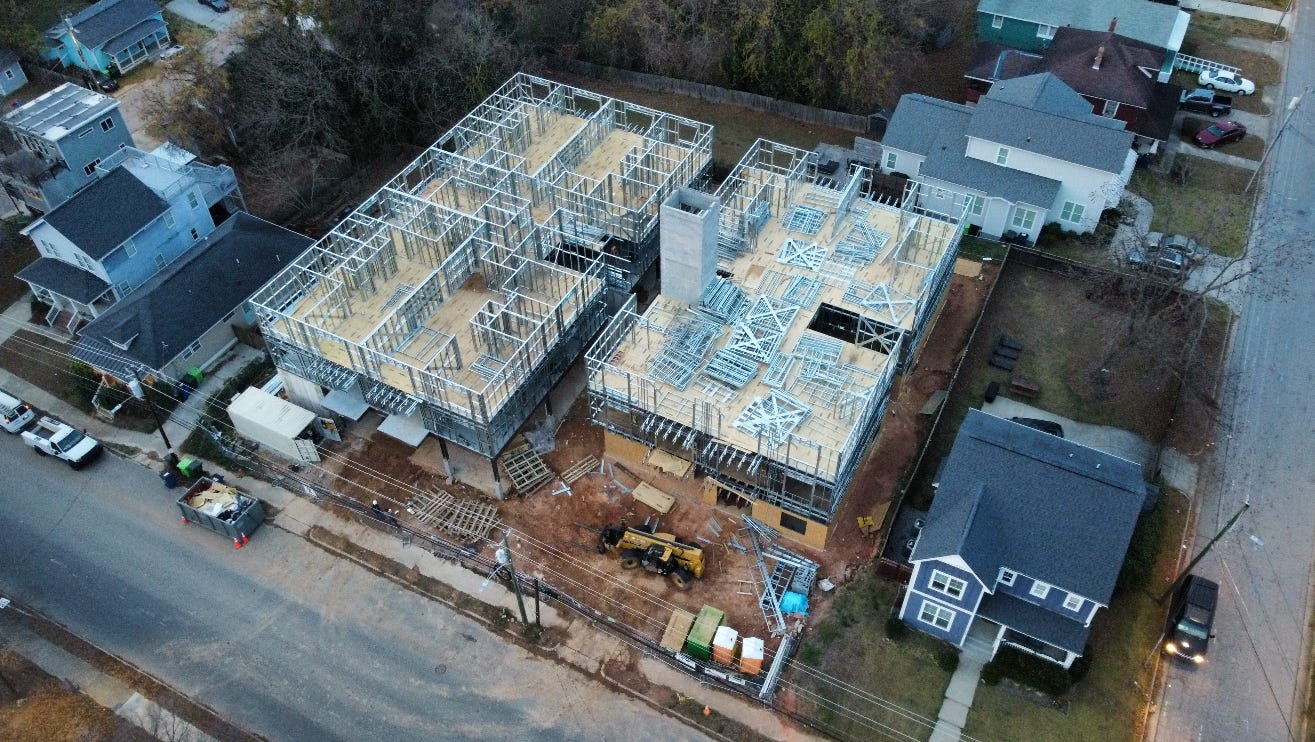
There’s still a lingering distrust of building systems, often driven by the prevalence of wood construction and a desire for redundancy in fire response. This has led to requirements that may not always align with actual risk, like additional stairs and oversized fire apparatus.
The Loft3 experience suggests a different path forward: trust the systems, invest in better materials, and design buildings that are inherently safe rather than overly complex.
4. Affordability Takes a Village
Delivering affordable middle housing can be a struggle to coordinate, along with design and construction challenges.
This piece was written by student fellows in collaboration with Single Stair NC.
Each semester, CITYBUILDER provides fellowship opportunities for aspiring student urbanists in the Triangle. This semester we’re focused on single-stair apartments. Single Stair NC is a new publication committed to advancing the pursuit of single-stair buildings in North Carolina.
At Loft3, the team navigated Raleigh’s affordable housing density bonus, which requires a percentage of units to be priced below market rate. While the process itself was relatively straightforward, largely handled through legal agreements and tied to Area Median Income (AMI), there was a lack of precedent of the same development composition (particularly for for-sale condos rather than rentals).
City staff were willing to collaborate, and financing mechanisms like community reinvestment programs provided additional support. The bank did not view affordability as a risk factor… in fact, it opened doors to favorable investment options. The key is understanding how to “solve backwards”, starting with the target price point and structuring the deal accordingly.
Most importantly, the project demonstrated that developers shouldn’t be intimidated by affordability requirements. With the right team (attorneys, lenders, and city partners) it’s entirely achievable.
5. Living Affordably Downtown Requires a Lifestyle Shift
Ultimately, the biggest obstacle in the success of a middle-density project isn’t in the technical details… it’s in residents shifting their lifestyles to be more walkable and social. Loft 3 is built around a different way of living where units are smaller, amenities are minimal, and many residents don’t own cars. Instead of private space, the intrinsic value comes from location, walkability, and community; these commodities are impossible to manufacture within single-family lot lines.
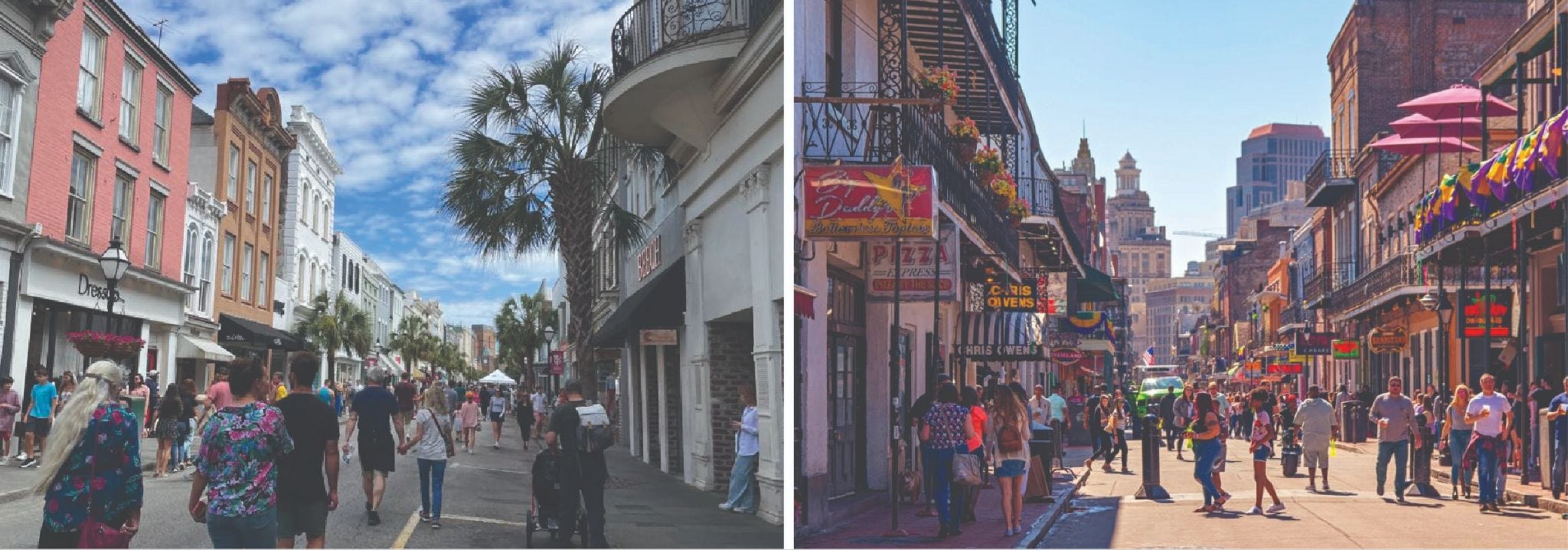
This is a sharp contrast to the suburban model that has dominated American housing for decades. As Wilk put it, “less is more.” When you live in a walkable area, you don’t need as much… fewer bedrooms, less storage, and fewer material possessions results in a streamlined life, where your time and money can be spent on hobbies or with loved ones. Your community becomes your most valuable asset: local shops, parks, and shared spaces help foster the connections that surpass material value.
The success of this lifestyle model depends on finding the right audience: people who have already rejected sprawl and are looking for something more intentional. These buyers aren’t being convinced; they’re being served. However, scaling this approach will require a broader mindset shift. Are people willing to give up elevators to save money? To live with one parking space… or none? To trade private amenities for public ones?
In cities like Charleston or New Orleans, this lifestyle is already normalized. Raleigh is on its way to catch up to its Southern neighbors.
Loft3 was, by the developer’s own admission, not without its challenges. “The project was not without a lot of headache,” one team member noted, reflecting on the many unknowns of constructing this building type at a small scale in the Southeast. However, these headaches are lessons for project teams to learn from, creating a practiced process to streamline future developments.
Loft3 is a prototype, a proof of concept that middle housing can work in Raleigh as long as it’s approached thoughtfully. With better floorplans, fewer cost burdens, smarter safety strategies, collaborative affordability efforts, and a willingness to rethink how we live, projects like this could become the foundation for a more connected, attainable city.
If you’d like to hear more from Steven Wilk on how he constructed this spectacular development, make sure to join our livestream tour and Q&A on Thursday, April 23rd at 12pm. We’ll see you there!
Julie Powers is a Bachelor of Architecture Student at NC State University, with an LAEP minor.
Additional graphic and illustration support was provided by NC State Undergraduate College of Design in Architecture major Brenna Belcher.

