

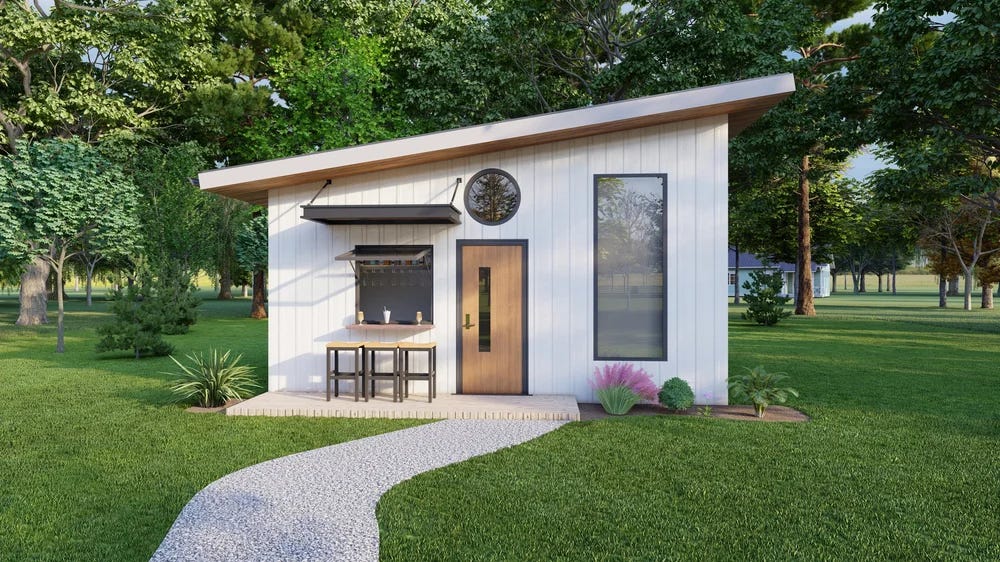
Across the country and throughout North Carolina, people are struggling with rising housing costs and population growth, coupled with the growing imperative to create more sustainable communities. In Raleigh, one of the most promising solutions is surprisingly small: Accessory Dwelling Units, better known as ADUs.
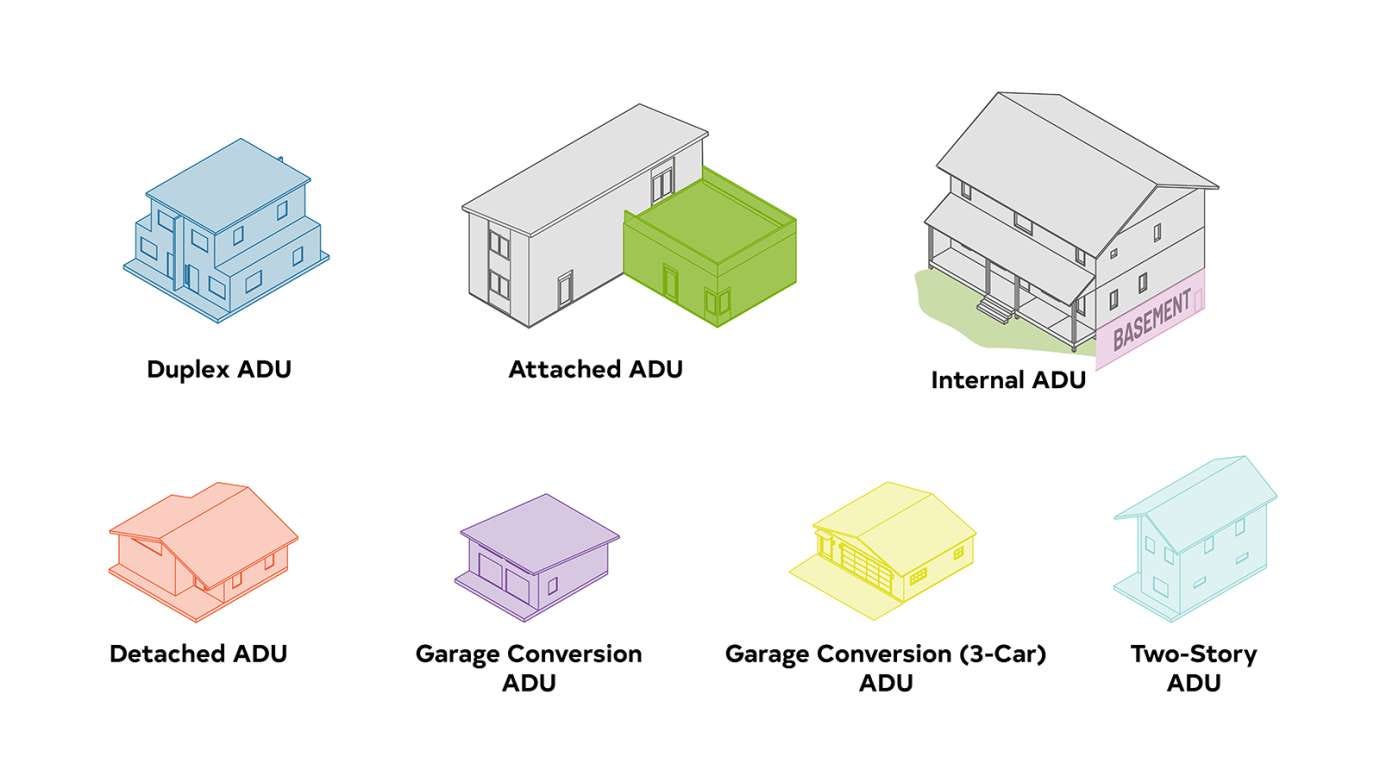
Sometimes called backyard cottages, granny flats, carriage houses, or garage apartments, ADUs are small, secondary homes on the same property as an existing residence. They can take the form of a detached backyard home, an apartment above a garage, an in-unit (often basement) conversion, or an addition attached to the primary house.
For decades, these kinds of homes were heavily restricted or outright illegal in Raleigh and many American cities. But Raleigh’s recent reforms have helped change that. Today, the city is becoming a leader in showing how ADUs can support affordability, sustainability, and neighborhood evolution, and possibly help welcome some of our neighborhood NIMBYs into the YIMBY movement.
ADUs can help people rethink what housing growth and new neighbors actually look like. They have the power to turn skeptical, even long-time homeowners into active participants in solving the housing shortage. While ADUs won’t solve the housing crisis on their own, they are an integral part of the solution.
Raleigh’s ADU Policy
In 2020, Raleigh adopted major zoning reforms that expanded where ADUs can be built, and simplified the process for homeowners interested in adding one to their property. The city now allows ADUs in many residential zoning districts, including areas traditionally reserved for single-family homes. In some designated transit corridors, homeowners may even be allowed to build two ADUs on a single lot.
The city’s reforms removed barriers that had historically made ADUs difficult to build. For example, Raleigh no longer requires additional parking for ADUs, allows multiple forms of ADU construction, and created a Fast Track program featuring pre-reviewed building plans to help streamline approvals. While these innovations aren’t without issue, ADUs are indeed being built.
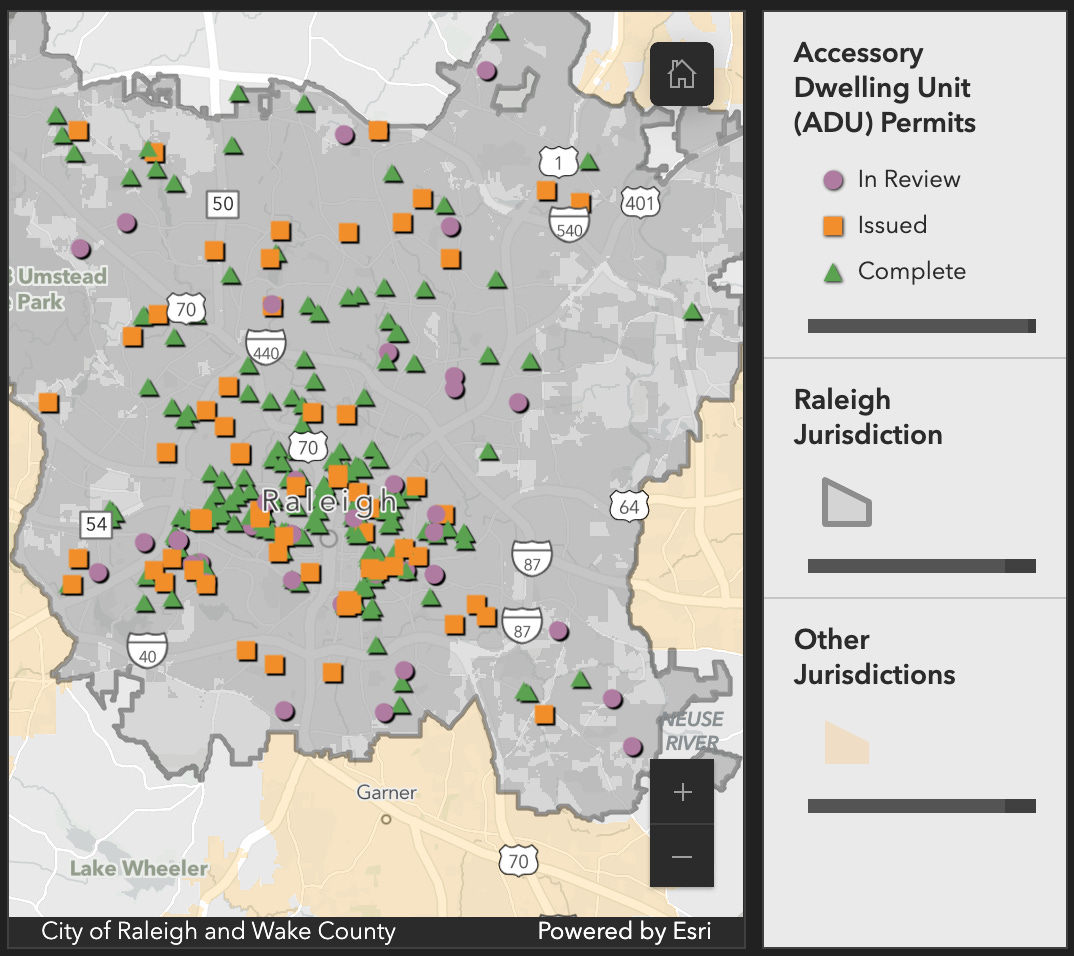
These policy changes may sound technical, but they represent a major shift in how we’re thinking about growth. Instead of concentrating all new housing into large apartment buildings or sprawling suburban development, Raleigh is embracing small-scale additions that fit naturally into existing neighborhoods.
By no means is this a silver bullet solution to our current housing crisis. But with ADUs, neighborhoods can welcome new residents while becoming more flexible, inclusive, and resilient.
ADUs are the Multi-Tool of Alternative Housing Typologies
For individuals in our area fortunate enough to already own a home, ADUs can create much needed flexibility. ADUs can house aging parents closer to their adult children, adult children closer to their aging parents, in-home caregivers, rent-paying tenants, and out-of-town guests. No one can deny that a family’s needs evolve over time, and ADUs are a great way to allow their property to evolve with them.
For renters, ADUs can create smaller and often more affordable housing options in neighborhoods where few apartments exist. This can be especially impactful in older neighborhoods that may already have good access to transit, education, and employment. For homeowners, ADUs can provide financial stability through rental income.
In cities, ADUs can generally increase housing supply without requiring major infrastructure expansion, because they’re built on existing lots that are already serviced by roads, sidewalks, utilities, parks, etc. In greenfield developments, the cost to add utility services can contribute to the costs of new housing overall.
The City of Raleigh has specifically highlighted the usefulness of ADUs in providing senior homeowners with more opportunity to age in place, saying: “[ADUs] provide aging homeowners the opportunity to move into a smaller, more accessible home in their backyard while retaining their larger, main house for family or renters. This is often referred to as ‘aging in place.’”
This level of flexibility was denied to homeowners before the recent reforms.
Sustainability Grows in the Backyard
ADUs are also one of the most environmentally sustainable forms of housing that cities can encourage. Their smaller size, in-town location, and proximity to existing infrastructure and services make ADUs a vital part of our sustainable development toolkit.
Smaller Homes, Smaller Footprints
The average ADU is significantly smaller than a conventional single-family home. While the median size of a new single-family home sold in 2024 was 2,210 square feet nationally, typical ADUs come in at between 450 and 800 square feet.
From an efficiency perspective, smaller home builds require fewer construction materials. Structurally, smaller homes require less energy to heat and cool, meaning that ADUs produce fewer emissions than single-family homes.
Reducing Sprawl
The zoning mandates implemented nationwide in the last century encouraged the development of neighborhoods that consisted exclusively of single-family detached homes. This inflexible system meant that new housing could only be accomplished by building ever outward, creating a pattern of sprawl.
When new housing is forced beyond the urban core, growth spreads into farmland, forests, natural spaces, animal habitats, and previously undisturbed lands. And it’s not just the land for the house and neighborhood itself that disturbs the natural environment. Fresh suburbia requires new roads, additional utilities, and expanded infrastructure, all of which take up previously unspoiled space.
If destroying nature weren’t enough, suburban development locks its residents into a lifestyle fully dependent on cars to access any non-home-based recreation, employment, services, or activities. Most suburbs were developed without any option for residents to utilize alternative modes of transportation, such as walking, biking, or transit.
In contrast, ADUs help cities absorb growth more sustainably by allowing more people to live within areas that are already served by infrastructure. Rather than forcing development farther away, ADUs create incremental housing growth close to jobs, schools, transit, and amenities.
Yes! In My Backyard!
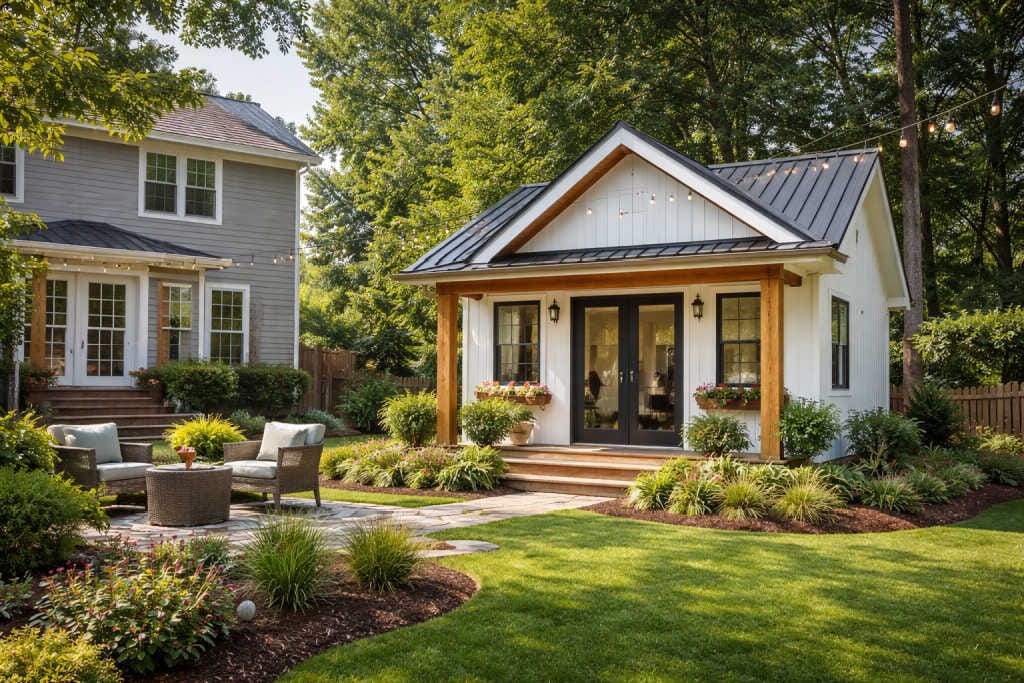
For many homeowners, supporting more housing abstractly can feel uncomfortable. People worry about parking, traffic, unfamiliar faces, noise, light, and the ever ill-defined “neighborhood character”. But ADUs make housing growth local, personal, and palatable; backyard cottages aren’t built by large-scale developers, they’re built by our neighbors, and built by us.
When you or your neighbor builds an ADU, the whole neighborhood is shown that growth doesn’t mean destruction. Likewise, our nation’s housing shortage stops being a massive, intractable issue and instead becomes a challenge that we can help solve by saying yes in our own backyards.
Join Us for an ADU Training and Tour on June 6!
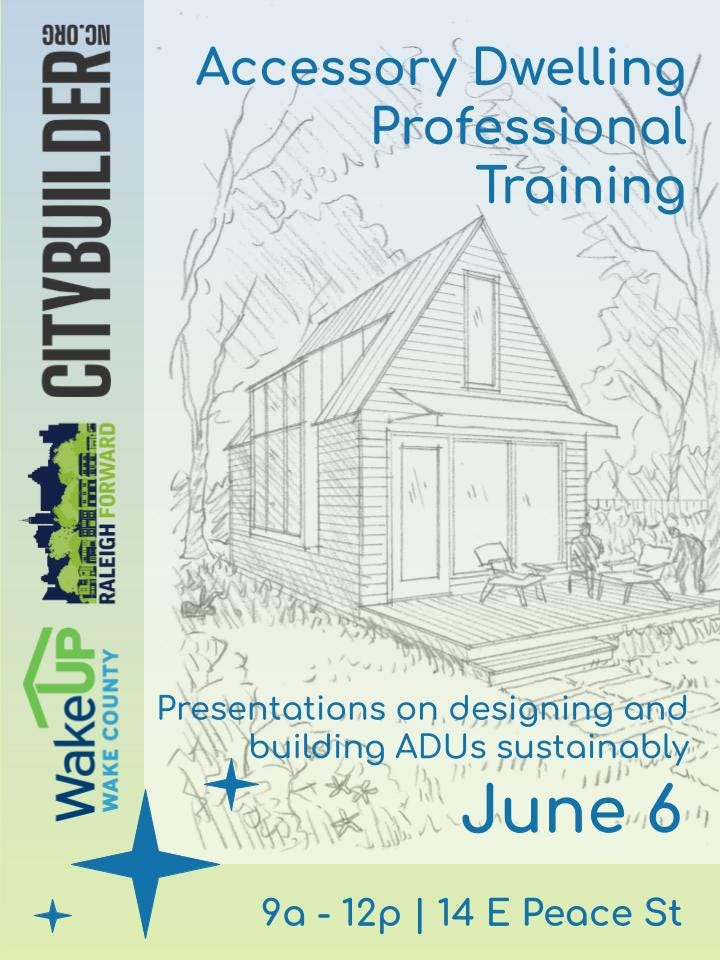
CITYBUILDER is thrilled to be partnering with WakeUp Wake County and RaleighForward, through an Impact Partner Grant from the City of Raleigh, to host an ADU Professional Training and Sustainability Home Tour. For anyone interested in learning more about ADUs in Raleigh, RSVP and plan to join us on Saturday June 6. These events are free and open to both professionals and members of the public.
For many people, seeing ADUs in person is transformative. These homes are often beautifully designed, compact, efficient, and seamlessly integrated into existing neighborhoods. They demonstrate that adding housing can enhance communities rather than diminish them.
Raleigh’s ADU reforms are about more than backyard cottages. This policy represents a new way of thinking about growth that is incremental, sustainable, people-centered, and adaptable. Raleigh is proving that ADU reform helps build a more flexible future, one small home at a time.
Charlotte Chapman is the Executive Administrator of CITYBUILDER.