

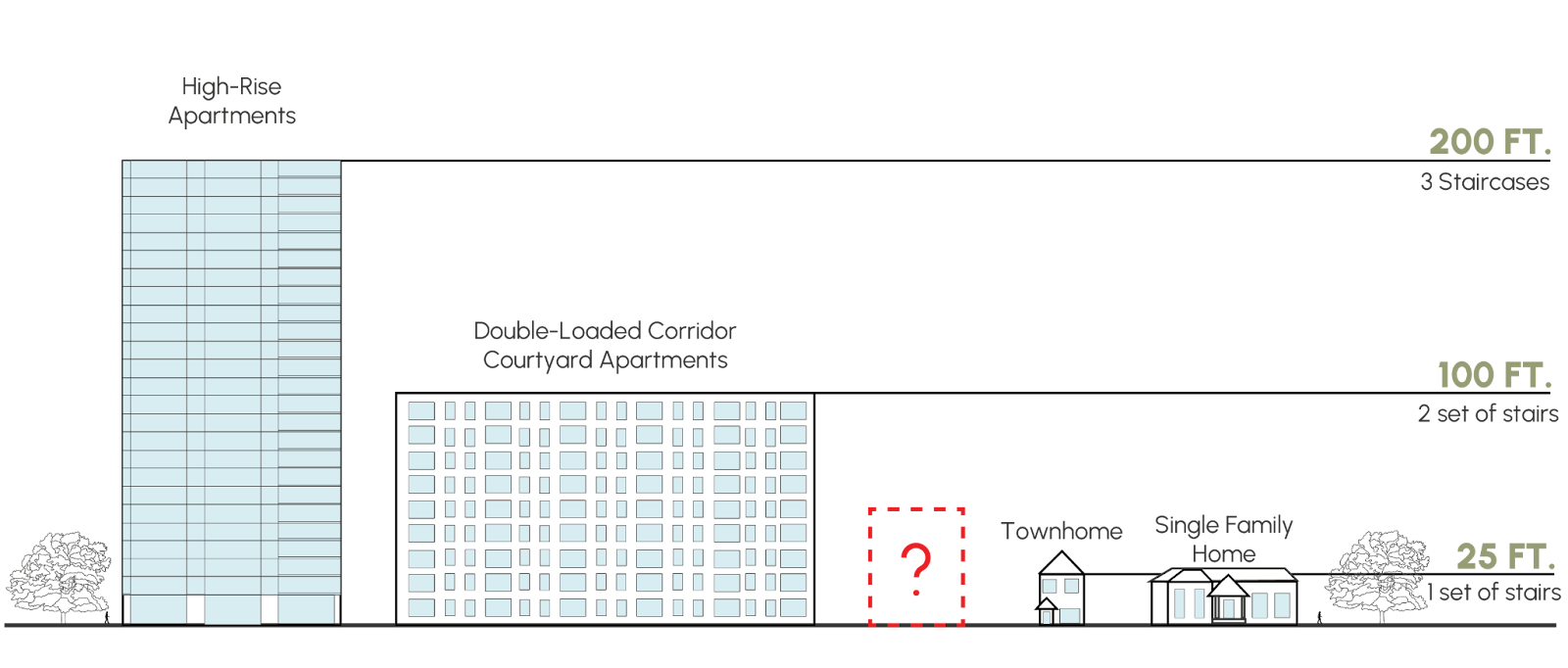
North Carolina’s cities are expanding, yet most new housing today remains clustered at two extremes: very low-density subdivisions or large multifamily apartment towers. Neighborhoods do not have a way to add smaller, mid-scale buildings that would fit comfortably within existing blocks. This missing segment limits infill development, reduces feasible housing sites, and restricts architectural and urban design options.
Other American cities have begun filling this gap by reforming their building codes to allow single-stair multifamily buildings above three stories. These policies enable mid-rise buildings on smaller lots while applying clear safety measures, including sprinkler systems, two-hour stair enclosures, strict distance limits from unit doors to exits, and reduced floor areas.
This article compares the various technical requirements adopted by jurisdictions across the country, and evaluates how NC Senate Bill 492 would place North Carolina within this national trend. The objective is to provide a structured view of what works, what varies, and how these lessons can inform a safe and functional approach for the state.
Senate Bill 492: NC’s Single-Stair Building Code Reform
To put it simply, SB 492 would amend the North Carolina State Building Code to authorize a single stairway to be used as means of egress in certain multifamily residential buildings. The bill would allow for buildings up to 8 stories total and 7 stories above the grade plane to have only one exit staircase. This amendment stipulates a variety of safety measures for the several different configurations of single-stair buildings:
Mid-rise buildings, which would be up to 8 stories and no more than 7 stories above grade would have the strictest restrictions: no more than four apartment units per floor, fire ratings of 2-hour fire-resistance for the egress staircase, and an NFPA 13 rated sprinkler system throughout the building.
Low-rise buildings, which would be up to 3 stories and no more than 2 stories above grade, would not allow more than six units per floor and would require either a 1-hour fire-resistance construction OR an NFPA 13 sprinkler system.
There are other requirements that apply to buildings of both heights, such as requiring exits to either lead directly outdoors, or be pressurized. Additional measures mandate maximum travel distances from the unit’s door to the building exit, and other egress path requirements designed to keep people safe.
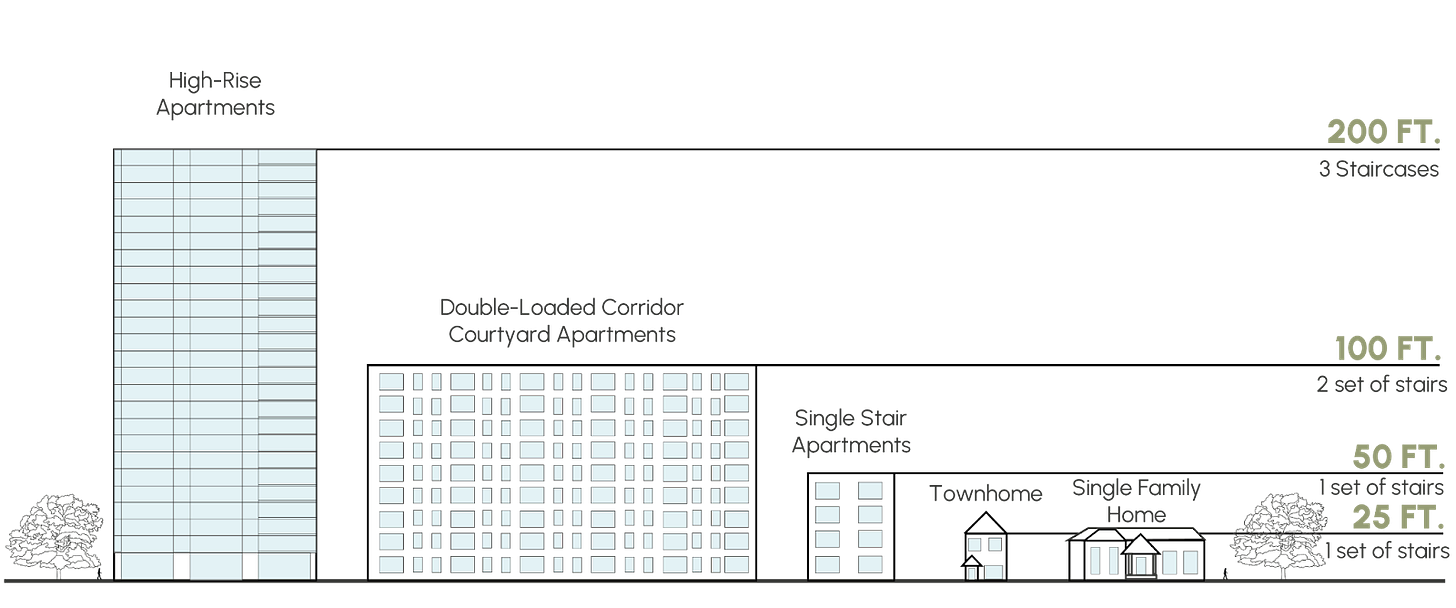
Where single-stair apartments fit within NC’s vertical landscape of housing typologies.
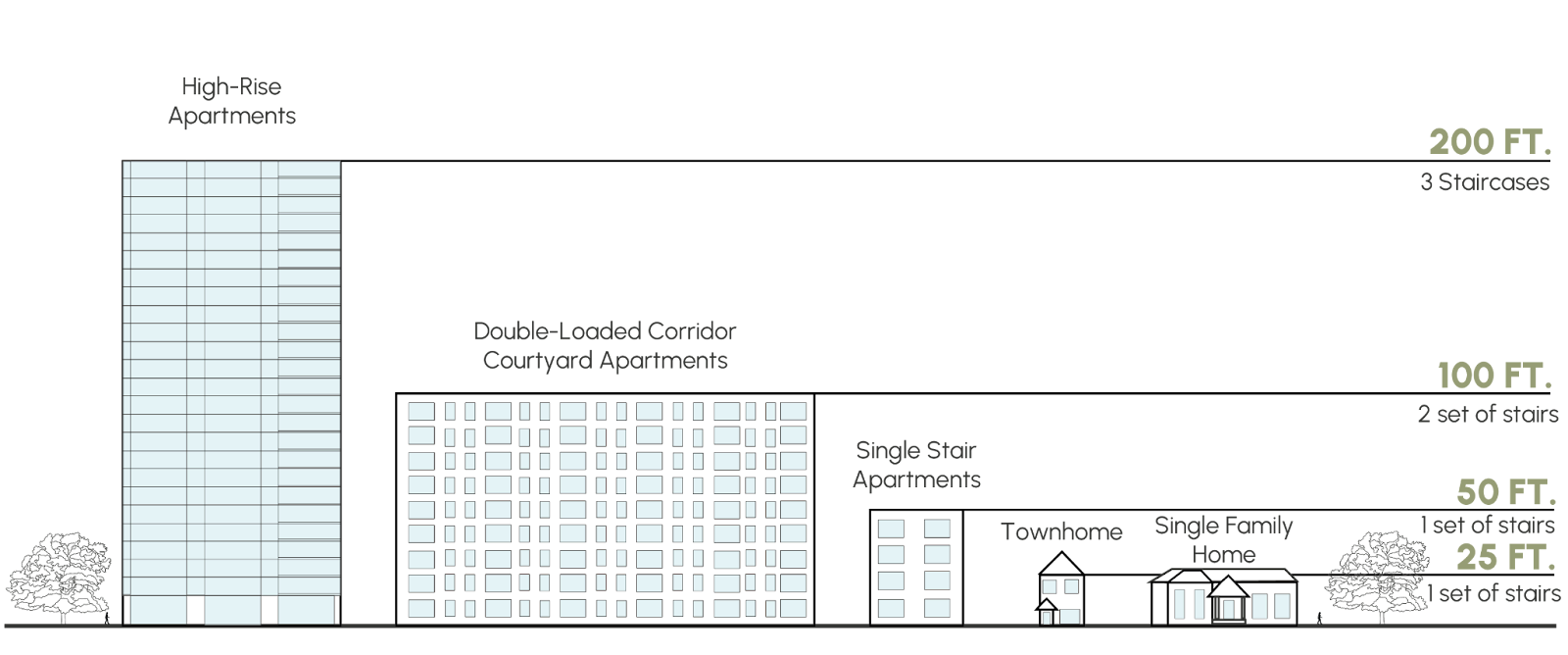
Single-stair buildings provide the opportunity for small lots or infill lots to be used for a mid-sized form of residential development. However, the International Building Code doesn’t permit the construction of single-stair apartments, citing outdated fire safety concerns. In reality, single-stair buildings have similar fire safety statistics to other building types. Many states that have legalized single-stair buildings have implemented other fire safety regulations, requiring sprinkler systems, or implementing a maximum distance from fire exits.
There’s a wave of single-stair legislation across the U.S., so how can interested municipalities enact safe policies based on what has worked in other locations?
What’s Legal in North Carolina Today?
Currently, North Carolina, along with the majority of other U.S. states, follows the International Building Code (IBC) when determining code restrictions for construction of residential dwellings. Here are the key takeaways of what’s legal right now in regards to single-stair construction:
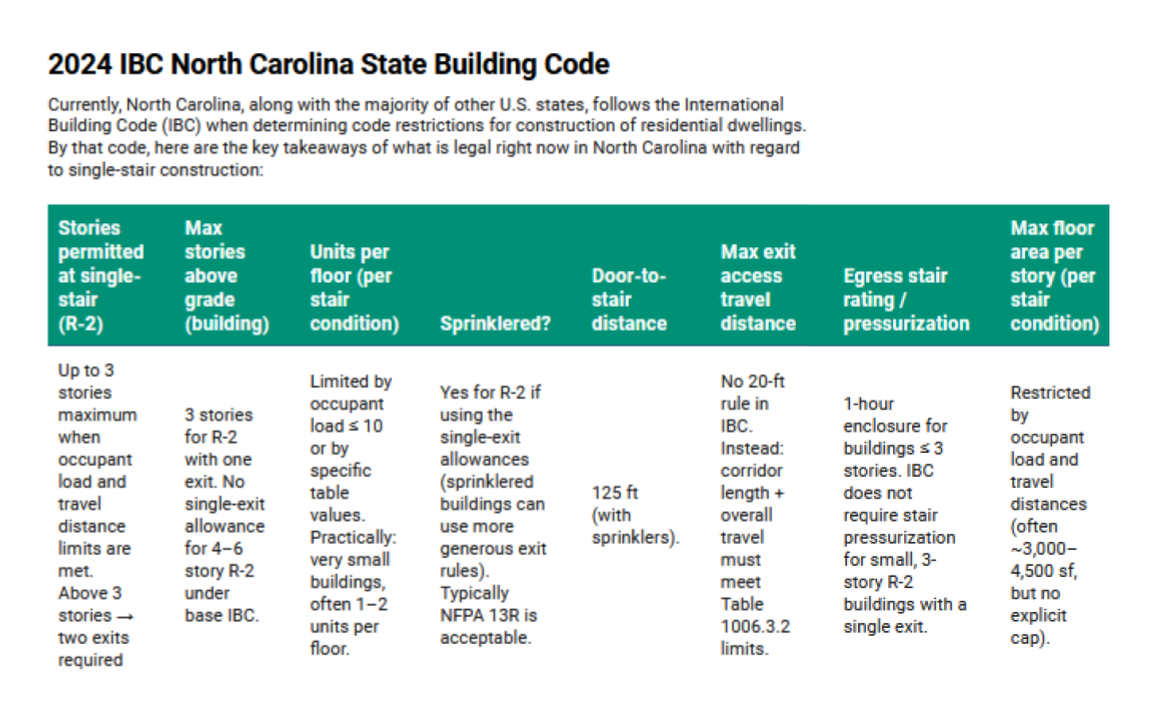
These rules only apply to small residential buildings with low occupant loads, such as condos, townhomes, single-family homes, or apartment buildings. Currently, buildings 4 stories or higher with 4 or more units per floor are not permitted under the IBC (without amendments to local code language).
Single-Stair Legislation Across the Nation
A number of jurisdictions in the United States have already passed bills to legalize small-scale apartment buildings with a single exit stairway. Below, we compare what single-stair legislation in other American cities allows, and where NC’s proposed SB 492 fits in.
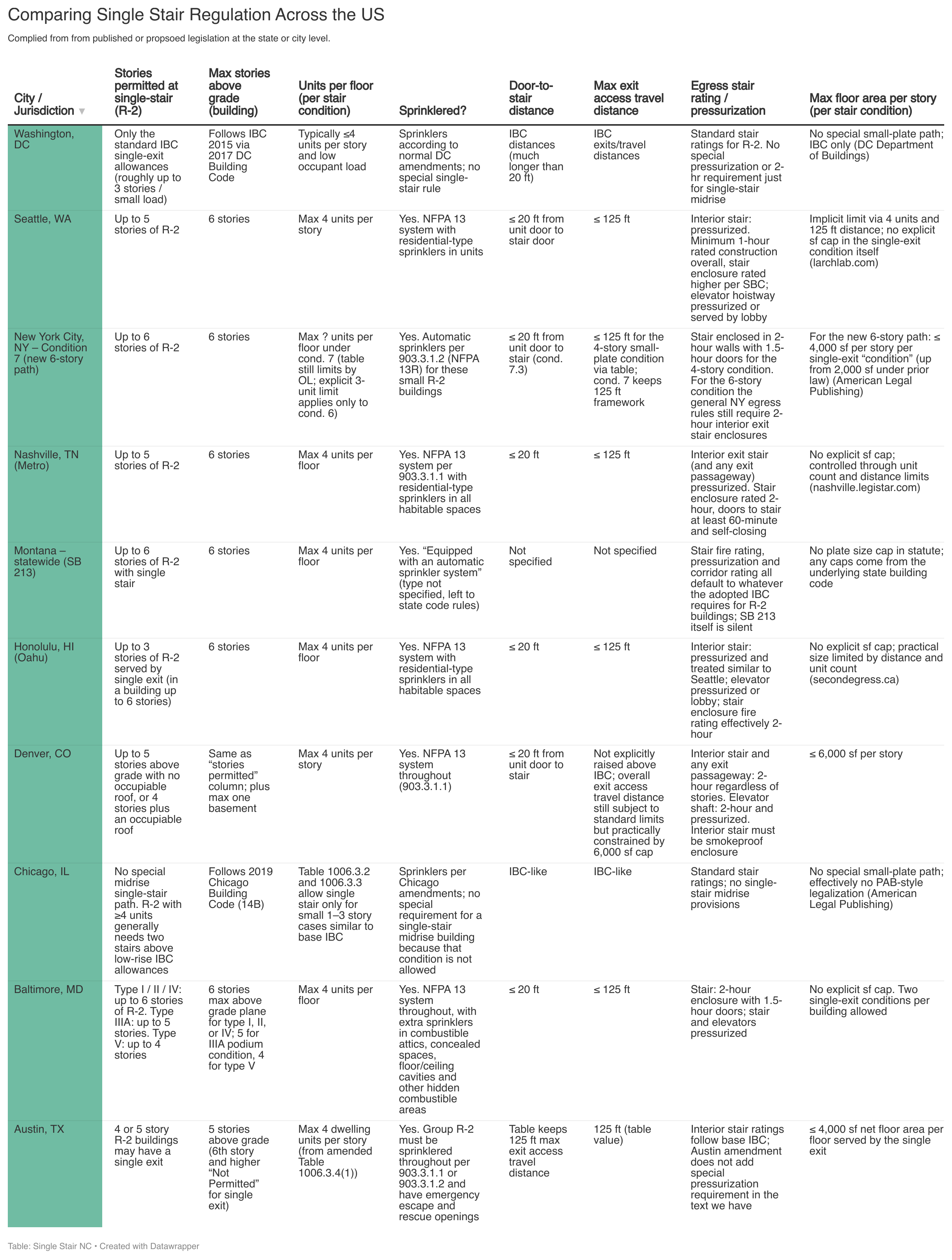
Here are some key takeaways from the chart:
Single-stair buildings are all sprinklered. All cities and states that have adopted single-stair buildings require sprinklers throughout the entire structure to improve safety precautions. This is different from townhomes and single-family homes, which usually don’t require sprinklers due to their small scale.
Construction materials determine how tall a single-stair building can be. “Construction type,” which refers to the material makeup of a building structure, determines how flammable the building is in the case of a fire. More flammable building types can be restricted to lower floor allowances and shorter heights to improve safety.
Single-stair laws increase the required fire rating of stairwells. The IBC requires the walls of emergency exit stairwells in non single-stair buildings to be 1-hour fire rated. Many single-stair laws require stairwells in single-stair buildings to be 2-hour fire rated, increasing the protection of occupants exiting the building.
Allowed egress distances are shorter in single-stair construction. Most single-stair laws restrict the distance from unit doors to stairwell doors to 20 feet or less, and restrict overall egress distances to 125 feet or less. This 20 foot unit door to stairwell distance is drastically shorter than the 125 feet that the IBC allows for standard apartment buildings. By minimizing travel distances inside the building, single-stair apartment laws reduce the time during which occupants could inhale smoke as they navigate through a hallway to the stairwell.
Floor area and units per floor are limited in single-stair buildings. Most single-stair laws limit the number of units per floor to four units, lessening occupant loads on the exit staircase and preventing crowding in the event of an emergency.
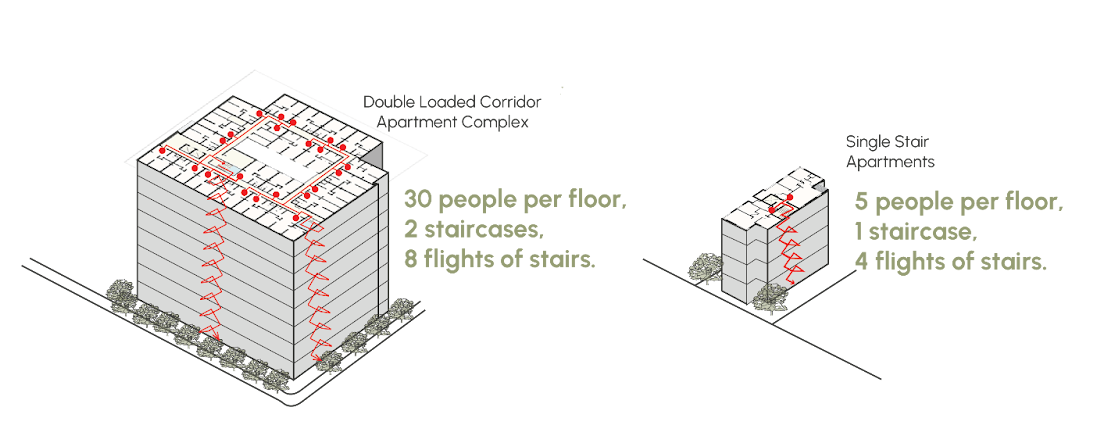
We often think that adding more stairs to apartment buildings makes them safer, yet existing requirements are quite unspecific when it comes to large-scale, double-loaded corridor buildings. This makes the occupant load per staircase significantly higher in large apartment complexes compared to single-stair apartments.
Single-Stair Buildings Make Better Public Spaces
When we walk down the street in American cities, we’re often greeted by walls of concrete, private storefronts, and parking garages. These building forms discourage connection and walkability; they shove people next to roads and don’t provide the opportunity to wander through plazas, gardens, and passageways.
European cities often have small pedestrian pathways that wind through buildings and courtyards, opening up to gardens, patios, plazas, or small shops. This promotes walkability and connection through place-making; it gives people a sense of wonder and discovery during their walk, while providing moments of pause throughout the journey to rest or explore.
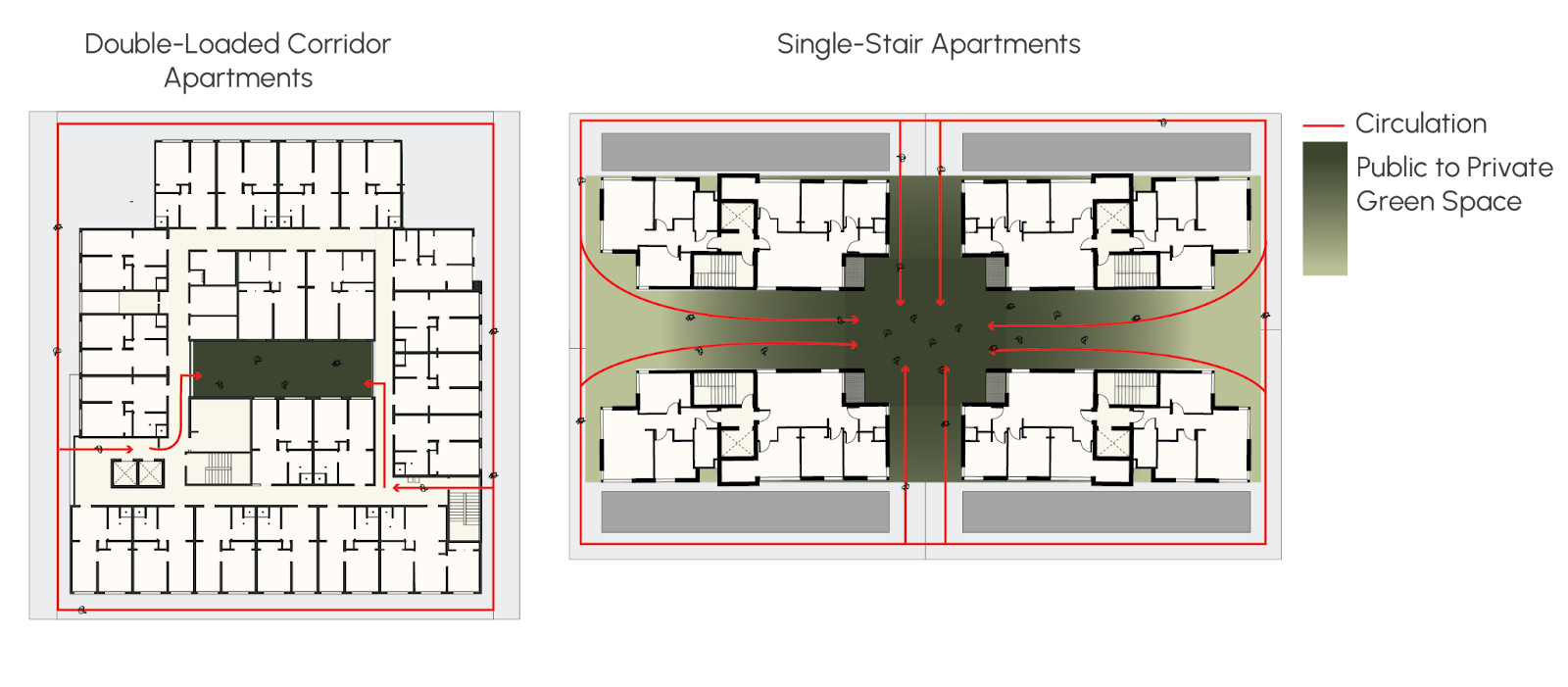
Single-stair buildings provide an opportunity to create these semi-public plaza or garden spaces. The arrangement of the buildings allows for a shared “backyard”, where all residents can partake in a peaceful outdoor area. Connected sidewalks allow neighbors to access these spaces, similar to a neighborhood park, yet all residents are in walking distance.
Lessons from Denver & NYC
A number of cities have seen a tremendous amount of success allowing single-stair apartment buildings in their local code. Here are a few of their experiences:
Denver
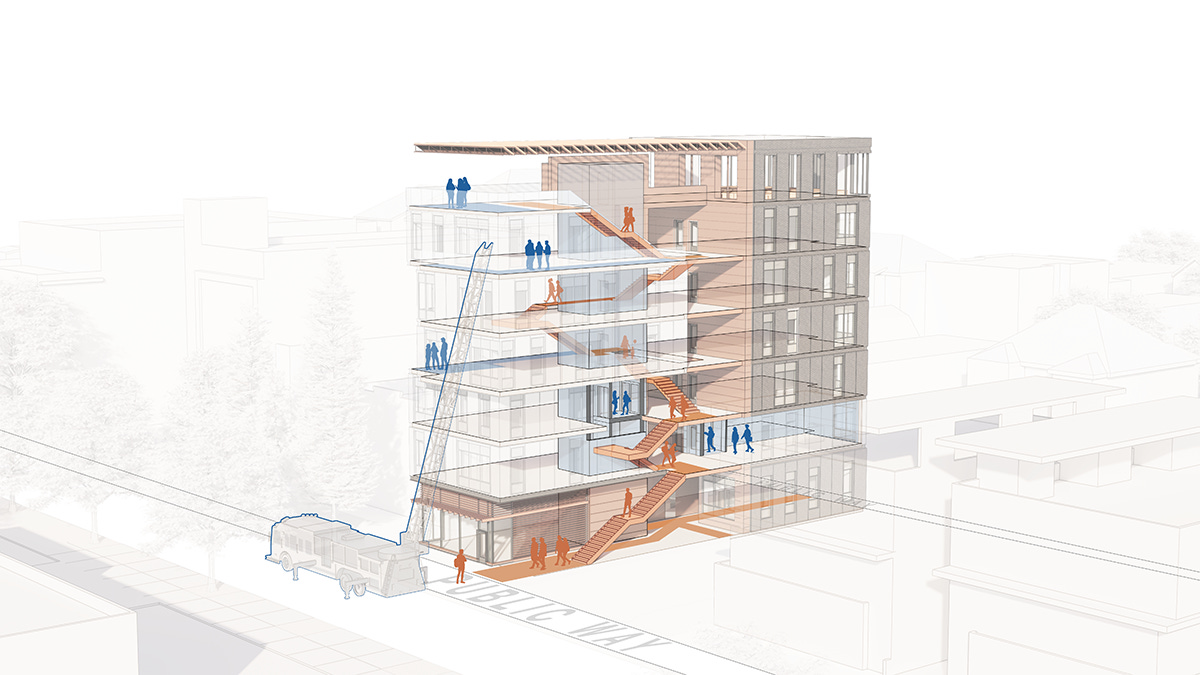
Use of an occupant evacuation elevator provides additional means of egress, while maintaining the effectiveness of single-stair buildings. An elevator must be included in the building per the ADA (Americans with Disabilities Act), and one prototype building has found a way to make better use of that valuable space.
NYC
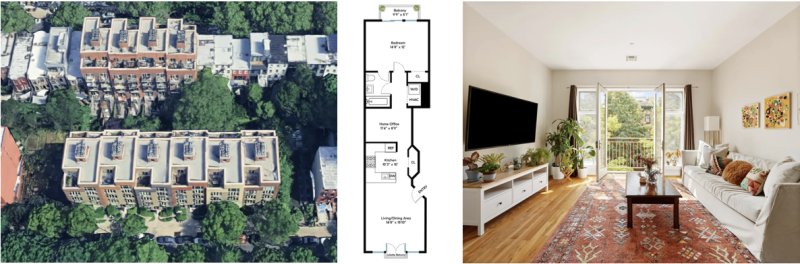
New York City’s unusually high height limits for single-stair buildings allow developers to meet market-rate demand while preserving open space and traditional urban fabric.
North Carolina is Ripe for Reform
Single-stair reforms across the country demonstrate that mid-scale multifamily housing can be legalized while preserving clear life-safety standards. Although each jurisdiction uses different thresholds for height, floor area, and construction type, the most common elements are consistent. Buildings are fully sprinklered. Egress paths are short. Stair enclosures receive higher fire-ratings. Unit counts per floor are capped. Together, these rules form a predictable and enforceable framework.
North Carolina’s proposed Senate Bill 492 follows this general structure, but its story height limits and construction-type allowances place it among the most ambitious reforms. As cities in the state evaluate the bill, the experiences of places like Seattle, New York City, Denver, Nashville, and Baltimore offer useful guidance. Their policies show what has worked, what has required adjustment, and how regulators have balanced safety with the need for new housing forms.
As advocates for our local municipality, we support the push to make single-stair housing legal, safe, accessible, and affordable to all cities in the United States (and Canada!). The same places that we take our families to visit on vacation can exist here: walkable, comfortable neighborhoods, with destinations and moments of wonder all throughout the journey.
Julie Powers is a Bachelor of Architecture Student at NC State University, with an LAEP minor. Additional graphic and illustration support was provided by NC State Undergraduate College of Design in Architecture major Brenna Belcher.


