

Here at CITYBUILDER, we write a lot about “Missing Middle Housing”, a broad spectrum of smaller-scale multifamily building types that occupy the middle ground between single-family detached homes and large apartment buildings.
The term doesn’t perfectly map onto Census-defined categories, which classify many rowhouses as “single family attached” and many larger “middle housing” apartments as buildings with 5-50 units. In my opinion, the core of “missing middle housing” are “plexes” — two, three, or four flats on a single city lot.
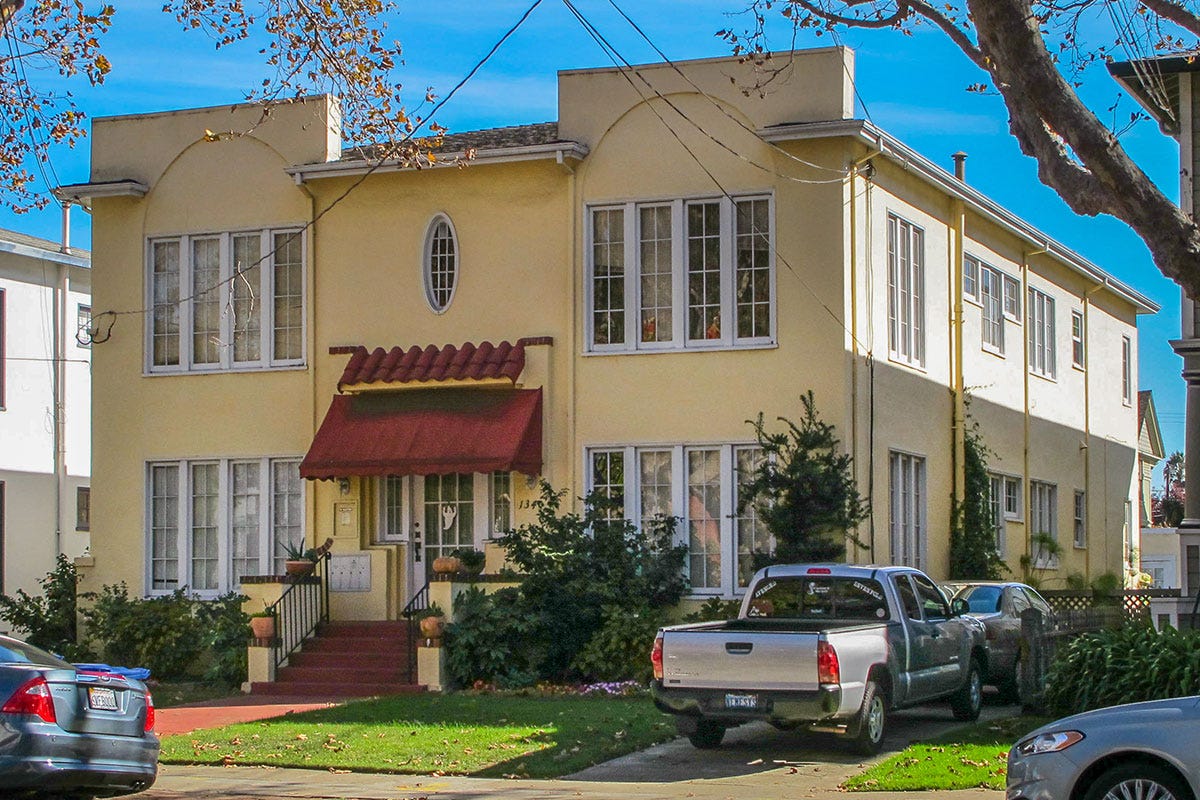
Small apartment buildings like these line the side streets of most of America’s walkable urban neighborhoods: two- and three-flats in Chicago, Polish flats in Milwaukee, three-deckers in Boston, or brownstones in New York. These human-scale structures add both density and variety to city streets, fit in well among both houses and apartments, accommodate every household type, and offer residents easy access to the outdoors.
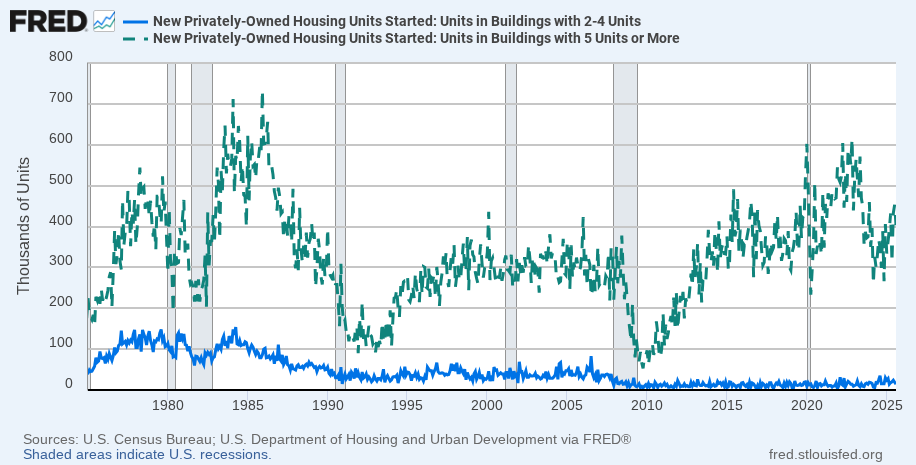
Yet despite their benefits, census data show that plexes have been a relatively small share of all multifamily construction in the postwar era, and have almost evaporated over the past generation. As recently as the early 1970s, more than one in four multifamily units were built in small buildings (structures with 2-4 units). Even during the mid-1970s recession, small buildings produced more than ten times as many units as they do today. In the stronger years of the 1970s, they delivered fourteen times as many units as today.
