

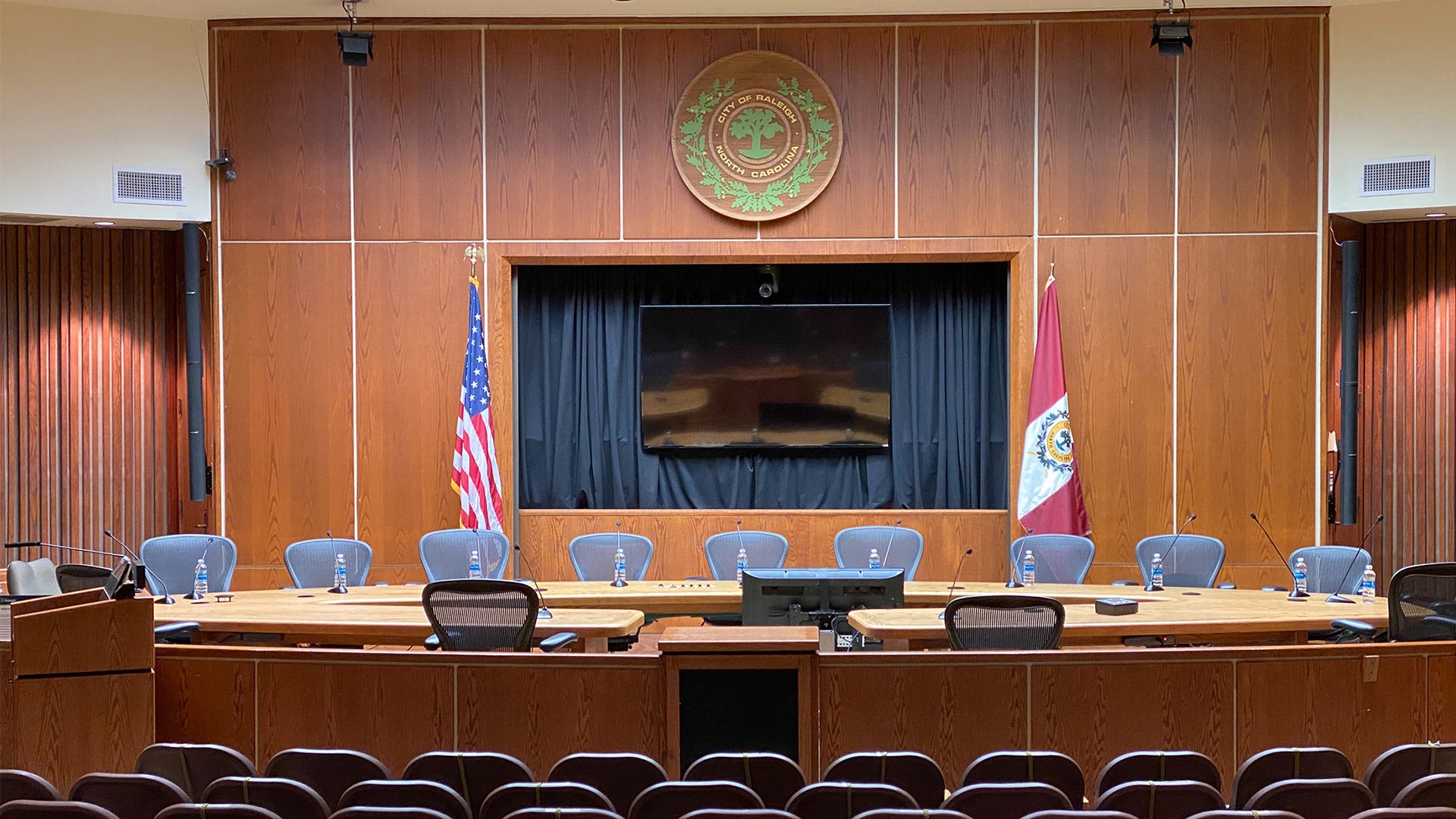
Today, Raleigh City Council will hold a public hearing on the proposed 2026 Housing and Transportation Bond referendum packages. Let’s dive right in:
What’s in the Bond Proposals?
The current draft that Raleigh City Council will be looking at today proposes:
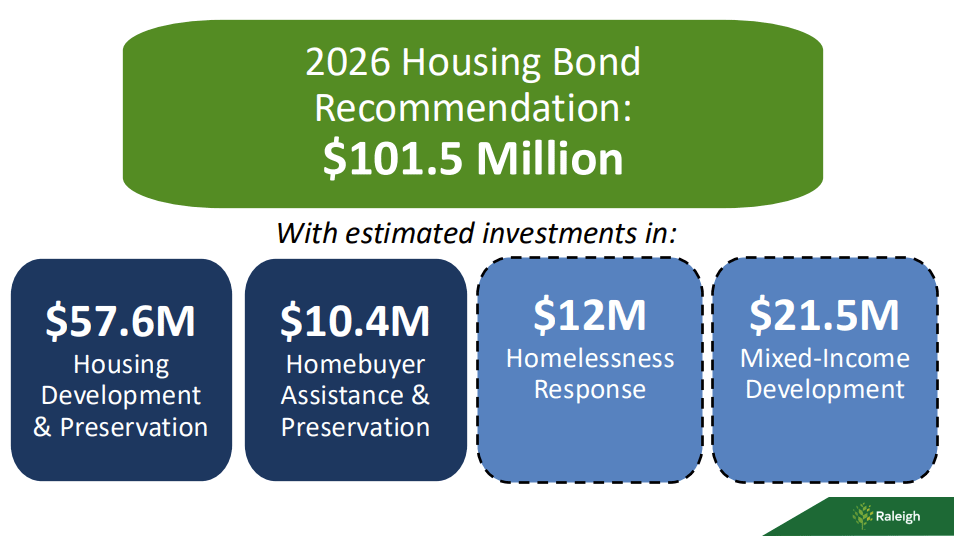
$101.5 million for affordable housing investments
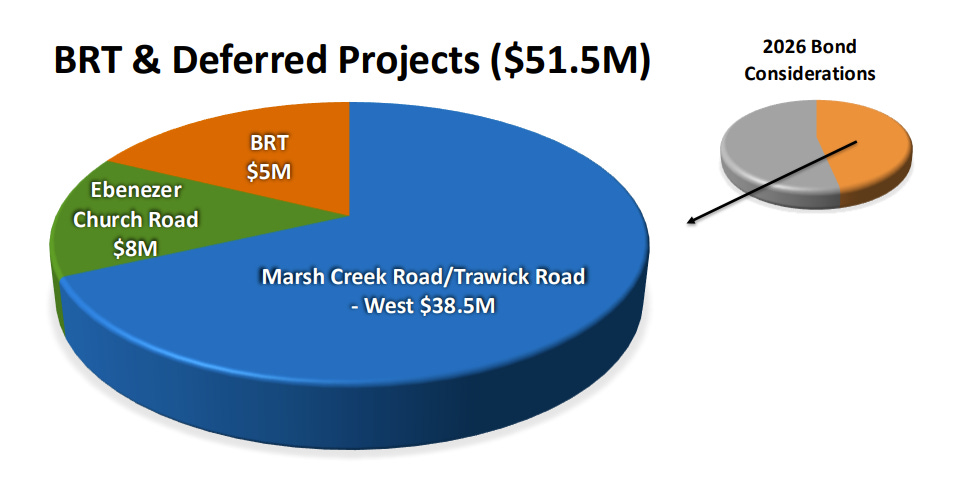
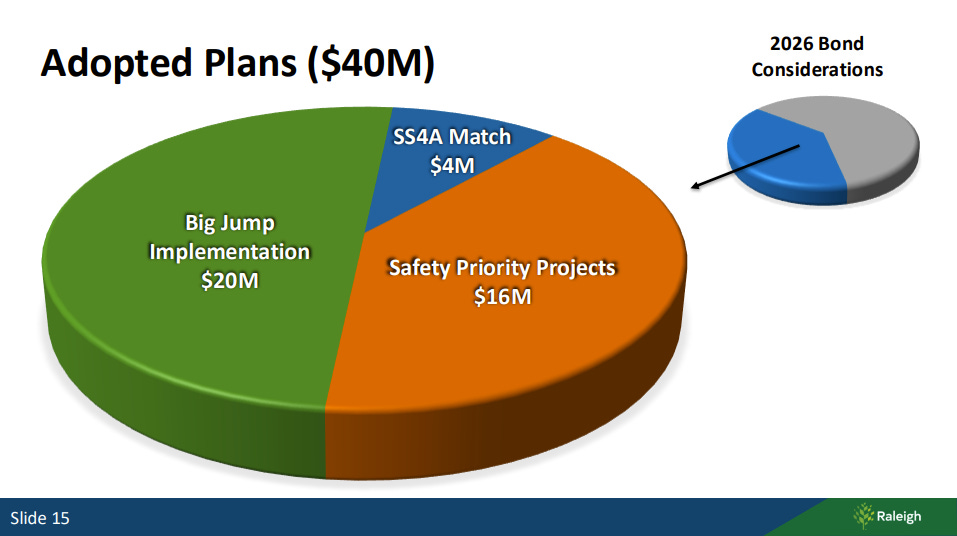
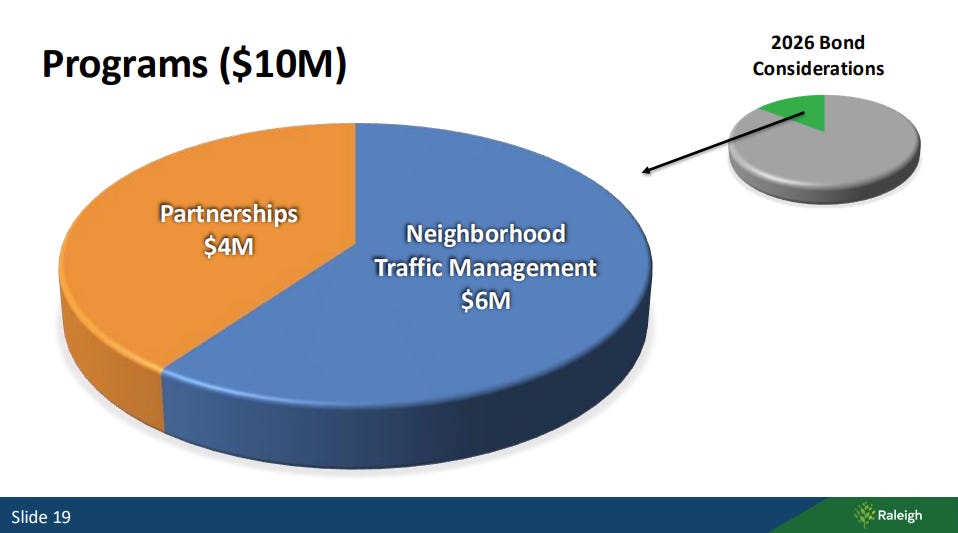
$101.5 million for transportation and mobility improvements
According to the proposed ballot language, the bond package at its current size is not expected to increase the city’s property tax rate dedicated to debt service.
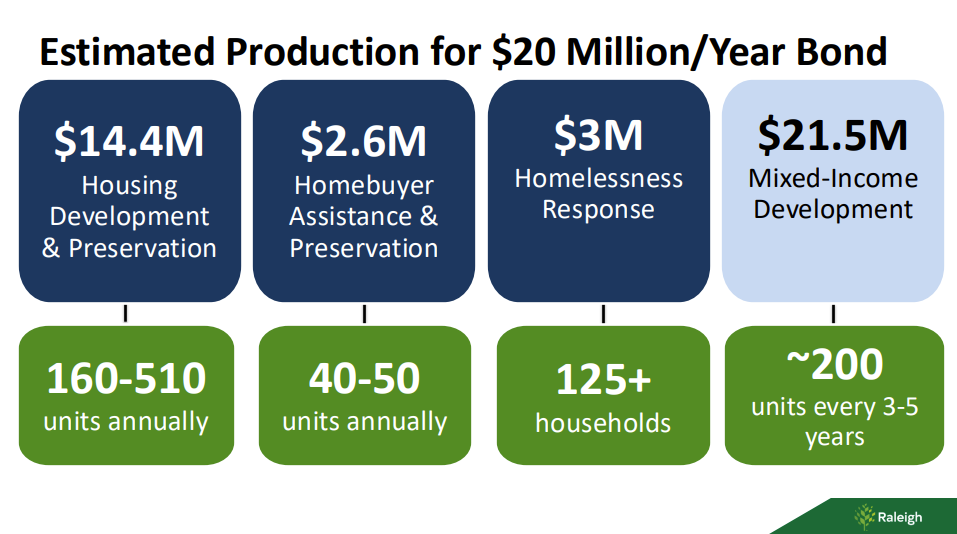
The housing portion would fund affordable housing development and preservation, homebuyer assistance, homelessness response, and a mixed-income revolving loan fund designed to attract additional outside investment and accelerate housing production.
The transportation portion moves beyond just traditional road spending, to include:
sidewalk expansion
bike infrastructure
Vision Zero safety projects
neighborhood traffic calming
greenway and connectivity improvements
Bus Rapid Transit related infrastructure
implementation funding for Raleigh’s Active Mobility Plan “Big Jump”
That “Big Jump” implementation alone includes more than 5 miles of new sidewalks and 50 miles of high-comfort bikeways over five years.
CITYBUILDER supports moving the bonds forward.
Some advocacy groups are now arguing the housing bond should be substantially larger, and are encouraging Council to delay or rethink the proposal. This is the wrong approach.
Raleigh absolutely should continue pushing for larger housing investments over time. The city will likely need additional housing resources in the future as the affordability crisis continues.
But there is also a recurring pattern in Raleigh politics where the moment a meaningful housing proposal becomes politically achievable, some groups pivot from demanding action to arguing the proposal should be bigger, slow down, or worse. We saw this same dynamic during the 2020 housing bond debate, when some groups argued the affordable housing bond should be larger, only to later oppose the bond entirely.
Thankfully, voters moved forward anyway, with 72% voting FOR the last bond.
Raleigh Forward recently published a clear explanation of why the question facing Council is not simply “how big can the bond be,” but how Raleigh should structure long-term housing investments in a way that can actually “be deployed effectively and sustained over time”:
RaleighForward on Balancing Urgency With Long-Term Fiscal Stewardship
In recent weeks, news outlets have reported that several advocacy groups are urging Raleigh City Council to consider a significantly larger affordable housing bond for the November 2026 ballot. Some suggest a bond closer to $200 million, which is roughly double the $101.5 million housing bond currently under discussion as part of a broader capital package that also includes transportation investments.
The motivation behind these calls is understandable. Raleigh’s housing affordability challenges have intensified alongside rapid population growth, and the demand for assistance continues to outpace available resources. But the central policy question facing Council is not simply how large a housing bond should be. The more consequential issue is how Raleigh should structure its housing investments so they can be deployed effectively and sustained over time.
…
Raleigh’s housing challenges are real and growing, and the City has an important role to play in addressing them. But effective housing policy requires more than large funding commitments. It also requires a financing strategy that aligns with how housing development occurs. The steady state bond approach under discussion represents an effort to enhance fiscal discipline as Raleigh deals with the same fiscal stress other cities are facing due to macroeconomic headwinds, not to mention state and federal budget cuts. Not only is this approach fiscally sustainable, but a more frequent, predictable investment cycle also allows developers, staff, and funding partners to plan more effectively. Within that framework, Council retains flexibility to adjust the size and structure of each housing bond. However, the larger goal remains: to implement a bond financing strategy that is not only ambitious and more effective, but predictable and durable enough to sustain progress over the coming decades.
Dive deeper into the housing bond components over at RaleighForward, where this was originally published.

Transportation is Affordability Infrastructure
Affordability is not just about housing production in isolation. Transportation costs matter too.
For decades, America’s answer to affordability has been “drive until you can afford housing.” But that model simply shifts costs from rent to transportation. Families end up spending thousands more per year on cars, fuel, insurance, maintenance, and long commutes.
Safe sidewalks, bike connections, transit infrastructure, and walkable communities are affordability infrastructure too. CITYBUILDER believes that walkable urbanism is how we build a sustainable future. This is part of why we support Raleigh’s current combined housing and transportation investment approach.
A city cannot seriously address affordability while ignoring transportation costs, unsafe streets, disconnected sidewalks, or the lack of mobility options outside of driving everywhere.
The reality is that housing progress in Raleigh has always depended on broad coalitions. Pro-housing advocates, transit supporters, environmental groups, urbanists, neighborhood organizers, affordable housing providers, and mobility advocates all need each other if we want to build a more affordable and connected city.
Splitting these coalitions apart over an “all or nothing” strategy risks ending up with neither.
This bond package is not a permanent solution to Raleigh’s housing crisis. But it is real funding for real projects that can move forward this fall.
Today’s public hearing is where City Council decides whether these bonds move forward to voters this November. So those of us who support more housing and better mobility infrastructure need to be visible today.
Public Hearing Information
📍 Raleigh City Council Chambers, 222 W. Hargett St.
🗓️ Tuesday, May 19th
⏰ 1:00 PM
CITYBUILDER encourages supporters to email City Council in support of the Housing and Transportation Bonds and to attend the hearing in person if possible. Wear green, or throw on your CITYBUILDER or YIMBY gear so supporters can easily identify each other in the room.
More housing is good. Building together is better.