North Carolina Needs More Housing Options
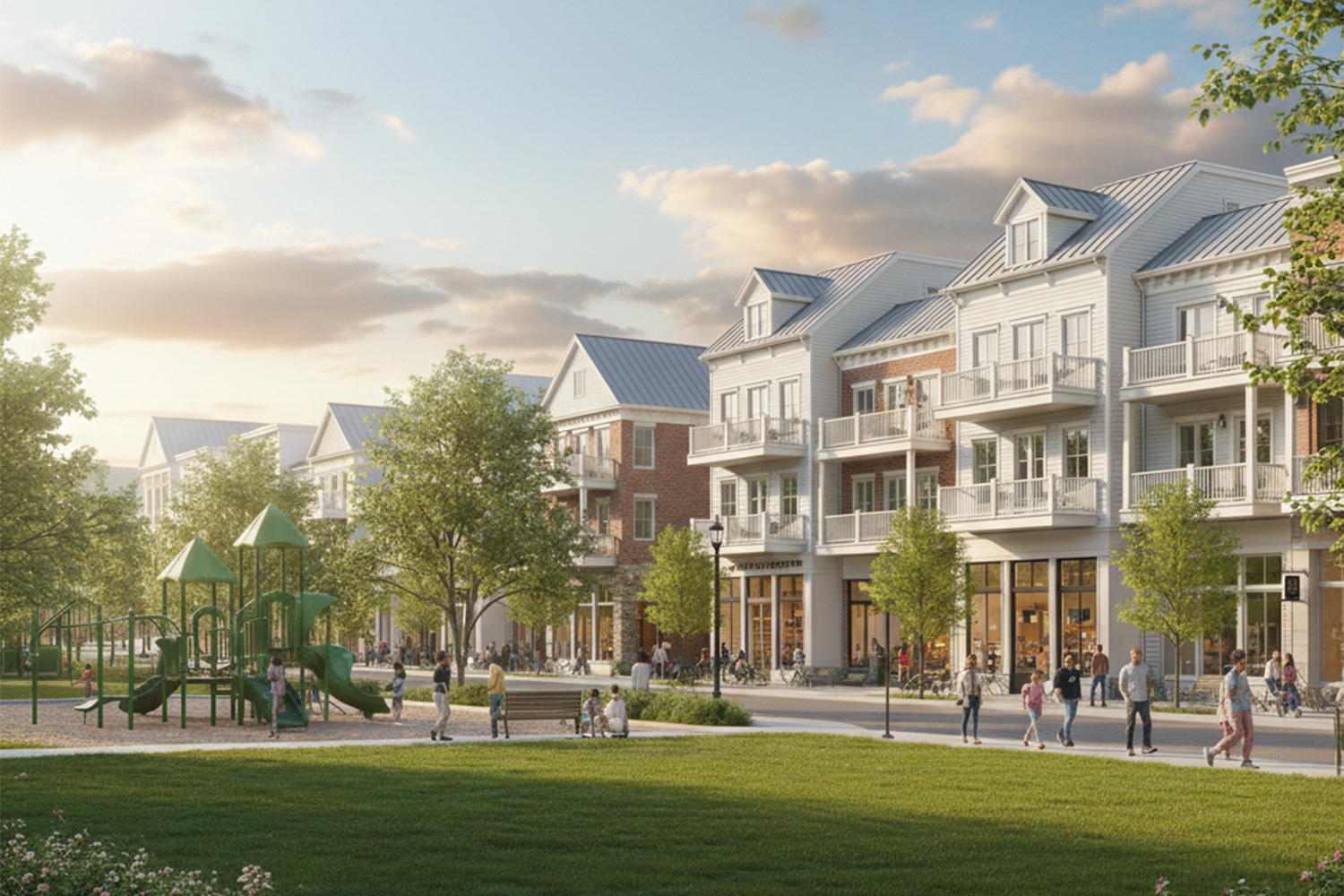
NC is growing fast, but we’re not building enough homes that people can actually afford. Because of this, the state has a major housing shortfall. Rents and home prices keep rising, and in many communities the only homes getting built are large apartment complexes or detached suburban houses. What’s missing is the middle: smaller apartment buildings that fit into neighborhoods, support walkability, and create more family-sized homes. Across the country, cities and states are beginning to revisit outdated building rules that make this kind of housing difficult or downright illegal to construct. North Carolina now has a chance to be part of that movement. The basic idea behind single-stair buildings is simple: they’re apartment buildings, up to six stories tall, built around one main staircase instead of the (legally mandated) two. They still use modern life-safety features and, yes, they have an elevator.
What Single-Stair Housing Actually Is
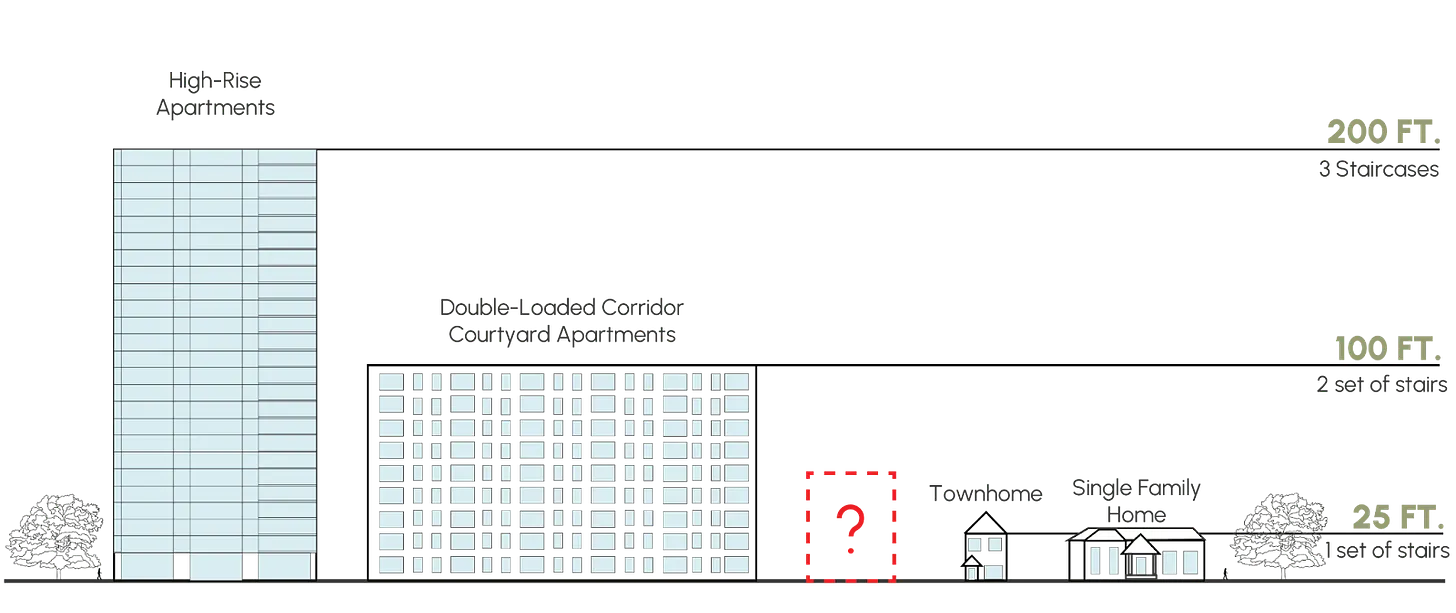
For many people, the phrase “single-stair” is unfamiliar, and sounds more unusual than it really is. In cities around the world, these small to mid-sized apartment buildings are built around one protected stair. Most apartments and condominiums today are legally required to have two staircases, which leads to long hallways, minimal light, and tall towers. Single-stair apartments are modern apartment buildings: they include elevators, sprinklers, fire-rated hallways and doors, and other code-required safety features. The point of legalizing them isn’t to reduce safety. The point is to make it possible to build apartment buildings that are smaller, simpler, and better suited to neighborhoods across North Carolina’s cities and towns.
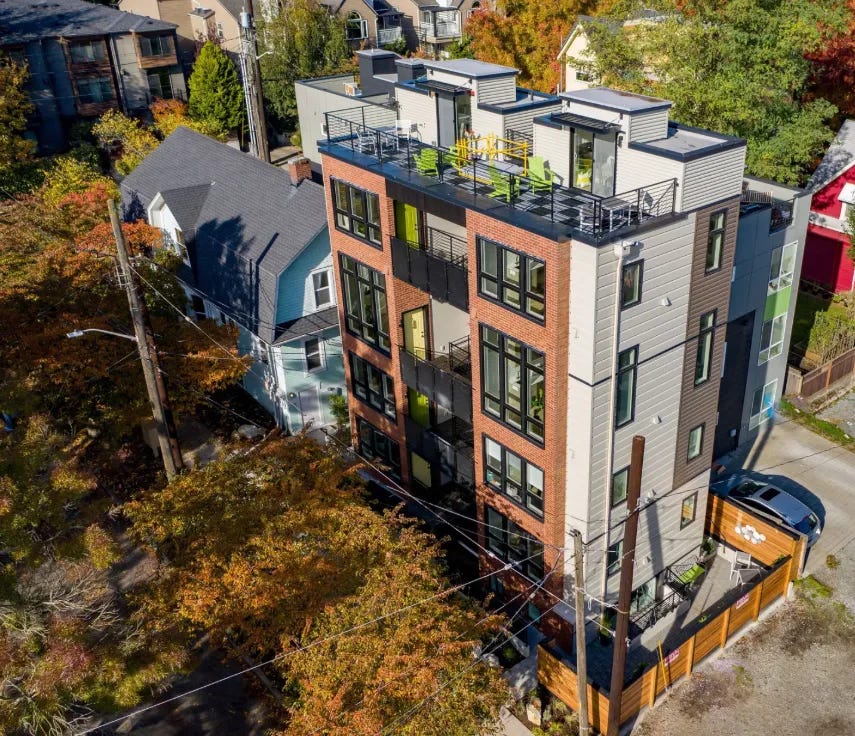
Just as important, single-stair structures allow for better homes than traditional two-stair apartment blocks. Single-stair buildings make it easier to design more family-sized apartments with two or three bedrooms, instead of forcing everyone into smaller one-sided units. Because the building is typically thinner, apartments can have windows on more than one side, which means more daylight, better airflow, and layouts that feel more livable. These quality of life advantages are one reason why single-stair reform has become such an attractive answer for housing advocates.
A Citizen-Led Effort to Raise Awareness
In late 2025, a group of North Carolina citizens, architects, builders, and policy makers got together to create singlestairnc.com. The website is designed to bring more awareness to this housing format and its benefits in North Carolina. Building code reform is not the kind of issue that gets much public attention, even though it has a major impact on what gets built and what housing options we have. The goal of the site is to make the issue easier to understand, show why it matters for affordability and neighborhood design, and give North Carolinians a way to take action.
North Carolina Is Part of a Bigger Movement
Single Stair is a nationwide movement and it’s time for North Carolina to step up. Pew Research reported that since 2022, 19 states and Washington, D.C. have introduced bills to study or allow single-stair buildings, and that seven states passed bipartisan single-stair legislation in 2025 alone. Our neighbors in Virginia already enacted a law in 2024 to study and recommend code changes for single-stair buildings. Maryland enacted a law in 2025 requiring its Department of Labor to study single-stair building code reform and report back by December 2026.
Tennessee shows just how quickly things can move once a state opens the door. Lawmakers there passed a 2024 reform allowing single-stair buildings under set safety conditions, letting cities opt in locally. By late 2025, Nashville, Chattanooga, Knoxville, Memphis, and Jackson had all moved forward. This makes Tennessee one of the clearest examples of single-stair reform going from idea to law to on-the-ground adoption.
That momentum has continued into 2026. Rhode Island introduced a bill to allow certain residential buildings up to four stories and 16 units with a single staircase, and California lawmakers introduced a new single-stair reform bill after the state’s fire marshal study process. For North Carolina, a bi-partisan bill, SB 492, has been proposed, but it’s stuck in the Senate pending a formal review and vote.
Why This Matters Right Now
North Carolina already has a live bill on the table, but it needs public support to see it through. Senate Bill 492 was filed in March 2025 and remains referred to the Senate Rules and Operations Committee. With the General Assembly’s short session underway, lawmakers are again looking for practical ways to address the state’s housing shortage. This is exactly the kind of reform they should take seriously. It is easy to understand, limited in scope, and aimed at one clear barrier that makes small apartment buildings harder to build. Politicians often say they want housing solutions. This is one.
What You Can Do
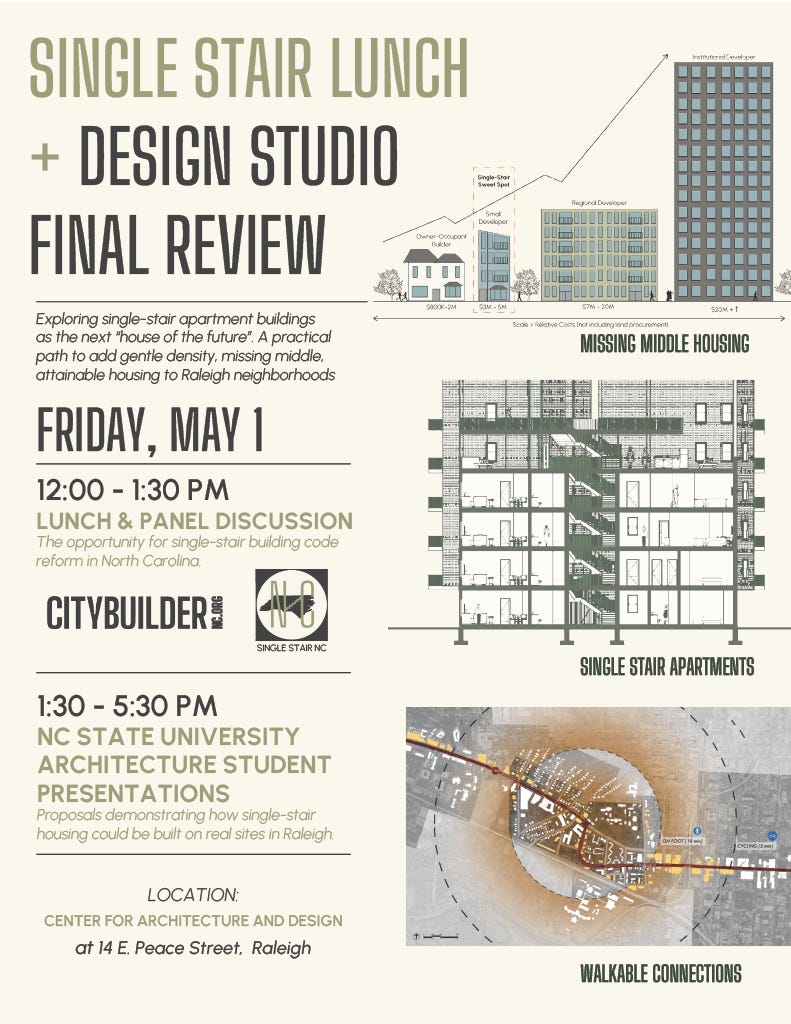
If you want more housing options and more walkable communities in North Carolina, then check out singlestairnc.com, and come to our Single Stair Lunch & Panel at 12pm on Friday, May 1st. At this event, we’ll discuss the pathway to legalizing and constructing single-stair buildings in NC. After lunch, stick around for presentations from current NC State architecture students, who will explore how real sites in Raleigh could be transformed by single-stair developments. Students will present from 1:30-5:30pm, so stop in to look at their brilliant projects.