

We read a lot in this community. We share articles, policy papers, books with dense footnotes and even denser implications. We talk about zoning reform over coffee and debate density metrics at cocktail parties. That is who we are, and I love us for it.
But this summer, we’re doing something different. We’re watching films together.
The CITYBUILDER Summer Film Tour is a three-city screening series coming to Durham, Cary, and Raleigh this summer, presented in partnership with Better Cities Film Festival and Southern Urbanism. Each event brings together a curated selection of short documentary films, none longer than twenty minutes, that explore housing, urbanism, and the future of American cities. Cities that look a lot like ours.
Think of it as the book club, but we watch instead of read. The format is the same: we absorb something together, and then we talk about it. The conversations after are just as important as the films themselves.
Why films? Why now?
The Triangle is one of the fastest-growing regions in the country. We are making decisions right now about land use, infrastructure, density, and who gets to belong that will shape this region for a generation. Most of those decisions are being made quietly, in planning commission meetings and zoning board hearings and development agreements that many residents never see.
Part of our mission at CITYBUILDER is to widen the circle of people who are paying attention. Film is one of the fastest ways to do that. A well-made short documentary can explain in seven minutes what a policy brief takes forty pages to say, and it can make you feel something in the process.
What we’re watching and why it matters
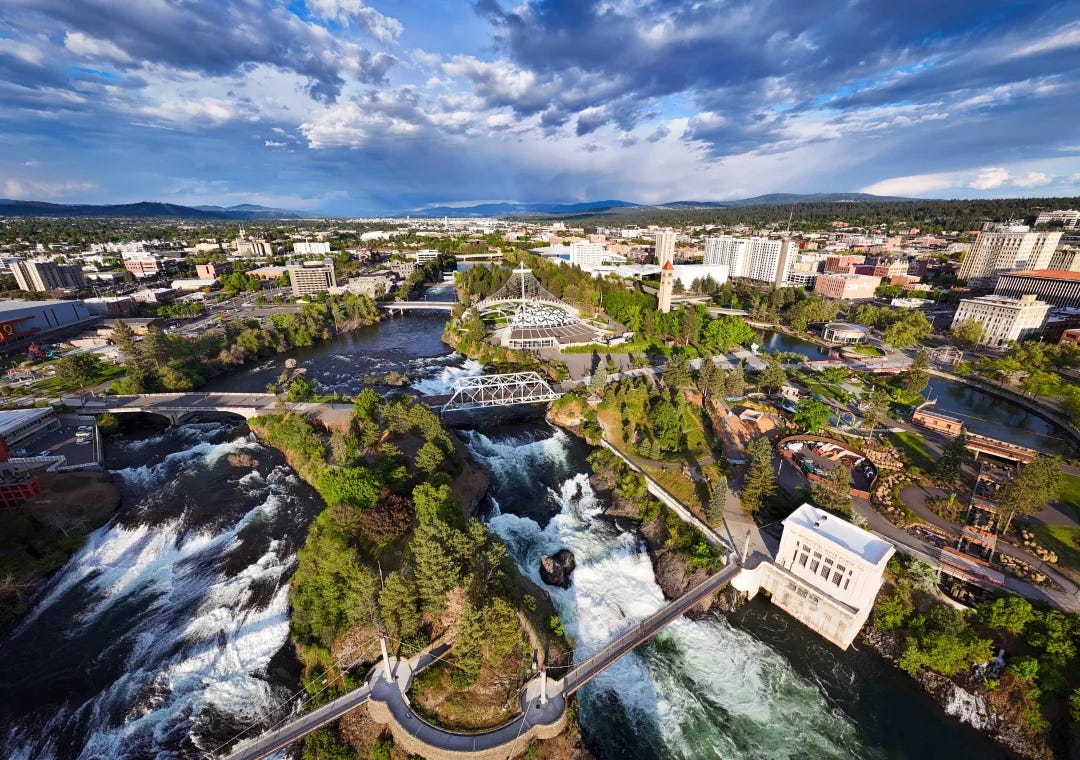
Saga City is an animated short about a fictional town called Colvert that was drowning in the problems we know intimately: traffic, sprawl, heat islands, economic decline, the suffocating logic of car dependency.
And then Colvert decided to do something about it. The community came together, shared a vision, and rebuilt the city through infill development, infrastructure overhauls, transit systems, and suburban density.
The film’s arc is the story of a place much like the Triangle, whose problems can only be solved by changing the status quo.
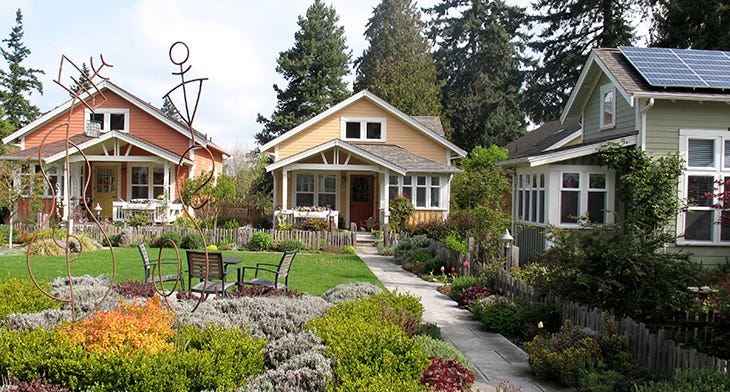
CNU25.Seattle: Pocket Neighborhoods features architect Ross Chapin walking us through two Seattle neighborhoods built at human scale: small clusters of homes arranged around shared courtyards and garden paths. He talks about what he calls the “gift of constraints”, and about the five layers of threshold between the sidewalk and your front door.
These layers tell you where public space ends and private space begins, creating a community that encourages neighborly interaction. One resident says of Chapin’s neighborhood: “It feels like an oasis.” When you design for people first, at human scale, this is what you get. Most of our zoning codes make it impossible to build like this.
LA’s Forbidden City is a walking tour with urban planner Mark Vallianatos through the duplexes, fourplexes, and bungalow courts of Los Angeles; buildings that Angelenos love, live in, and can no longer build. It is a mystery and a history at the same time. In the 1920s, you could put any housing type next to any other on the same street. By the time parking minimums and setback requirements and density caps worked their way through the code, the most-loved building types in the city were effectively banned.
Here is our plan: at every screening, we want to start building a list of buildings in the Triangle that people love and can no longer legally construct. Raleigh’s forbidden city. Durham’s. Cary’s. Come to a screening and help us start it.
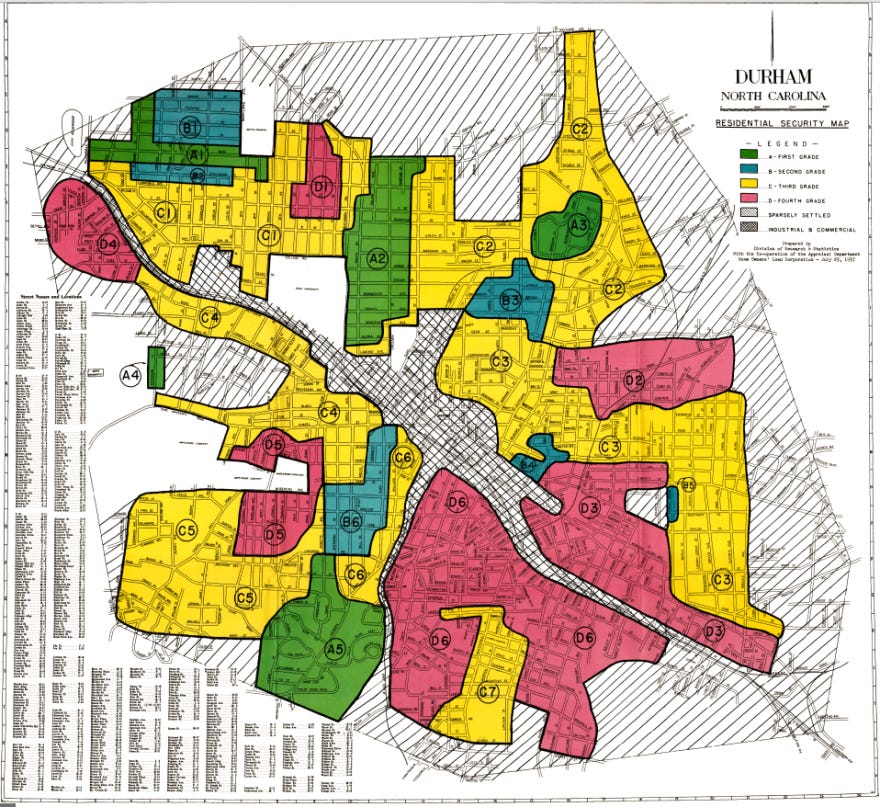
Segregated By Design is the film I most want you to see, and the one I find hardest to describe without getting angry all over again. Richard Rothstein, author of “The Color of Law,” narrates a fast-moving motion design film about how every major American metropolitan area became segregated — not by accident or individual bias, but by the deliberate, explicit policy of the federal, state, and local governments.
It explores the New Deal housing policies that demolished integrated neighborhoods to build segregated ones. You’ll learn about the United States Housing Authority’s first target city, Austin, Texas, where they planned to relocate every African American in the city to a specific designated area, closing schools and libraries based on skin color. The Federal Housing Administration’s insured loans — available to white families, denied to Black families, with deeds that prevented resale across racial lines. Redlining. Blockbusting. Slum clearance. State-sponsored violence.
And then this: the slums were not created by the people who lived in them. They were created by targeted government policy that forced overcrowding, withdrew public services, and then allowed white homeowners to look at the conditions and conclude that this was a characteristic of the community rather than a product of the government that engineered it.
Rothstein’s closing argument is that if we recognized that segregation is unconstitutional, we have an obligation to remedy it completely. That is not a comfortable conclusion, but it is a necessary one. I want us to watch this together and talk about what it means for our Triangle, for the maps of our own neighborhoods, for whose name is on the deed.
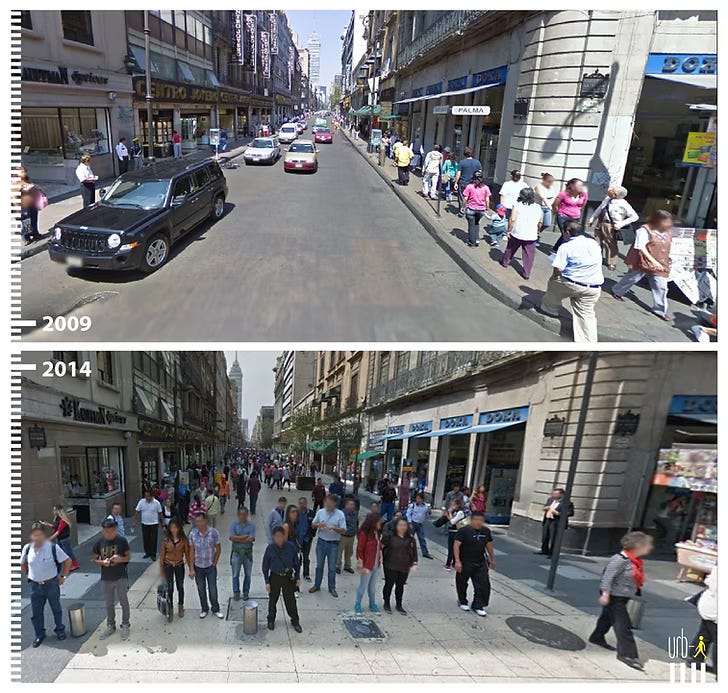
Before | After is one minute and forty-five seconds long, and it will make you want to call your city council member. It’s a collection of street transformations around the world, captured on Google Streetview by the team at Urb-i: car-dominated roads redesigned for people, with paint and bollards and bike lanes and benches where parking spaces used to be. It’s simple, direct, and inspiring. Cities on every continent are doing this. We have no excuse not to join in.
Come to one. Come to all three.
These screenings are held around the triangle. They’re at great venues: Fullsteam ATC in Durham, Hearsay in Cary, Trophy Brewing in Raleigh. They’re family-friendly with activities for kiddos. Drinks are available. The format is relaxed.
But these screenings are not passive. After we watch these films, we’ll talk about what they mean for housing in the Triangle, about the history underneath our neighborhoods, and what’s actually within reach for our region.
This summer sits between where we’ve been and where we’re going. CITYBUILDER is hosting YIMBYtown 2026 at the Raleigh Convention Center this November — a national pro-housing conference that will bring together advocates, planners, builders, and policymakers from across the country. This film tour is how we prepare for that. It is how we deepen the community that makes a conference like YIMBYtown worth attending.
Come watch. Come talk. Come build it with us.
Dates & Locations
June 25, 2026, 7-9pm · Fullsteam ATC · 320 Blackwell St #101, Durham
July 22, 2026, 7-9pm · Hearsay, A Cocktail Bar · 317 W Chatham St, Cary
August 26, 2026, 7-9pm · Trophy Brewing & Taproom · 656 Maywood Ave, Raleigh
All screenings are $10 and open to the public. Presented with Better Cities Film Festival and Southern Urbanism.
Brought to you by our Gold Sponsor
Hannah Moell is a Raleigh-based visual artist and housing advocate. As Development & Partnerships Director at CITYBUILDER. She leads sponsorship, fundraising, and partnerships, with a current focus on YIMBYtown 2026 at the Raleigh Convention Center.
Her art practice spans encaustic fractals, large-scale watercolor florals, and natural pigment on linen, all rooted in neuroaesthetics — the science of how pattern and the natural world trigger beauty and awe. She holds a BFA from East Carolina University and teaches through Durham Art Guild and the Makery.
Whether building coalitions or paintings, she’s drawn to systems that hold meaning and work that moves people.
