

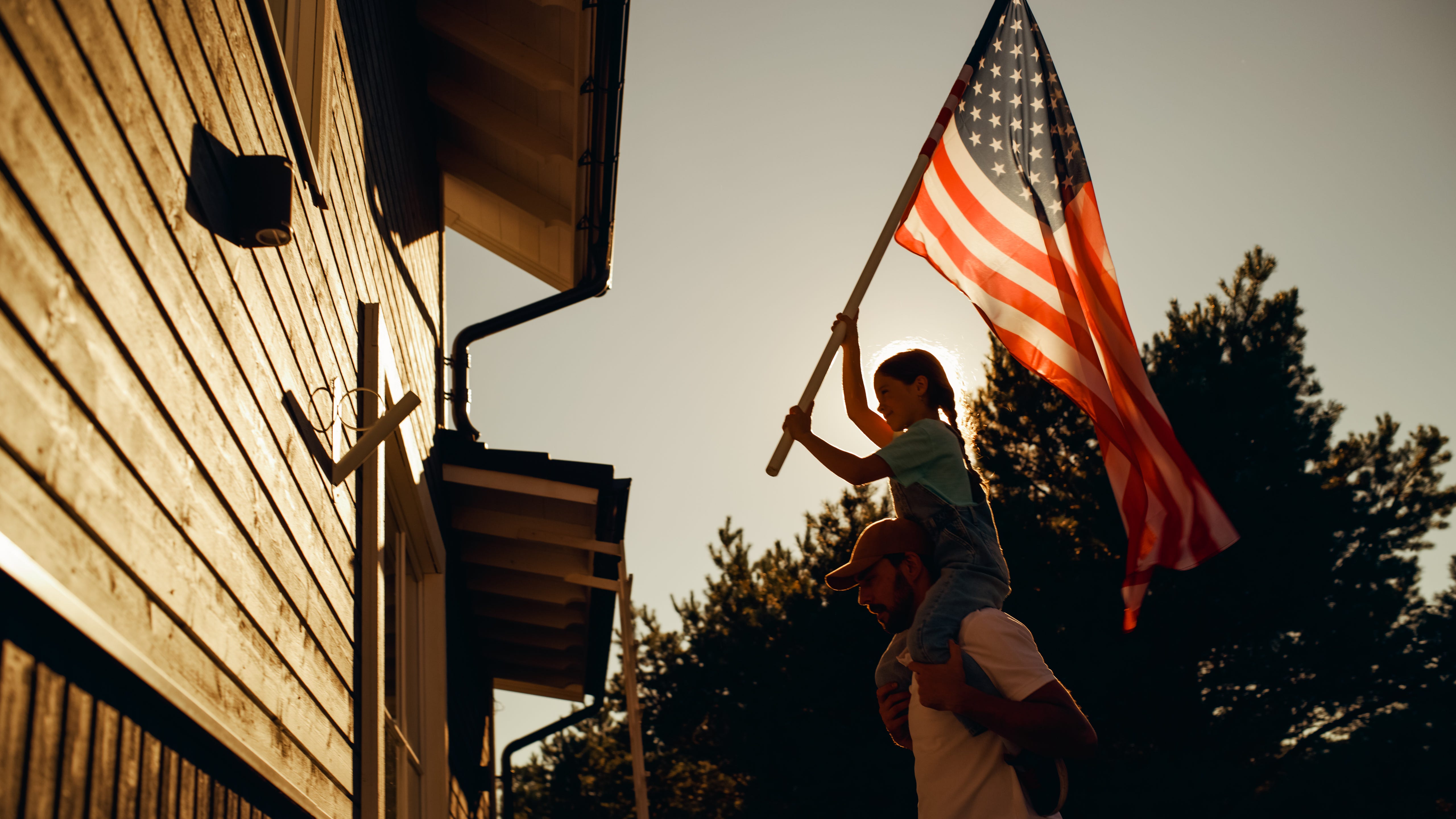
Two hundred and fifty years ago, a group of ordinary people made an extraordinary claim.
They declared that a nation could govern itself.
They did not assume perfection from the beginning, but rather trusted the continuous work of citizens willing to take responsibility for the places they shared.
One of my favorite reads on early American politics is Democracy in America, a book of observations by a young Frenchman named Alexis de Tocqueville, who traveled America just 50 years later. He wanted the same thing so many of us want today, he wanted to understand why this unlikely ‘American experiment’ seemed to work.
He arrived as the country was transforming from an agrarian nation into one of towns, canals, railroads and growing cities. Fascinatingly, he found that the secret wasn’t really in Congress or in the presidency; it was in our towns:
“Town meetings are to liberty what primary schools are to science; they bring it within the people’s reach, they teach men how to use and how to enjoy it. A nation may establish a system of free government, but without the spirit of municipal institutions it cannot have the spirit of liberty.”
- Alexis de Tocqueville, 1835
I’ve always loved that idea.
Not because I think town meetings are magical. Anyone who has been to even 1-2 of them knows better. Rather, because I like the lesson here about democracy being something we must practice.
We practice it every time neighbors disagree about the future of a street. Every time a community decides what to preserve, what to change and what kind of place it wants to become. We practice it everytime we argue about new apartment buildings, ADUs, bike lanes, parks or what belongs on that corner down the road.
For me, how we practice democracy and how we build housing are intrinsically linked.
Homes are more than buildings, building types, front yards and setbacks. Every line we draw on paper shapes who gets to live here, who gets to stay and who gets to become part of our community. That’s when the American experiment becomes opportunity.
Can your children afford to stay close to home?
Can a young family put down roots?
Can an older neighbor remain in the community they helped build?
Can someone new find a place to belong?
These are life-shaping questions that are often decided by abstract and arbitrary policies rather than by true opportunity. They are questions I repeat when I challenge our local leaders on housing.
Are we making room for one another?
Two hundred and fifty years after the Declaration of Independence, America is still imperfect and unfinished. And that’s a good thing.
Each generation, we inherit the stewardship of this experiment. With the responsibility not to preserve America exactly as we found it (or our neighborhood either) but to leave it a little more free, a little more welcoming and, hopefully, a lot more capable of meeting the needs of the people who come after us.
Sometimes that work happens in Congress. More often, it happens in city halls, planning commissions, neighborhood meetings, construction sites, new business openings, long time loyal customers at beloved spots and, most importantly, in conversations between neighbors who care enough to show up.
Where we build community is where democracy is practiced.
That’s the optimism I’ll leave you with today. Two hundred and fifty years later, we’re still showing up: to argue, to build and to imagine something better for tomorrow.
Happy Independence Day.

Jenn Truman is a young designer, leader, and advocate based in Raleigh, she is embedded in the local community through both her professional and volunteer work. Jenn is a regular contributor to and Founder of CITYBUILDER.