

The Past
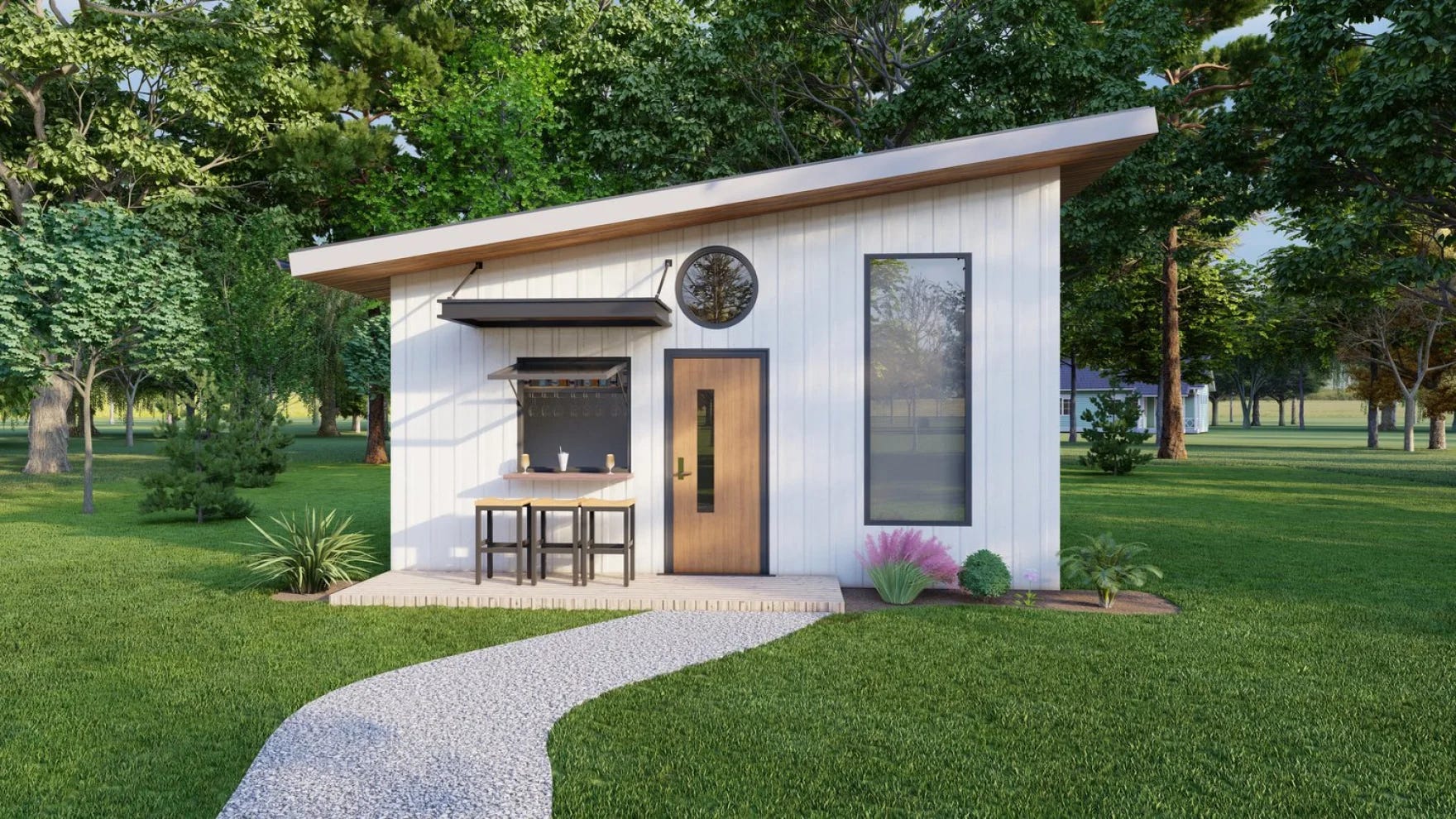
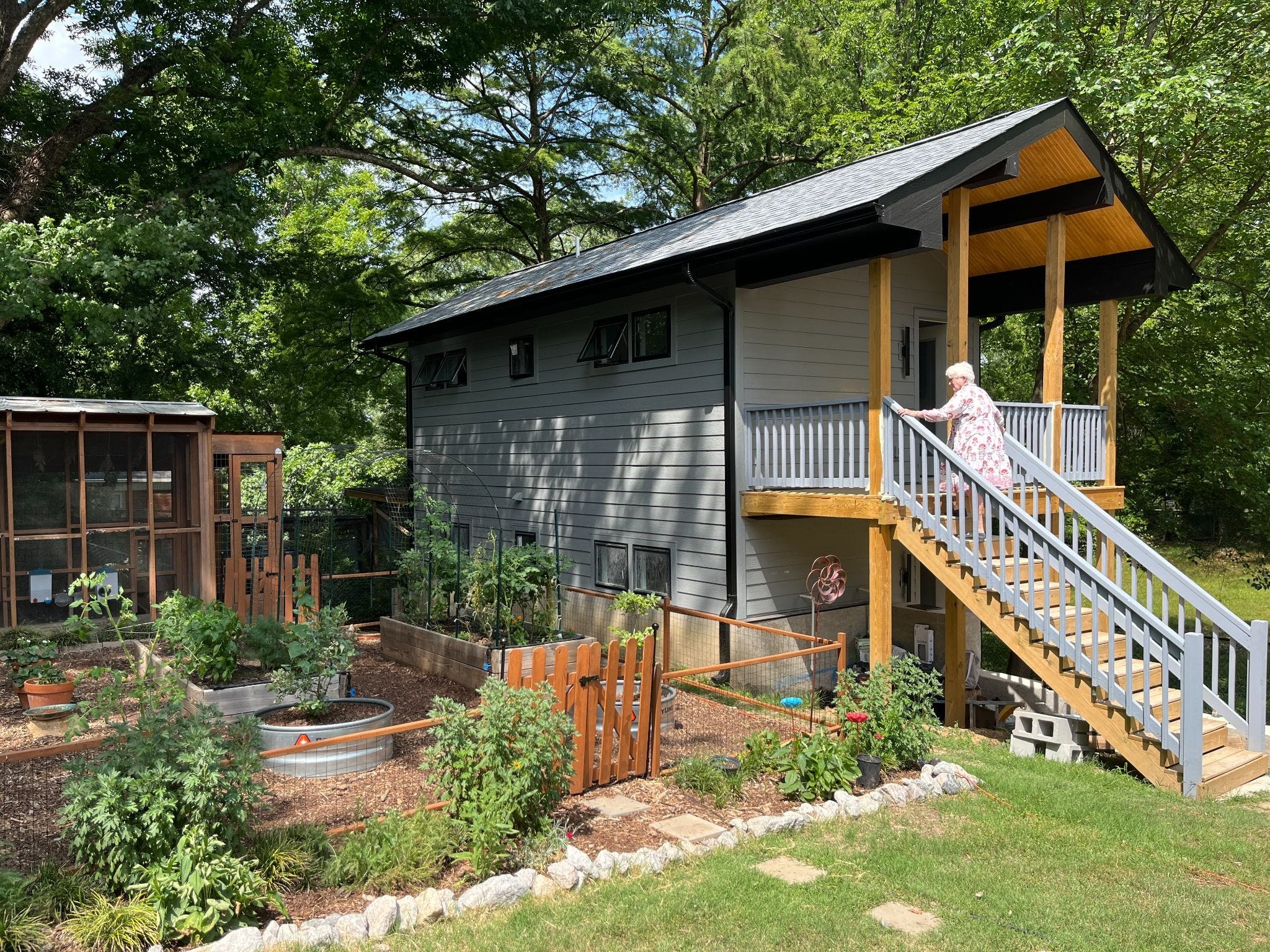
Accessory dwelling units are a historic building type, often found in Raleigh’s older neighborhoods. These houses are smaller living units located in, attached to, or behind a single-family home. While ADUs are currently legalized across the City of Raleigh, this wasn’t always the case. In the 1970s, Raleigh outlawed ADUs during a time of suburban flight and urban decay. It wasn’t until the 2010s, 40 years later, that Raleigh began reconsidering their decision.
In 2013, although ADUs were allowed in a draft of the city’s Unified Development Ordinance, they were removed from the final document following public concerns. In 2014, the NC State School of Architecture began working on a project to help community members better understand and envision ADUs in Raleigh. Following this project, a petition to the City Council to reconsider legalizing ADUs was filed. During these legalization efforts, WakeUP Wake County stepped up to lead, advocate, and mobilize supporters. In 2018, an ordinance was adopted, but it required individual residents to initiate the development of a cumbersome overlay district through a rezoning process. After years of advocacy, education, and research, ADUs were made legal in 2020, citywide and by-right.
The Present
In the six years since ADUs were made legal citywide and by-right, progress has continued to be made, and WakeUP Wake County has worked to educate and encourage community members to explore opportunities to add an ADU to their property. Since 2020, there have been 356 total applications for an ADU, 290 issued applications, and 226 completed ADUs. Additionally, Raleigh has begun an ADU Fast Track program, which allows residents to view and purchase pre-reviewed plans. This program aims to increase the accessibility of ADUs to homeowners and create more opportunities for housing in our community!
WakeUP Wake County’s Recent Work
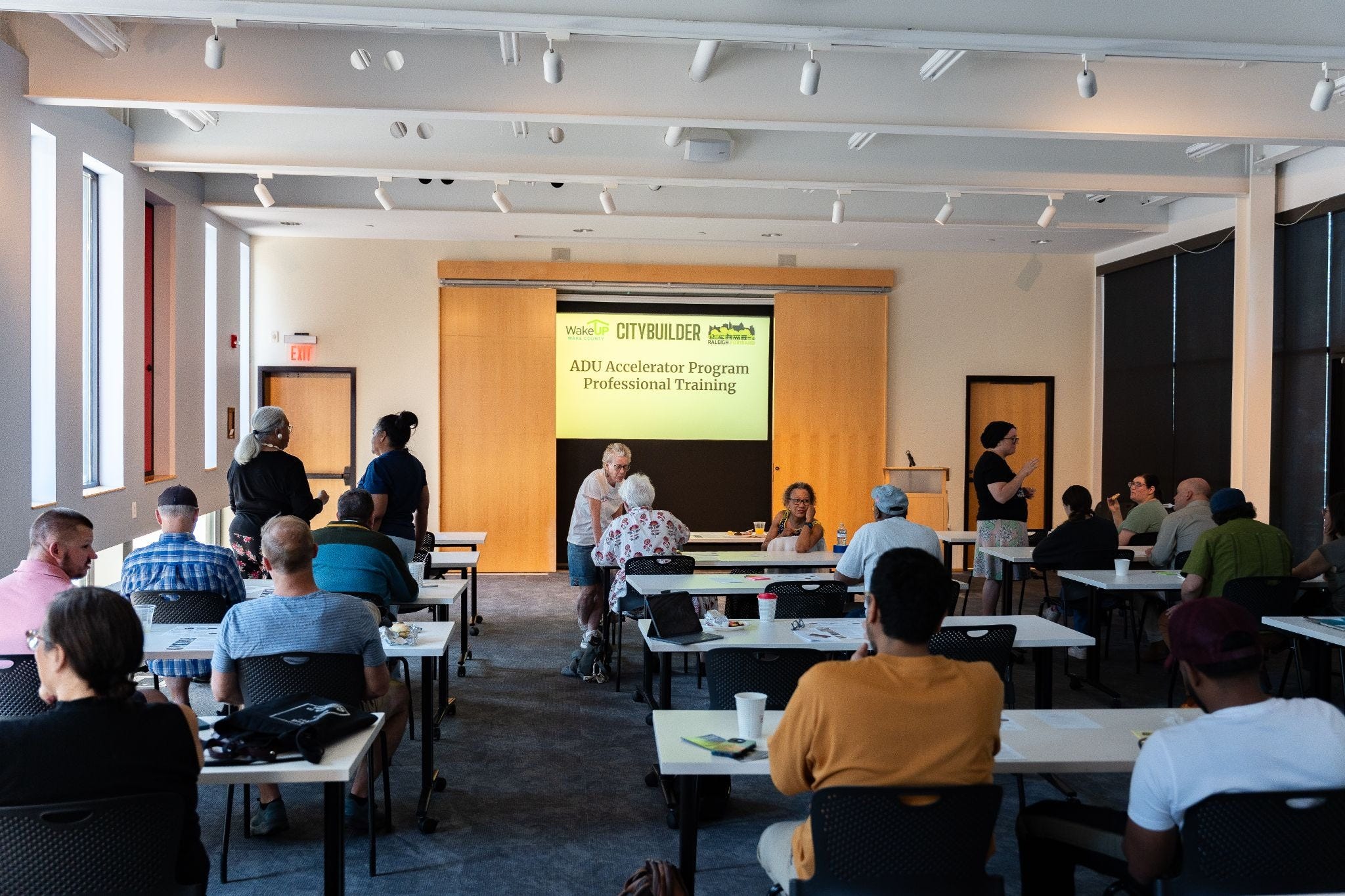
In June of 2026, WakeUP Wake County, in collaboration with CITYBUILDER, hosted an ADU Professional Training Workshop and Tour. This brought together builders, developers, and homeowners to learn about design, finance, and the approval process for ADUs in Raleigh. Additionally, participants were able to tour new ADUs and speak with the homeowners and designers about each specific property. During this event, we asked those homeowners why they chose to build an ADU; here’s what they said:
“Giving financial options to urban property owners who want to maintain residences here and want to contribute to their community” - Brian
“To start to give back and create more housing in the city” - Meg
“To do our little bit to contribute to affordable housing in Raleigh” - Tom
Additionally, building ADUs diversifies our housing stock, creates more affordable housing, supports walkability and transit-oriented communities, provides homeowners with additional income, and allows families to grow and change without having to move out of their neighborhoods.
What’s Next?
Although progress has been made in recent years, WakeUP Wake County remains focused on supporting advocacy and education efforts throughout the community. As one of AARP’s Community Challenge Grant Recipients, WakeUP Wake County, in partnership with CITYBUILDER and RaleighForward, is hosting an ADU Community Workshop on November 12th from 5:30 - 7:30pm and a Community ADU Immersive Tour on November 14th from 1 - 3pm.
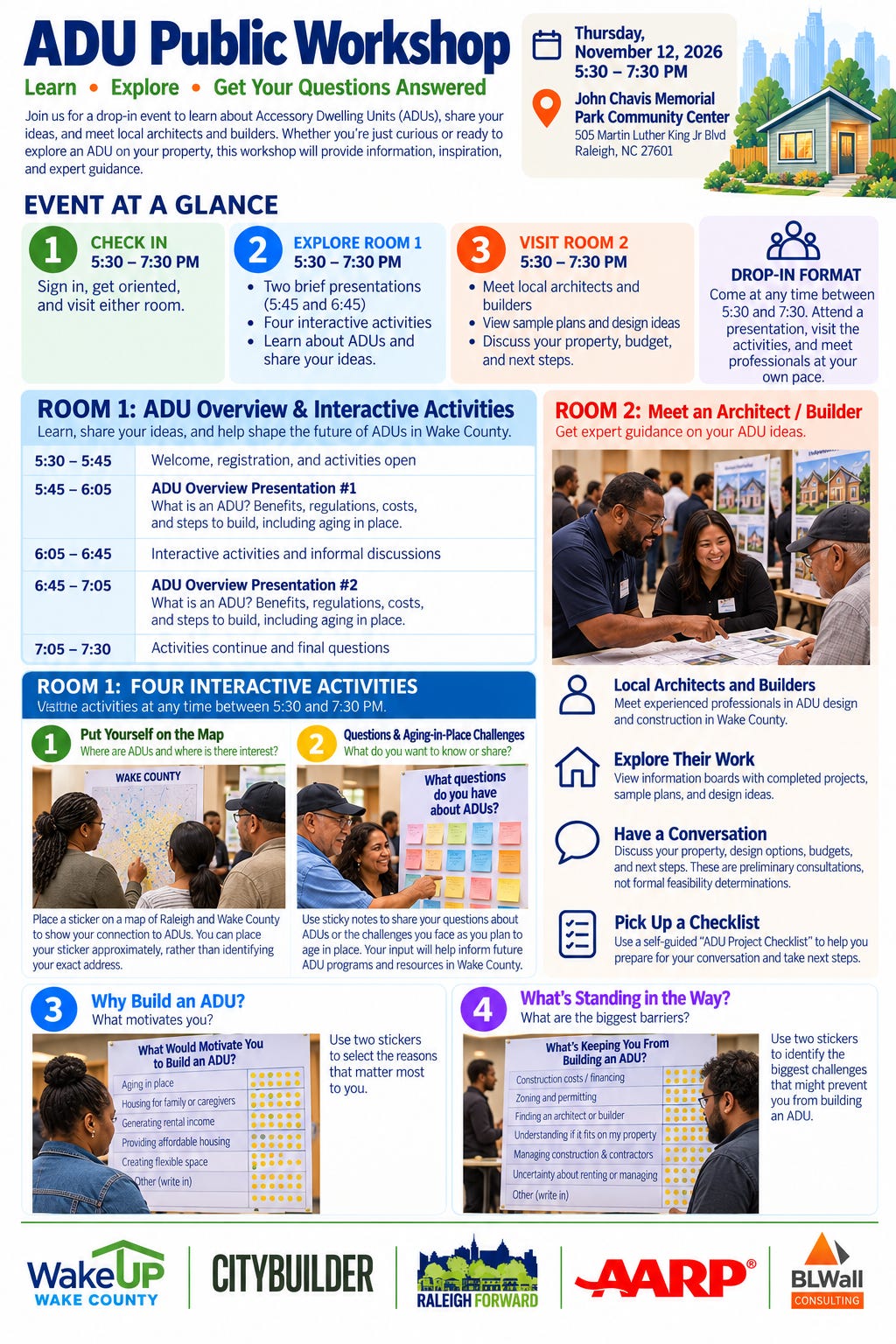
The ADU Community Workshop provides the opportunity for attendees to meet with architects and builders and hear a presentation about ADUs, which will be repeated throughout the evening.
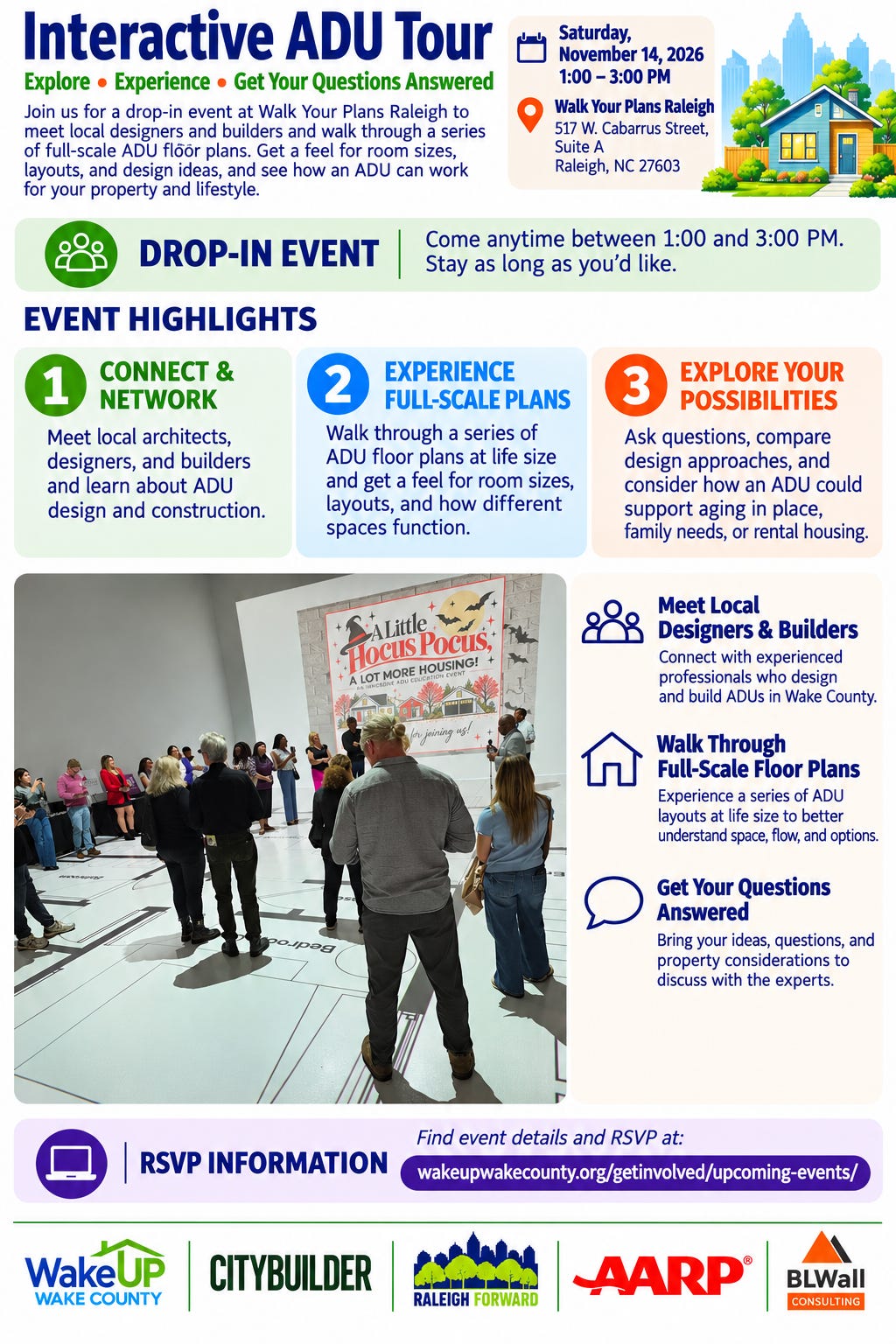
The Community ADU Tour is a drop-in event where community members will be able to participate in an immersive walkthrough of various ADU floor plans and hear from multiple housing-focused organizations. Both events are free and open to the public; refreshments will be provided. Find more information and register below!
Layal Sadik is a recent graduate from Appalachian State University. She graduated with a Bachelor of Arts in Political Science and Sociology, with a minor in Arabic. She currently works with WakeUP Wake County, researching local transportation, housing, and various sustainability efforts.