

This piece was written by Elijah Geist, a CITYBUILDER student fellow. Each semester, CITYBUILDER provides fellowship opportunities for aspiring student urbanists in the Triangle.
When I was a kid, the places I lived were more rural than urban, more countryside than cosmopolitan. My family moved constantly; we never stayed in the same home for more than a year or two. But each location shared common denominators: large yards, detached single-family homes, neighbors who I never spoke to, and an abundance of “green space”. My parents always emphasized the importance of living outside the city in more “natural” settings. It wasn’t until recently that I realized my parents used this idea to mask a harder truth: living closer to the city was simply unaffordable for a family like ours.
Thus, despite our distance from grocery stores, friends, and other amenities, my family always found comfort in the belief that we were living a more sustainable lifestyle in our modest, detached single-family home. This line of thinking helped us ignore our economic misfortune, so you can imagine how unsettling it was to find out that we, in our single-family home, were using far more energy than people in dense multifamily buildings.
It’s been that way for a while: between 2009 and 2015, energy usage per square foot dropped by 29% in multifamily residences, while single-family homes saw a reduction of only 13%. While residential energy consumption has become more efficient overall, single-family homes are lagging behind denser housing options on all fronts.
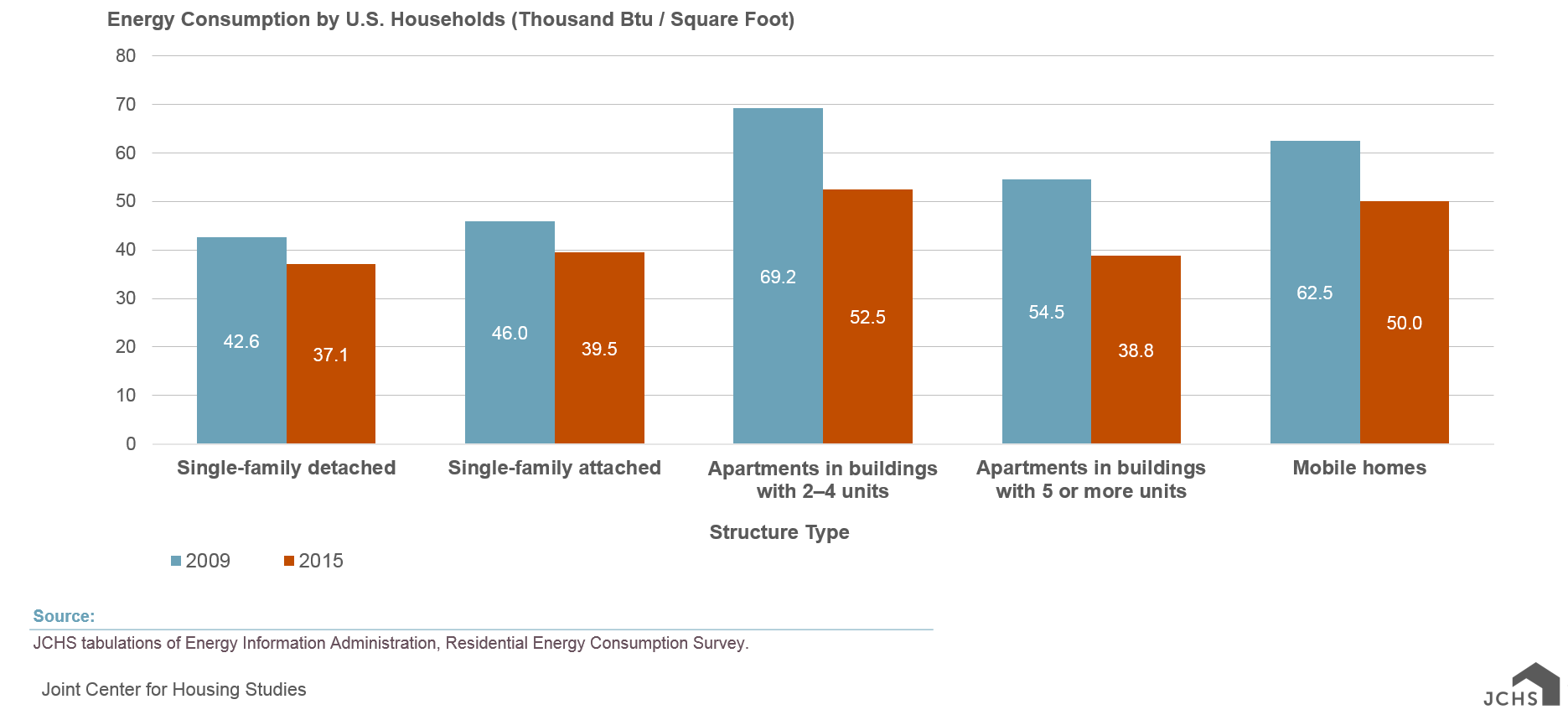
The chart above seems to show that single-family homes actually use less energy than multifamily units, but that’s only true on a “per square foot” basis. Single-family homes in the US are on average 2.5 times bigger than multifamily residences, so in the context of energy per square foot, single-family homes have a deceptive advantage. If we account for the vast size difference between single-family and multifamily homes, we find that multifamily homes having a lower rate of energy consumption overall.
Multifamily housing also uses significantly less energy per person than a detached home. In fact, a new high-rise multifamily development is 82% more energy efficient than a new single-family home in the US.
Initially, this news upset me. I lived most of my childhood believing that, despite being poor, at least I was doing some good by living out in the middle of nowhere. Evidently, this was not the case.
Okay, so maybe my childhood home wasn’t as “energy efficient” as it could have been, but surely mother nature was pleased with how carefully my family treated the trees and plants scattered around our tiny plot of land. I mean, you don’t see many apartments with yards! Well, it turns out that compact multifamily developments also have less pollutant and sediment runoff than the average detached home in the suburbs. Oh, and all of that beautiful green space in the countryside only exists because dense housing in urban areas slows down the sprawling nature of American development patterns. In a sense, those dense developments are saving the green space that my family thought we were preserving.
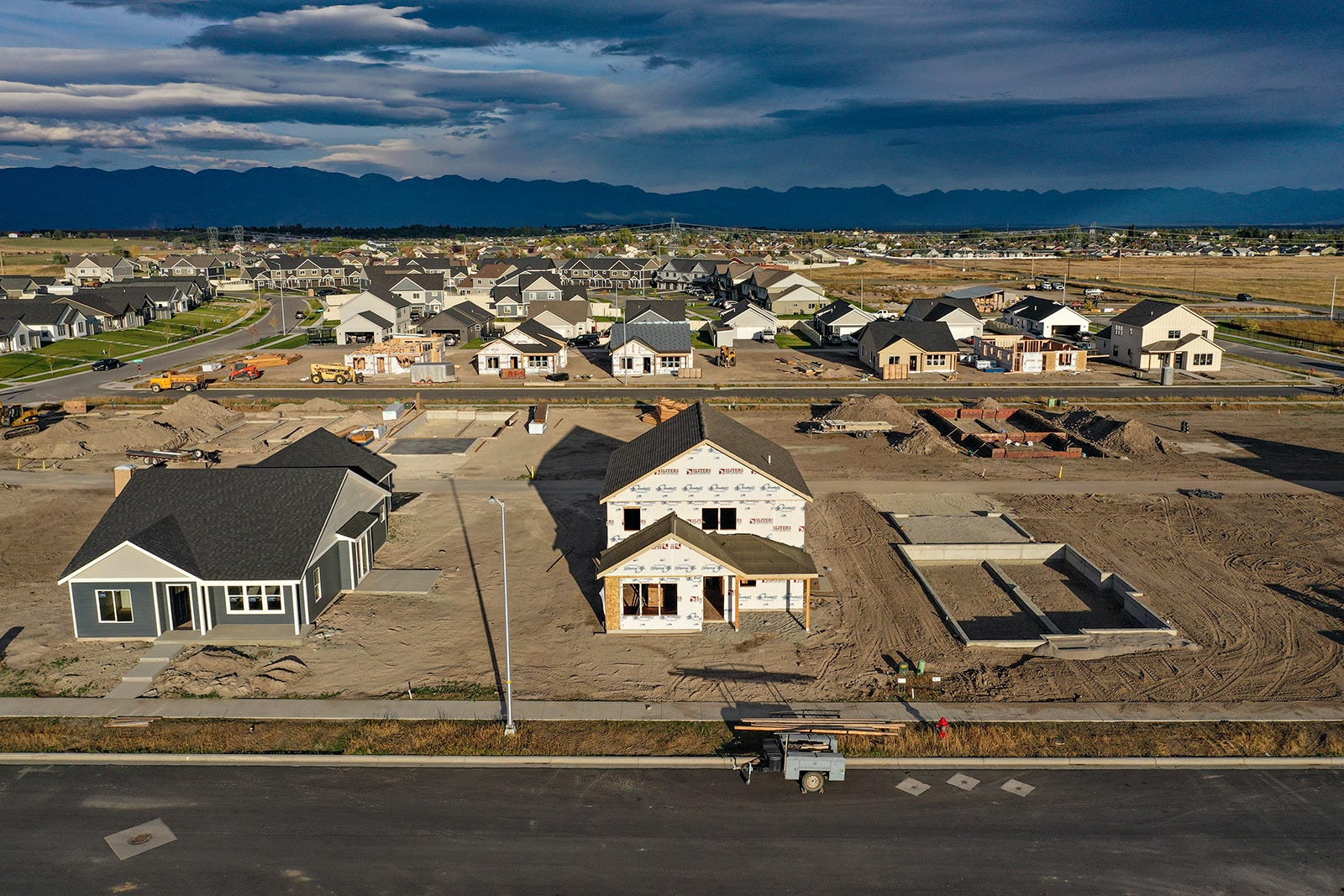
So denser housing options use less energy, help preserve natural green space by decreasing the number of single-family homes being developed, and produce less harmful stormwater runoff when compared to the suburbs.
But there’s no way that all of those urban traffic jams and idling cars can be good for the environment. Clearly the quiet streets of the suburbs translate to lower vehicular emissions, right?
Well it’s true that idling cars are the number one source of air pollution in many areas throughout the US. Each gallon of gasoline that’s burned while idling releases 20 pounds of greenhouse gas emissions into the atmosphere. For every hour spent idling, a light duty truck burns up to one gallon of diesel fuel and conventional vehicles burn up to 1/5 gallon of gasoline.
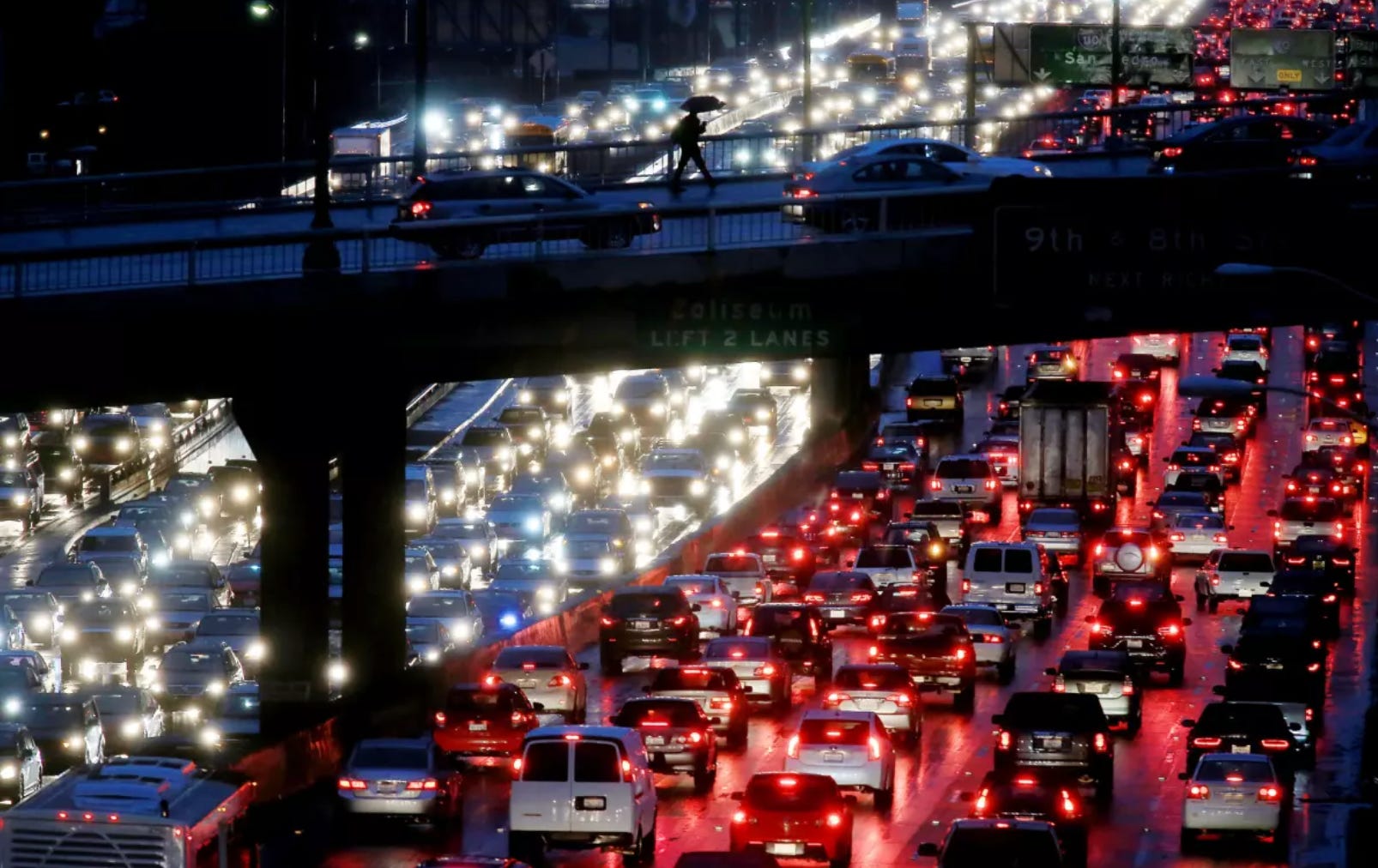
But believing that these increased carbon emissions are a result of increased density is misplaced. The traffic that produces these emissions is largely made up of individuals commuting into the city from their homes in the suburbs. Census Data from 2019 showed that over 44% of people living in metro counties commuted to a location outside of their home county for work. Simply put, commuting has become a way of life in America. The average American spends 27 minutes driving to work and another 27 minutes driving home. In contrast, those who live in urban areas spend far less time commuting; that means fewer emissions.
Critics of multifamily, mixed-income developments decry tall buildings and denser forms, but then demand unlimited parking and the ability to drive from their suburban homes to the urban core without encountering traffic. This sense of entitlement has long dictated the layout of cities throughout the US, resulting in ever-higher vehicle emissions, and a significant amount of wasted time for everyone involved (see the aforementioned 54 minute daily commute).
The facts don’t lie: dense housing and walkable communities reduce stormwater pollution, generate fewer carbon emissions, and take up less land compared to single-family homes. Environmentalists can rest easy, even the Sierra Club recognizes that density is environmentalism. So enjoy nature, and support denser housing options in your community, on Earth Day, and everyday.
This piece was written by Elijah Geist, a CITYBUILDER student fellow and current graduate student at the UNC Department of City and Regional Planning.