

We had a hunch that Durham was ready for this. We did not fully know how ready.
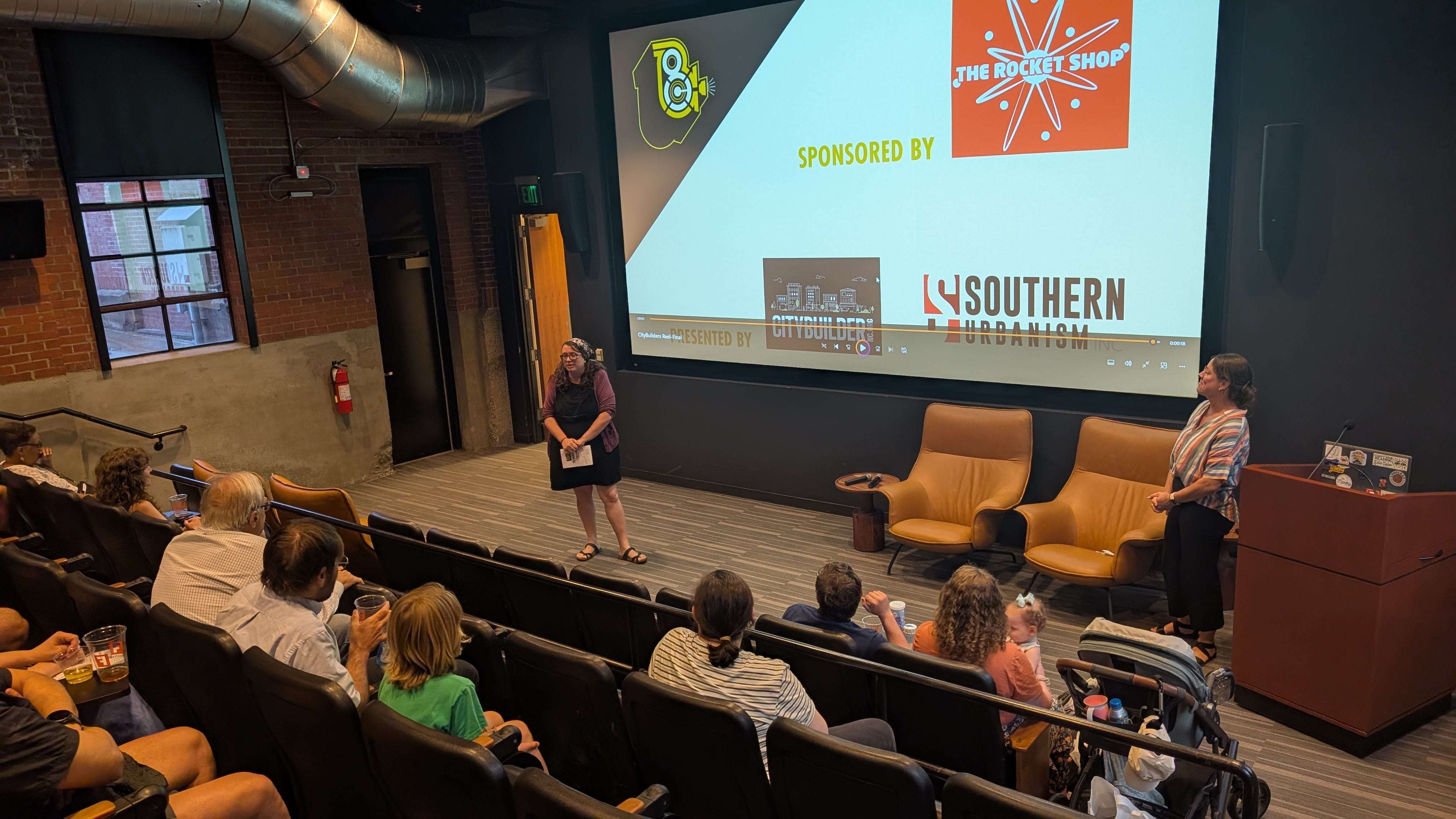
On June 25th, CITYBUILDER hosted the first stop of our Summer Film Tour at Fullsteam ATC on the American Tobacco Campus in Durham. It was a $10 screening of six short documentary films about housing, neighborhoods, and cities throughout our country.
We passed out popcorn. We handed out questionnaire sheets and little urbanist bingo cards. Sean from Fullsteam was pouring complimentary beverages and showing off the gorgeous new space being built out there, which opens in the fall. Twenty-five people showed up, spread across the room in ones and twos and small groups, and we talked about what we watched, and what it meant.
Who Was in the Room
One of the things that struck me most was who came. We had tons of new faces at this event, lots of people who had been part of our digital community for a while and had never made it out to an in-person gathering before.
They showed up solo. They showed up in groups. Some of them are active in local government. Others are involved with ULI Triangle. They’re exactly the kind of people you’d want in a room when the subject is housing policy and the future of our region.
And shoutout to the family with their 14-month-old in the audience, and the couple who brought their puppy. CITYBUILDER events are always kid-friendly, intentionally. Most of our team are parents. We want families in the room. We want the little CITYBUILDER generation to grow up thinking that this is just what people do on a weeknight, that you go somewhere, watch something, and then you talk about how cities work and who they’re built for.
The thread that connected everyone, whether they arrived already knowing the policy details or coming in fresh, was genuine curiosity. That’s what we like to see.
What We Watched
Saga City
An animated short about a fictional town drowning in sprawl, car dependency, and economic decline that decides to rebuild itself from the inside out. Infill. Adaptive reuse. Transit. More density, more greenery, more people. The film’s conclusion isn’t really about infrastructure; it’s about getting our neighbors, communities, and elected officials to see what’s possible.
CNU25 Pocket Neighborhoods
Architect Ross Chapin walks through two Seattle neighborhoods built at human scale, small clusters of homes arranged around shared courtyards and garden paths. He talks about the gift of constraints, and about the five layers of threshold between the sidewalk and your front door that tell your brain where public space ends and private space begins. One resident says of Chapin’s neighborhood: “It feels like an oasis.” Most of our zoning codes make these places impossible to build.
LA’s Forbidden City
This one’s a walking tour through the duplexes, fourplexes, and bungalow courts of Los Angeles. These housing types made neighborhoods vibrant and affordable, but were quietly banned one parking minimum and setback requirement at a time. This is the story of the Raleigh and Durham too. At every screening, we’re building a local version of that “forbidden housing” inventory: the buildings in the Triangle that people love but can no longer legally construct.
Before | After
One minute and forty-five seconds long, and it’ll make you want to call your city council member. This quick film is a collection of street transformations captured on Google Streetview by the team at Urb-i. It’s filled with formerly car-dominated roads redesigned for people, with paint and bollards and bike lanes and benches where parking spaces used to be. Cities on every continent are doing this. There’s no reason we can’t do it here.
River City Rising
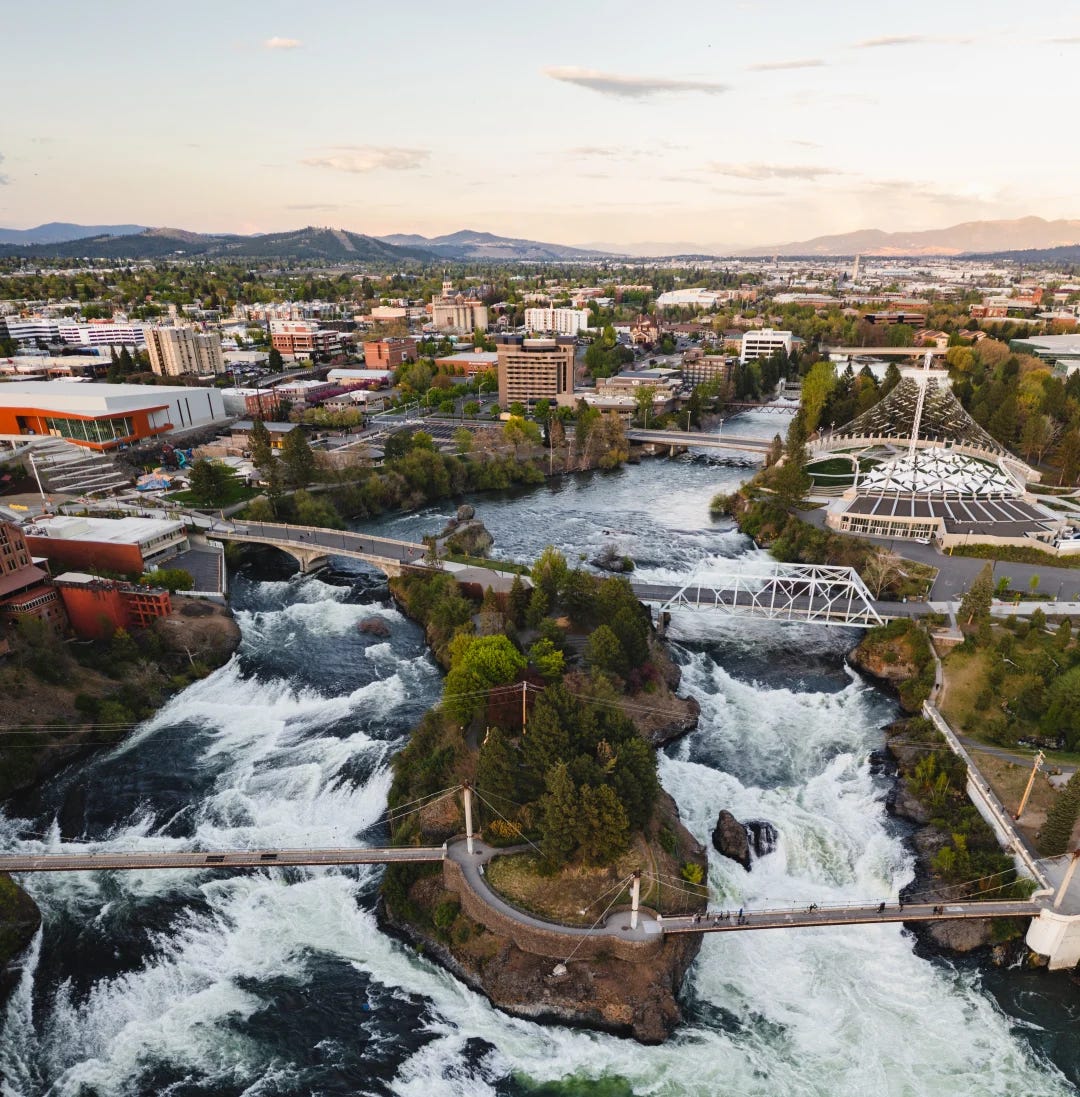
A short documentary about Spokane’s response to its own housing emergency. The city looked backward to move forward, drawing on historic urban planning principles and the character of its original streetcar neighborhoods to shape housing supply solutions and zoning reforms for today. This one’s a great reminder that the answers to our present problems usually have their roots in the past.
Segregated By Design
All six films were great. But the one that really got the crowd going, the one nobody wanted to stop talking about, was this one.
The Conversation That Stayed
Segregated By Design is a 17-minute motion design film narrated by Richard Rothstein, author of The Color of Law. It traces exactly how American cities became segregated. Not by accident, not by the invisible drift of individual choices, but by the deliberate, explicit policy of federal, state, and local governments. The New Deal housing programs that demolished integrated neighborhoods to build segregated ones. The FHA loans available to white families and denied to Black families. Redlining. Blockbusting. The concentrated government machinery that created the conditions it then blamed on the communities it had engineered.
About six members of our audience had already read The Color of Law. The rest were encountering this history for the first time, in this form, at this level of clarity. That gap in the room, between those who had been sitting with it and those who were just now learning it, produced one of the most honest conversations I’ve been part of in a long time.
What made this discussion land the way it did was the personal experience people brought into the room. The conversation moved between history and the present, between what the government did then and what the maps of our own neighborhoods look like now, between policy and lived experience. People were connecting this new information to something they already knew but hadn’t had the language to describe.
The point Rothstein drives home in the film’s closing argument is this: if the policies that created segregation were unconstitutional, then we have a civic right and a civic duty to repair what they broke. That is not a comfortable conclusion, but it is a necessary one. And it’s the kind of conclusion that hits differently when you’re sitting in a room full of people, all of whom live inside the cities that those policies created.
After the Films
After the last film ended, Sean walked the group through the Fullsteam ATC build-out, the new space taking shape on the American Tobacco Campus that will open this fall. As we walked past the lounge area, pinball machines, and patio, the conversation just kept going, moving from the films into the space itself… into what it means for a neighborhood when a place like this opens.
We also got to watch Sean change out the marquee, which was one of those small, genuinely delightful moments. Our Executive Administrator, Charlotte, even got a turn at it. It was the kind of ending to an evening that you can’t plan for and can’t replicate, the kind that makes people want to come back.
What Comes Next
Our film tour moves to Cary on July 22 at Hearsay, A Cocktail Bar, and closes in Raleigh on August 26 at Trophy Brewing. Both are hyperlocal venues, intimate and genuinely good. The kind of places where a conversation can run long without anyone feeling rushed out the door.
The same six-film lineup travels to Cary and Raleigh. Every city gets the full program. What changes is the room, the audience, and the conversation that follows. That is the whole experiment.
Raleigh in August is the hometown show, and we’re programming it around what resonated most in Durham and Cary. The films that made people stay late, and the discussions that nobody wanted to end.
Bring Someone With You
We kept saying it in Durham and we mean it for Cary and Raleigh too: if you came, and you thought of someone who should have been there, bring them.
The strongest thing that came out of Durham was not any single conversation (though the conversations were great). It was the gathering itself: the fact that twenty-five people who care about this showed up on a weeknight and stayed late. Word-of-mouth invitation is how that room gets bigger. It is how we build the community that makes a conference like YIMBYtown worth attending, and worth hosting, and worth traveling to Raleigh for in November.
We are building this community together — a community of people who see the cities around them clearly, who understand the history underneath them, and who believe that we can choose to build something even better than what we have today.
Come watch. Come talk. Bring a friend. Come build it with us.
Dates & Locations
July 22, 2026, 7-9pm · Hearsay, A Cocktail Bar · 317 W Chatham St, Cary
August 26, 2026, 7-9pm · Trophy Brewing & Taproom · 656 Maywood Ave, Raleigh
All screenings are $10 and open to the public. Presented with Better Cities Film Festival and Southern Urbanism.
Brought to you by our Gold Sponsor
Hannah Moell is a Raleigh-based visual artist and housing advocate. As Development & Partnerships Director at CITYBUILDER. She leads sponsorship, fundraising, and partnerships, with a current focus on YIMBYtown 2026 at the Raleigh Convention Center.
Her art practice spans encaustic fractals, large-scale watercolor florals, and natural pigment on linen, all rooted in neuroaesthetics — the science of how pattern and the natural world trigger beauty and awe. She holds a BFA from East Carolina University and teaches through Durham Art Guild and the Makery.
Whether building coalitions or paintings, she’s drawn to systems that hold meaning and work that moves people.