
The Triangle Should Choose Abundance
Raleigh and Durham's new plans should envision possibility instead of scarcity.
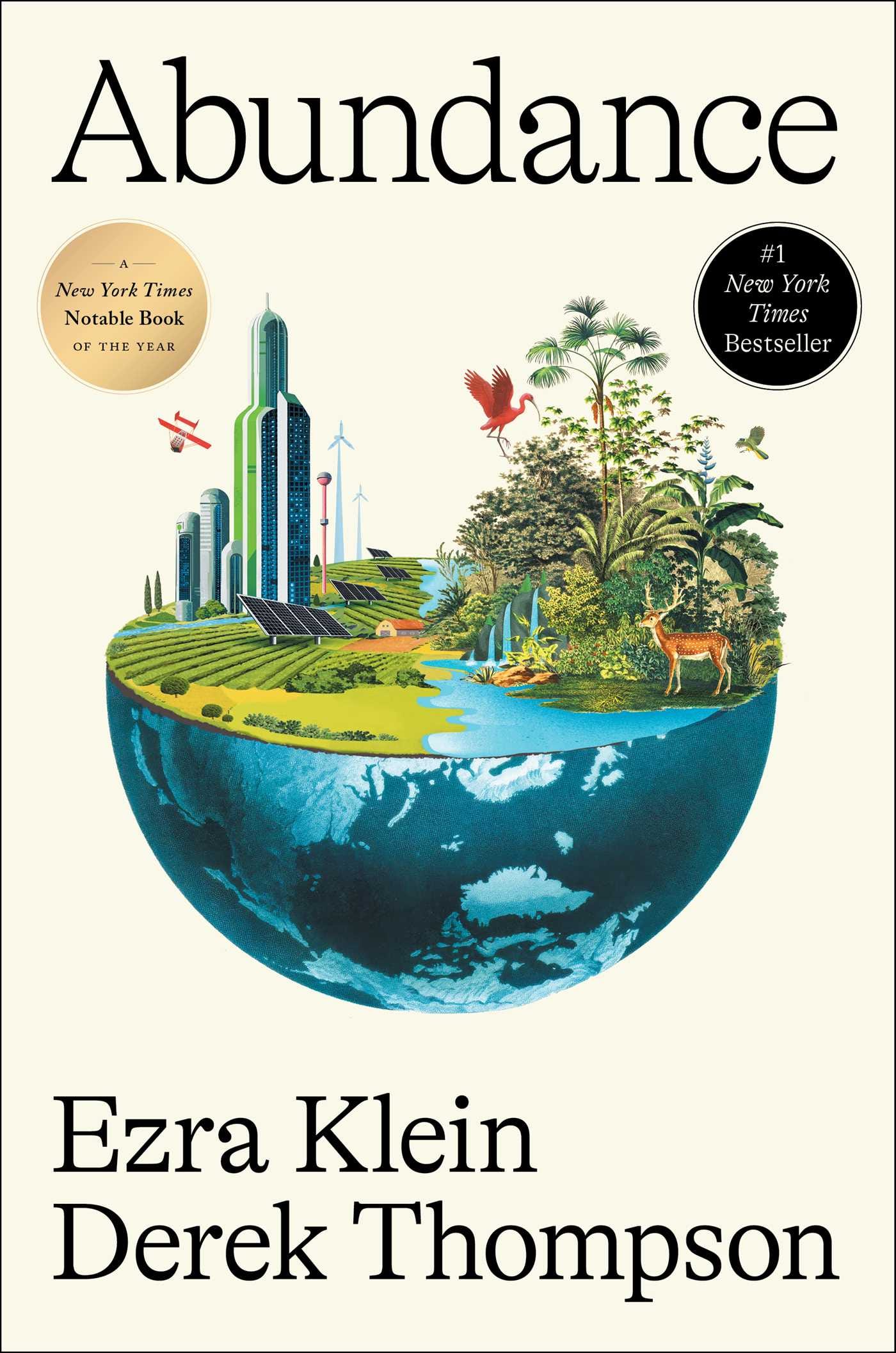
We begin Abundance by Ezra Klein and Derek Thompson not with policy, but with a morning.
“You open your eyes at dawn. You turn in the cool bed sheets.
A few feet above your head, on the top of your roof, a layer of solar panels is blinking in the sun.
Their power mixes with electricity pulled from several clean energy sources.
Towering wind turbines to the east.
Small nuclear power plants to the north.
Deep geothermal wells to the south.
Forty years ago, your parents cooled their bedrooms with jewels dredged out of coal mines and oil pits.
They mined rocks and burned them. Coating their lungs in the byproducts. They encased their world, your world, in a chemical heat trap.
Today that seems barbaric.
You live in a cocoon of energy so clean it barely leaves a carbon trace and so cheap you can barely find it on your monthly bill.
The year is 2050.”
The opening chapter reads like science fiction, but it is grounded in engineering, economics, and policy pathways that already exist. It is not escapism. It is orientation.
Klein and Thompson continue, describing “clean and clear” water piped in from desalination plants that provide “half of the country’s used fresh water,” allowing “previous parched cities to erupt with green foliage.” Fruit and vegetables are “Shipped from a farm mere miles away.” Crops grow vertically rather than horizontally, freeing up land once constrained by sprawl and scarcity.
“When your parents were young, nearly 25% of all global land was used to raise livestock for human consumption. That is unimaginable now. Much of that land is rewilded.”
And then this quiet but profound line:
“The world has changed. Not just the virtual world, that dance of pixels on our screens. The physical world, too.”
For those of us in CITYBUILDER; across real estate, municipal leadership, design, advocacy, and civic process, we know the mechanics. We understand pro formas, zoning text, comprehensive plans, bond cycles, elections, and public comment periods. We know the friction. We live inside the “how.”
But before the how, there must be a horizon.
Abundance asks us to sit, just for a moment, inside a fully realized physical future. To consider energy that is clean and inexpensive. Housing that is attainable. Food that is local. Land that is restored. Infrastructure that serves human flourishing rather than merely managing decline.
Scarcity, as the book suggests, is often constructed; not only through limited resources, but through limited imagination and procedural inertia. Thus, scarcity becomes embedded in policy, in timelines, in the stories we tell about what is possible.
What would shift if those of us shaping the Triangle oriented first toward abundance? Toward creativity anchored in feasibility. Toward innovation paired with implementation, and growth that is generous rather than extractive.
This conversation is especially timely as Raleigh reevaluates its comprehensive plan and Durham advances updates to its development frameworks. These decisions will influence housing supply, cultural vitality, environmental performance, and economic resilience for decades to come.
At our book club on February 25th, we will gather not simply to critique systems, but to reflect more spaciously:
What is the physical world we are trying to build?
What would abundance look like in our neighborhoods, our projects, and our policies?
What would need to change (procedurally, politically, personally) to move toward abundance?
We invite professionals, public servants, developers, advocates, creatives, and community members of all perspectives to join us.
Bring your questions.
Bring your reflections.
Bring your vision.
Join CITYBUILDER Book Club
📘 Abundance by Derek Thompson and Ezra Klein
📅 Wed Feb 25th 12:00pm - 1:00pm
📍 PRESS Coffee Crêpes Cocktails
400 Hillsborough St suite 108, Raleigh, NC 27603, USA
👉 RSVP here
Come for the ideas. Stay for the people who want to build a Triangle where everyone has a place to live. We’ll see you there.
Hannah Moell is a housing advocate, market researcher, and multidisciplinary artist whose work bridges data and design with emotional resonance. Through her research with BSB Design, she explores how residential architecture can respond to shifting demographics, economic pressures, and the human need for belonging. At the intersection of strategy and soul, Hannah’s work seeks to shape housing that is not only innovative and attainable, but deeply life-enhancing.


