

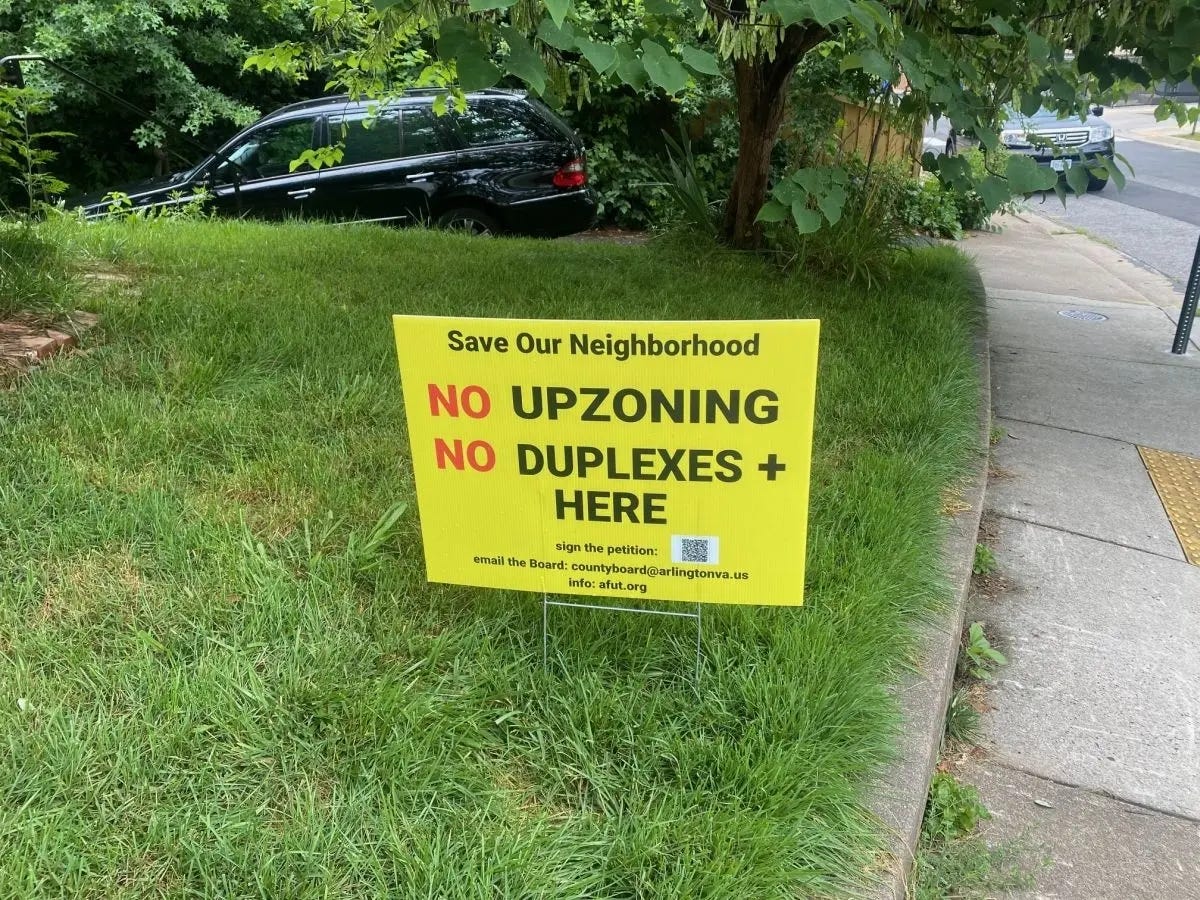
The rules governing where we build and how we live were never just about land use. Although zoning is often presented today as a neutral planning tool, history tells us a different story.
While some version of zoning and planning has existed for centuries, modern American zoning was created to exclude. In the U.S, modern zoning is not the descendent of a virtuous ideal that was gradually degraded by bad actors. Rather, since its inception, the purpose of American zoning has been to exclude specific demographics from certain neighborhoods. By outlawing the types of businesses run by immigrants or people of color, and by prohibiting the kinds of housing that low-income families could afford, modern zoning was fundamentally designed to restrict the presence of poor people and people of color.
This is not a radical claim. The origins of zoning are well understood by historians, legal scholars, economists, and urban planners. Many of the regulations that still define American neighborhoods, such as single-family-only zoning, minimum lot sizes, parking requirements, setback rules, and restrictions on multifamily housing, were originally implemented to segregate Americans based on class and race.
Or, as planner M. Nolan Gray explains in his book, Arbitrary Lines, How Zoning Broke the American City and How to Fix It, “Zoning is not a good institution gone bad. … On the contrary, zoning is a mechanism of exclusion designed to inflate property values, slow the pace of new development, segregate cities by race and class, and enshrine the detached single-family house as the exclusive urban ideal.”
And these restrictions have had a consistent, intentional outcome: they have limited the amount of homes available so that housing is scarcer and more expensive. While zoning was created to keep some races and nationalities out of certain neighborhoods, it persists in sorting where people can live by their income.
Protect Property Values and Exclude People
Current American zoning rules have their roots in the early twentieth century. Back then, the nation’s rapidly growing cities faced real public health problems from unsafe extreme overcrowding, and unsanitary living conditions. The need to regulate living spaces to provide safe habitation was real and urgent. In New York City, many of the unsafe housing conditions were alleviated by a series of laws (including the Tenement House Acts of 1867, 1879, and 1901) that outlawed deadly fire-trap building designs, mandated outward-facing windows in every room, and required private indoor plumbing, among other regulations.
But, it wasn’t safety concerns for the poor that led to zoning restrictions. In 1916, both New York City and Berkeley California enacted zoning rules rooted in racist and anti-immigrant fears.
In New York, the first comprehensive citywide zoning law in the U.S. was concocted by wealthy Fifth Avenue merchants to protect their high-end retail establishments by keeping industrial factories, and the mostly Jewish, low-income workers that would window shop on their lunch breaks, out of their luxury shopping district, by pushing the factories that employed them away. While the law included other restrictions as well, it was the merchant’s association’s fear of immigrants that got the ball rolling.
Also in 1916, Berkeley, California, became the first city in the US to enact single-family-only residential zoning. Planners and white homeowners explicitly crafted their land use law to prohibit Black-owned dance halls and Chinese and Japanese-owned laundries from operating in white neighborhoods.
For the prejudiced and powerful, the promise of zoning as a tool for racial sorting was gaining traction.
With the momentum of these 1916 regulations and others, in 1926 the Supreme Court decided in Village of Euclid v. Ambler Realty Co. to go well beyond the task of separating dangerous industrial uses from residential neighborhoods. In the majority opinion written by Associate Justice George Sutherland, he stated:
[T]he coming of one apartment house, if followed by others, interfering by their height and bulk with the free circulation of air and monopolizing the rays of the sun . . . and bringing . . . the disturbing noises incident to increased traffic . . . and the occupation, by means of moving and parked automobiles, of larger portions of the street, thus detracting from their safety. . . until, finally, the residential character of the neighborhood and its desirability . . . are utterly destroyed. . . the reasons are sufficiently cogent to preclude us from saying. . . that such provisions are clearly arbitrary and unreasonable, having no substantial relation to the public health, safety, morals or general welfare.
The ruling effectively gave municipalities the ability to restrict what could be built based on such amorphous and biased ideals as “residential character,” “neighborhood desirability,” and “morals or general welfare.” These ideals are still invoked today to prevent new housing and exclude people.
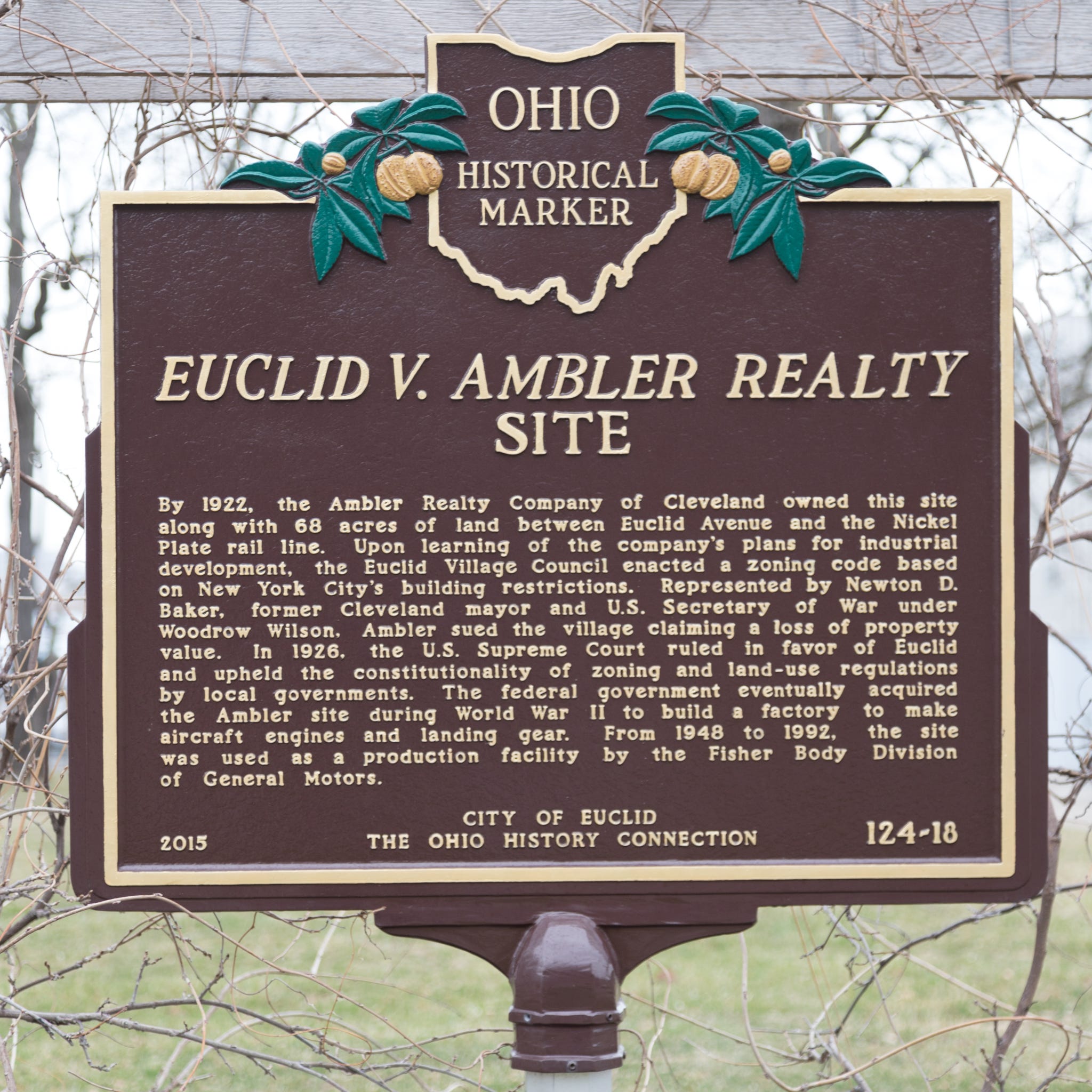
With the Supreme Court’s blessing, what came to be known as “Euclidean zoning” steadily divided nearly every city in America into strict districts and assigned each parcel of land a narrow set of permissible uses. Over time, local governments layered on increasingly restrictive rules governing housing type, building height, lot size, setbacks, parking, and residential density. In the abstract, these regulations seemed neutral. In practice, they became powerful tools to limit housing, limit building, and limit who could afford to live in a neighborhood. (Read more about the Euclid ruling, which turned 100 this year.)
Fearmongering and Exclusive Homesites
Many communities openly embraced zoning to preserve exclusivity. New communities and neighborhoods were built on the outskirts of towns and cities, as a way to avoid co-mingling with people outside their group. As Gray notes in Arbitrary Lines, planned communities, new neighborhoods, and even entire municipalities, were constructed “purely to adopt zoning as a way to exclude certain less privileged groups and artificially keep densities low, hoarding lavishly funded public services for affluent residents.”
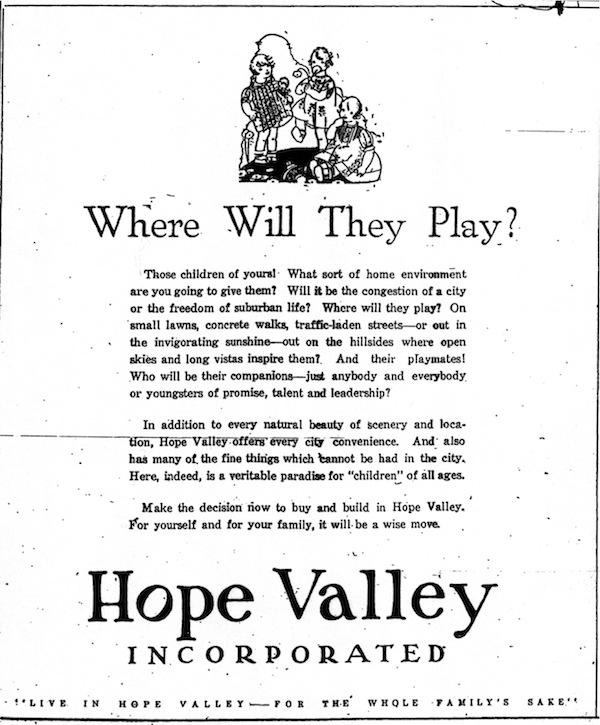
When, with the Fair Housing Act of 1968, it became illegal to zone and discriminate based explicitly on race, single-family zoning became a way to create economic boundaries where explicit racial covenants or laws to exclude the poor could no longer be used. Attorney Bo Yan Moran states this plainly in her piece for the UC Davis Social Justice Law Review:
“One of the most successful exclusionary zoning strategies was and continues to be single-family home zoning. The facially neutral term of “single-family home zoning,” while devoid of explicit racial language, leverages disparate racial economics: only wealthier individuals are able to purchase such large pieces of land for one family.”
These places, inflexible in their original zoning, are today places without affordable housing options. These are places with minimum lot sizes, bans on building duplexes, and required landscape buffers to hide and protect single-family housing from shopping or apartments. These are places where young families cannot afford to live. These are places where there are no options for single people, or low-income households.
As recently as 2019, around 75% of residential land in American cities was zoned to exclude everything but single-family homes. That means no duplexes, triplexes, courtyard apartments, accessory dwelling units, rooming houses (aka boarding houses or SROs), or small apartment buildings. Not only are multi-unit options prohibited, but single-family exclusionary zoning has been further tightened to require larger (and therefore more expensive) homes on larger (and therefore more expensive) lots. While today’s zoning doesn’t explicitly ban lower-income people, it does ban the housing types that lower-income people can afford.
It’s important to understand that this outcome was not by accident.
Zoning Prevents Affordability
Despite the need for increased housing in places with increasing populations, zoning regulations explicitly limit the amount of housing that can be built. Limiting supply while demand is increasing causes prices to skyrocket.
Zoning restricts building in many ways: by limiting the number of units allowed on a site; capping the height of buildings that can be constructed; and mandating the square footage of new homes as a percentage of the total lot. The same zoning rulebook may also require homes to be situated on a oversized lot of a prescribed minimum size, and require that space be left unused along all lot lines, and the list goes on.
All of these rules work to increase home costs, by restricting our ability to build affordably, and by encouraging the construction of larger, standalone, detached homes. The rules make it harder to build smaller, more affordable units and multi-family housing.
Even in neighborhoods formerly designated as single-family-only, where new multifamily housing construction is legalized, stringent zoning regulations greatly limit the amount of these homes that can actually be built. While many planners and city officials understand that we must allow more multi-family housing in traditionally single-family-only neighborhoods, the bias against multi-family housing that has long been baked into our zoning rules, can mean that code changes are more performative than practical.
Pro-zoning advocates argue that existing zoning rules are critical to preserve neighborhood character, and to protect property values, especially in single-family neighborhoods. And, while neighborhood character is an amorphous catch-all invoked only when it conveniences homeowners, it is absolutely true that zoning protects property values. When the supply is intentionally unchanged while demand increases, prices skyrocket, and those who already own their homes get rich.
Nearly every modern zoning regulation is designed to protect and preserve single family neighborhoods. In most communities, zoning is used to protect the single-family homeowner’s investment by preventing additional housing supply from entering the market. The policy-driven rising home prices decrease housing affordability. Whether or not local officials describe it that way, zoning policies consistently produce the same result: fewer homes, higher prices, and greater exclusion.
In doing so, each line of zoning code works to price out young families, lower-income households, and individuals who cannot afford large, single-family homes.
Undoing the Harms of Zoning
The zoning code books in most municipalities are hundreds of pages long, or more. This is the result of an accumulative effort over time, in which rules are added, and added again. Little is removed, even while the rules become contradictory, confusing, and counter to a community’s goals.
Most municipalities and the people in them now see affordability, walkability, and inclusion as desirable outcomes, but their aims are stifled by their outdated zoning code, which only encourages development that runs counter to those objectives. While this type of malpractice is common in bureaucracy, we deserve better, and we owe better to those in our community who simply don’t have time to become steeped in planning history. Most importantly, we owe better to the people and communities that have been maligned by our zoning practices thus far.
I believe the most prudent approach would be to throw out these overloaded zoning tomes and rewrite them from scratch. Our fresh draft could focus on what we want, rather than what people in the past were afraid of. We could work to protect people’s health by separating noxious and dangerous land uses from schools, homes, and business, and we could stop enforcing restrictions that act as if apartments and shops qualify as noxious uses. With our simplified code, we could refocus city planners’ newfound bandwidth, freed from enforcing arbitrary and antiquated rules, toward improving citizens’ quality of life, incentivizing affordability, and our planners could work to plan our communities and our infrastructure for a future that welcomes growth, and integrates communities.
In Arbitrary Lines, Gray posits that reform alone is not enough, and he makes the case for abolishing zoning altogether. Yet, he recognizes that “back in the real world,” (p. 135) this is not an easy goal to accomplish. Instead, he suggests we aim to move towards a “less bad zoning” (p. 109) through four local reforms:
End Single Family Zoning (p. 111)
Abolish Minimum Parking Regulations (p. 114)
Eliminate or Lower Minimum Lot Size and Floor Area Regulations (p. 115)
Decriminalize Inherently Affordable Housing Typologies (p. 116)
The encouraging news is that, across the country, cities are beginning to rethink decades of exclusionary land-use policy, and North Carolina is leading the way.
In the Triangle and throughout North Carolina we are legalizing accessory dwelling units, allowing for new duplexes and fourplexes, eliminating parking mandates, and allowing more homes to be built more densely near transit and job centers.
Because of the inherently exclusionary nature of zoning, and the bad outcomes zoning has produced for our communities, it’s time to consider how we can overhaul the system. Single-family zoning, in particular, that creates and preserves neighborhoods to exclude all other housing typologies, should be no longer be tolerated. This is the path towards integrating our neighborhoods, providing enough housing for everyone, and allowing for flexibility in our communities when growth comes knocking.
We Can’t Stop People from Moving Here (and We Shouldn’t Want to)
If we want housing to become more affordable, we must build more housing. As someone who has watched my hometown of Durham grow and change over the decades, I understand how hard it is to see a place you love become different than how it was before. But preventing building to meet demand is to guarantee that we price-out everyone out of our cities and towns, other than the most well-off who will be able to afford home and rent prices as they rise. And when we prevent building in our developed areas, we guarantee that homebuilding will sprawl endlessly into rural and natural areas.
Zoning restrictions that prevent building in our communities result in old and new residents getting priced out, while enriching those who already own their homes. In places that are desirable to live, home prices do not lower while new construction is stagnant. When the housing supply remains at the same level, even while new people move in, home prices rise. Yet, we cannot prevent price increases by simply shutting out new residents. We must alleviate price increases by building the supply to meet the new demand. Furthermore, we must reject anti-newcomer rhetoric, and remember the harm that is done to people when communities exclude other people.
We must stop treating new neighbors in new housing as a threat, and start recognizing that every regulation preventing new homes has real human consequences. In tandem, we must stop treating single-family neighborhoods as sacrosanct, and understand that to provide for both newcomers and long-time residents, we must build housing that goes beyond the limits of the single-family home.
BIO
Charlotte Chapman was born and raised in Durham, NC. She has an undergraduate degree in Architectural Studies, and a Masters in Urban Planning. She has worked in real estate, development, and in non-profits, including management positions at a national criminal justice reform organization and a local food co-op. She currently serves as the Executive Administrator at CITYBUILDER.