

CITYBUILDER readers know that housing is quickly taking center stage as a key political issue in North Carolina. Local governments have been slow to address many of the fundamental obstructions to more robust, affordable, and sustainable communities as our state continues to grow (though there have been positive steps in recent years). After several fits and starts, an array of proposals are either currently being considered by the North Carolina General Assembly, or soon will be.
But this week, we have a new entrant into the Housing Policy Thunderdome (er, I mean, wonderful, not at all dysfunctional exercise in democratic self-governance): Governor Josh Stein!
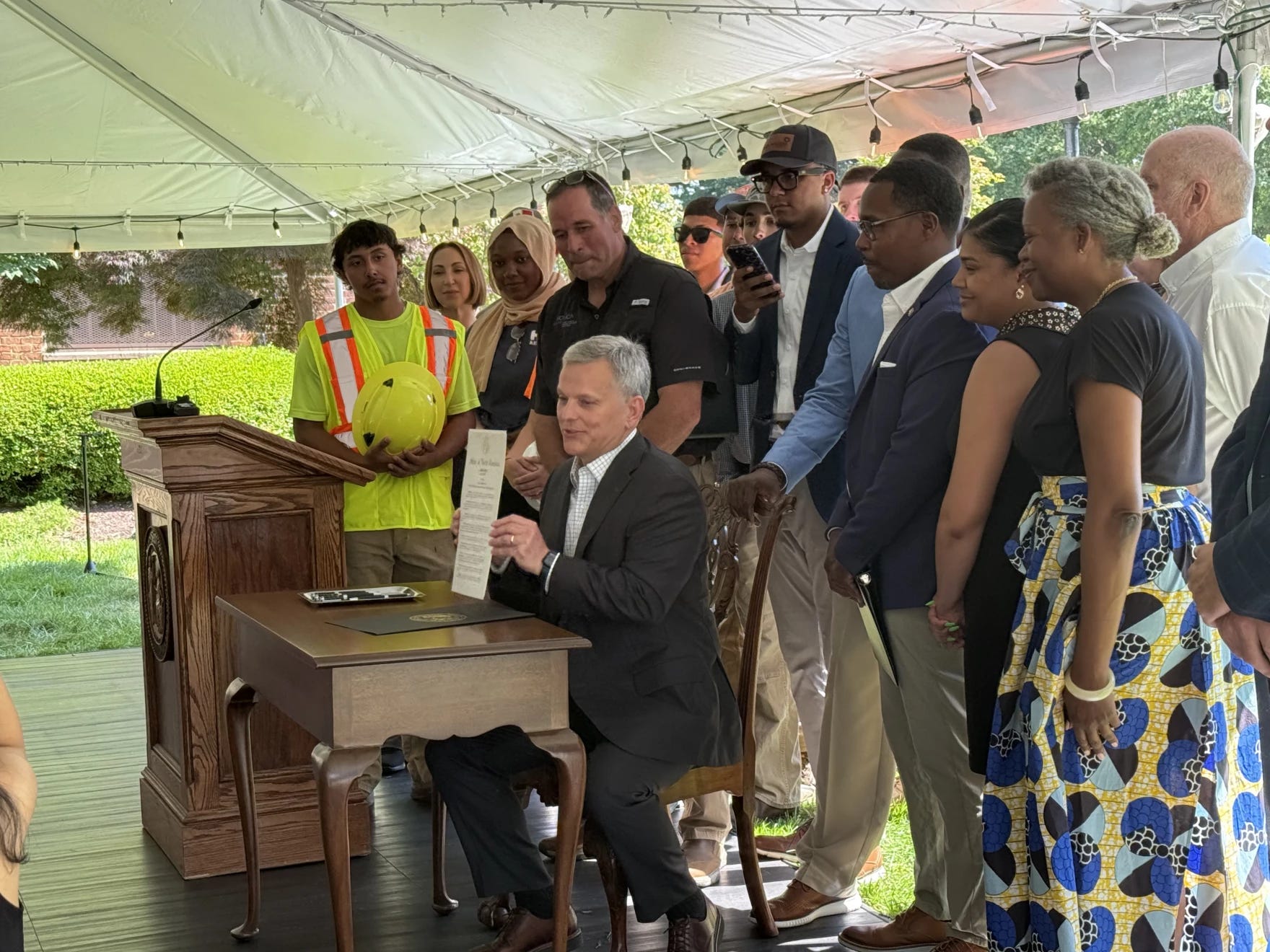
On Tuesday, May 19th, Governor Stein signed Executive Order 36: “Increasing Housing Opportunities for All North Carolinians.” In outlining his rationale for the order, the Governor hit all the housing sweet spots: North Carolina’s 764,000 home shortage, the rapidly expanding gap between wages and housing affordability, infrastructure and workforce needs, an aging housing stock, diverse housing needs across different demographics – the hits.
As the Governor said, “you all have heard the expression ‘if you build it, they will come’, well, as it turns out in North Carolina, if you do not build it, they will still come”. Core message of the day: North Carolina is booming, and we need more housing.
However, for me, the most exciting element of this order is the fundamental recognition that state agencies have a role to play in solving this challenge, and they need to work together to do it.
What does the executive order do?
First, I want to take a moment to express appreciation for the work that goes into getting a new, cross-agency EO ready for primetime. I served as Climate Change Policy Advisor to Governor Cooper over the last couple years of his administration, so I was able to get a look behind the curtain; boss signed 330 EOs over his 8 years, so he had some experience in this department. It is no easy task, so I want to commend Governor Stein and his team for taking a hard swing at addressing this issue in a comprehensive way!
Okay, that being said, what does this thing actually do?
Section 1: Establishes a new Senior Advisor for Housing in the Office of the Governor
This sounds like a small step, but trust me when I say this is vital!
Often, policy advisors will act as the central point person with a specific agency. In other cases, such as with my former role as Climate Change Policy Advisor, they work with several agencies that each touch on parts of an issue, but don’t necessarily “own” it.
This position seems to be similarly situated, as well as being a member of senior staff. This speaks to the prioritization of housing as an issue moving forward. Unlike other states, North Carolina does not have a muscular housing-focused entity at the state level beyond the NC Housing Finance Agency (“NCHFA”). The people at NCHFA do great work with the mandate they have, but it is not within their charge to address the myriads of underlying policy influences that impact housing production.
This means that for the first time, there will be someone specifically tasked with seeing how all the pieces of the bigger picture fit together. Governor Stein also brought in a heavyweight in Janneke Ratcliffe, who was most recently Vice President at the Urban Institute, a premier national leader on housing policy. Her entire focus will be devoted to working across agencies and issue areas, breaking through silos, and reforming policies and incentives created by agencies that often are blind to how they influence where and what we are able to build.
In the Governor’s Office, with limited time and too many problems, personnel truly is policy, and Janneke Ratcliffe is good personnel.
Section 2: Efficient Deployment of State Resources Through Technology and Data
The title of this section reads pretty boring, but that masks its importance. This is the meat of the order, outlining the expectations of various agencies to work with each other and the new Senior Housing Advisor.
Some particularly notable elements related to community design and land use decisions include the following (emphasis my own):
All agencies shall work with NCHFA to “…increase efficiencies in small-scale projects to enable more participation by small developers.”
This is an explicit acknowledgement of the value of small-scale projects and developers. Spotlighting projects that do not receive the same benefits through public subsidies and face structural disadvantages is a vital first step to developing the wider variety of housing types that North Carolinians need. I discuss this issue and much more in a North Carolina Housing and Transportation Roadmap that I developed last fall.
“…explore the development of integrated housing information platforms to streamline data across jurisdictions and address critical inputs like zoning, infrastructure capacity, transportation, permitting, and market feasibility.”
How this provision is implemented will be key, but creating easy to navigate platforms will help local governments (particularly smaller communities with less resources) adopt best practices. Also, by linking these elements together, the Governor is showing that his administration understands how these elements all collectively impact what types of communities actually get built and where.
“…directs DOT to explore metrics for transportation project impacts on community connectivity, housing availability, and local economic benefits and to collaborate with local planning organizations and community-based organizations to support transit-oriented development, locally driven housing development, and local connectivity” and “directs DOT to incorporate Complete Streets guidance into project design to the maximum extent feasible to support community connectivity, safety, and housing access.”
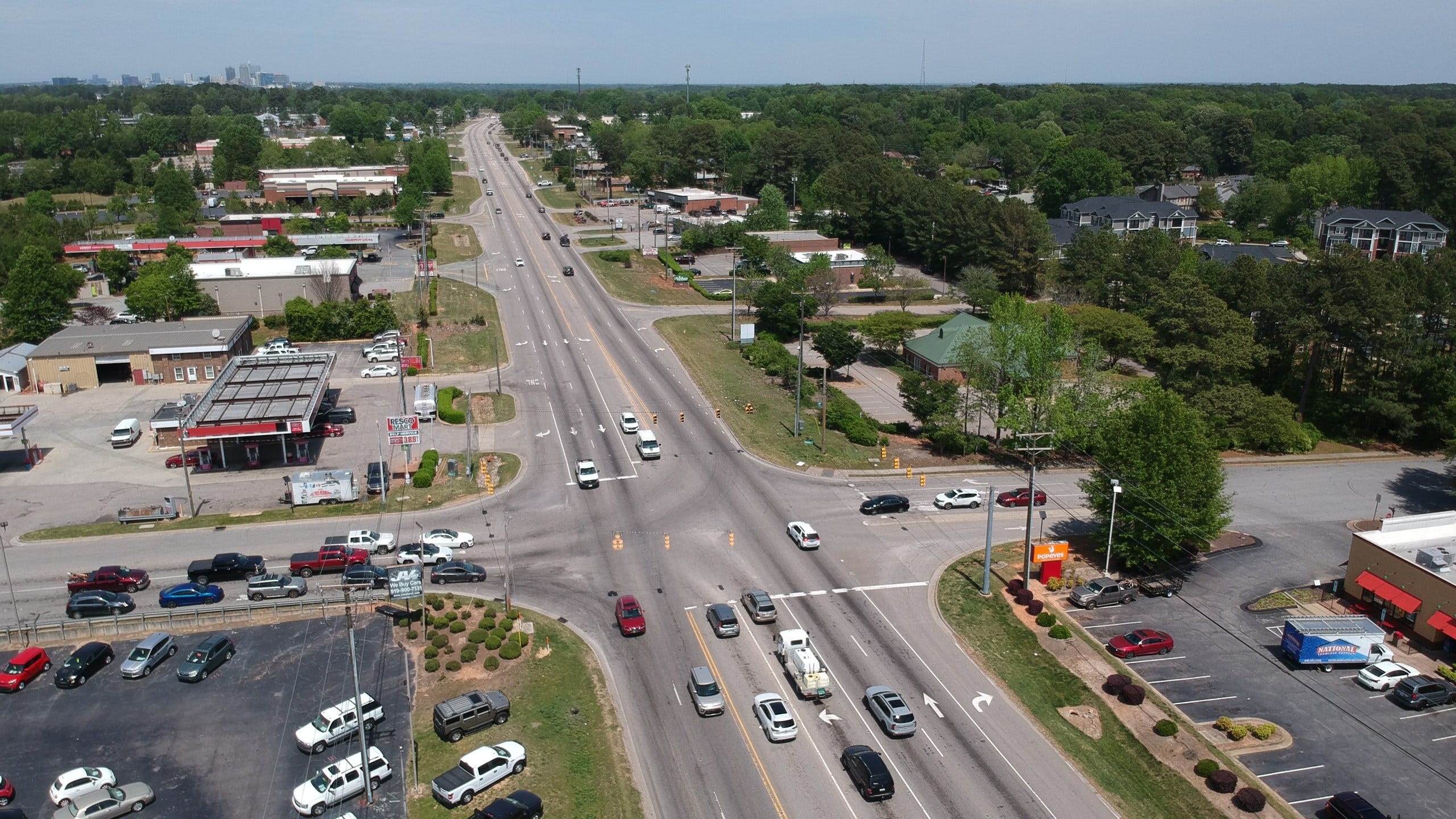
Personally, this is the provision I am most excited about after spending two years working with NCDOT on clean transportation priorities. The extent to which the agency sees its role as simply mitigating problems downstream of causes beyond its control without recognizing its role as an active player in shaping community design was… eye-opening, to say the least.
This directive flips that perspective on its head.
The Governor is directing NCDOT to take a harder look at the impact of its infrastructure decisions on surrounding local communities, what types of community design decisions they lead to, and the importance of connected, safe, and community-oriented streets in creating the conditions necessary to build more homes of all types in the state. However, from my experience, the Governor’s team and advocates will have to stay on top of this to make sure that NCDOT actually adopts the deep reforms needed to give this some teeth (more on that below).
“directs DEQ to work with the Senior Advisor and state agencies to advise on the use of the Flood Resiliency Blueprint and other natural hazard risk data (e.g., landslide, wildfire), drinking water and wastewater treatment system capacity, stormwater, and water allocation limitations that may impact development patterns for new housing.
This provision is good, but I would like to see it go further. Land use needs to be more affirmatively incorporated into resilience planning, rather than simply using resilience tools to advise housing policies. How I like to think about this is by treating resilience planning as a two-sided coin.
On one side, you mitigate harms: restrict building in rapidly expanding floodplains and areas under threat from wildfire; improve building standards to better withstand increasingly severe storms; implement impervious surface restrictions; invest in stormwater runoff capture, green infrastructure, and natural floodplain restoration, etc.
I want to take a quick moment to outline the importance of these issues, as some of these policies have become political flashpoints, particularly in the wake of Hurricane Helene. These issues are not just important from a safety perspective, but have positive economic returns and impact the affordability of daily necessities that aren’t always obviously related and are rarely factored into policy decisions.
For example, at a high level, almost the entirety of rising electricity costs from 2019-2023 can be traced back not to data centers (don’t worry, that’s still coming), but to the rising costs of grid distribution infrastructure (the poles, wires, and transformers that carry electricity from larger transmission lines to homes and businesses). This increase in cost was driven in large part by the need to “harden” these poles and wires to be more resilient to wildfires and other extreme events.
Quick aside: yes, this is also a sprawl story where lower-density means less people to pay these costs in each area, and yes, I also cover this in my Roadmap (if you can’t tell, I think it’s a good report).
Okay, back to the resilience coin. On the first side you have harm mitigation. On the other side you incentivize better outcomes: remove parking mandates that lead to more impervious surfaces, allow (and encourage) greater density in safe areas, improve land use and transportation systems to reduce expanded development pressure into floodplains and natural land.
In my opinion, NCDEQ, as well as many of my friends in the climate and environmental community, have not taken the second side of the coin seriously enough. This is not necessarily borne out of opposition to the ideas, but because acting on them often involves scrambling long-hardened political coalitions, employing strategies outside of areas of traditional expertise, and accepting sometimes unavoidable local environmental trade-offs. However, restricting buildable areas without allowing for increased flexibility in safe areas to offset it creates housing supply imbalances and untenable political realities, inevitably resulting in pressure to roll back environmental protections, causing poorer outcomes for everyone.

Bringing NCDEQ into a conversation on resilience and development patterns could be a great opportunity to advance further discussion in this area, but it will require intentionality, and will need to be leveraged properly.
Additional important provisions in this section include instructions to the NC Department of Health and Human Services to streamline existing government programs and integrate new data tools to better serve individuals suffering from mental health and substance abuse disorders, those with intellectual disabilities, and underserved populations that are often systematically excluded from affordable housing opportunities. All of these are critical advancements and will surely pay dividends for cross-agency cooperation and more efficient data sharing, and deliver greater assistance to those most in need!
Section 3: Further Integrate Housing Initiatives at Department of Commerce.
The final section of this order focuses on the Department of Commerce. Although I believe there is much more that can be done to leverage the Department’s resources to incentivize additional local reforms, it is heartening to see that Commerce is taking a prominent role given the importance of housing affordability in continuing North Carolina’s recent economic growth.
Most provisions in this section are high-level and focused on typical Commerce functions, such as providing greater assistance to local governments and housing non-profits, and advancing workforce development priorities in housing-related trades and professions. All good, if a bit devoid of details.
However, the final provision in the order caught my attention.
Commerce is directed to “give housing creation and support significant weight in the process for nominating eligible census tracts to the U.S. Treasury to be designated Opportunity Zones.”
Like others, how this section is implemented will be key, but to me, this opens the door to Commerce taking a much closer look at the housing policies of local communities and leveraging the possibility of federal investment to incentivize further reforms. Given the likelihood of upcoming federal housing legislation that incorporates new considerations for local zoning and real-time housing supply improvements when determining certain federal awards, this is a very smart move if implemented proactively.
Final Thoughts
This is an exciting executive order with a ton of potential, but its success is entirely dependent on how deep the administration digs and how far they are willing to push agencies to think in new ways. Pushing forward legislative reforms is still vital, and if implemented correctly, this executive order has the potential to accelerate the impacts of reforms.
The Governor has jumped into the fray, but it will be on all of us to push for the reforms we need and deserve.
Conor Mulderrig is an Independent Clean Energy, Housing, and Transportation Policy Consultant in Durham, NC. Previously he served as Climate Change Policy Advisor to Governor Roy Cooper where he worked to advance cleaner buildings, transportation systems, and land use reforms. He also served as Special Advisor for Clean Energy Deployment and Resilience at the North Carolina Department of Environmental Quality, Resilience Liaison to the Governor’s Recovery Office for Western North Carolina, and most recently was an Infrastructure Fellow for Arnold Ventures Philanthropies.