

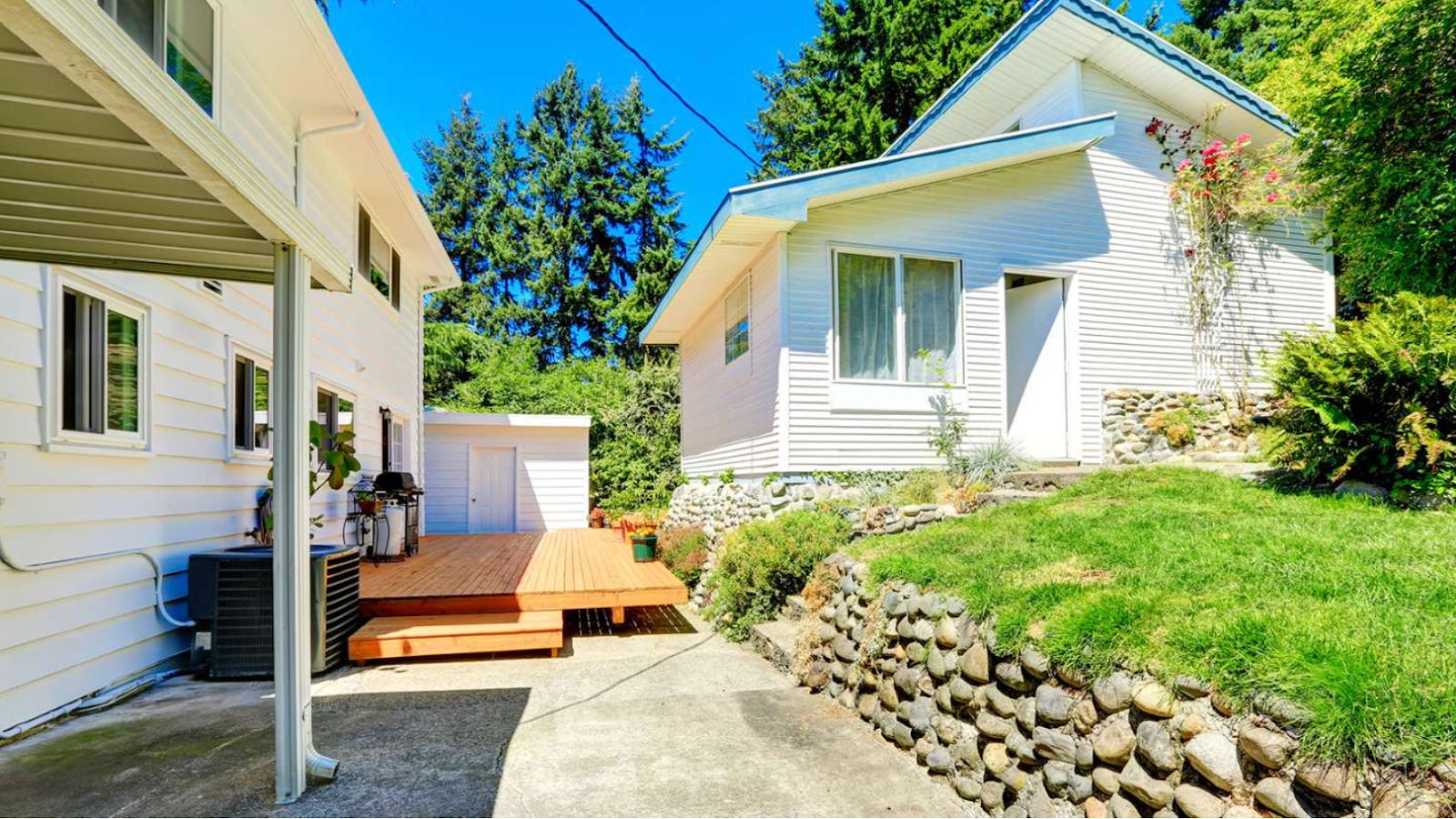
The City of Raleigh is approaching six years since it implemented substantial changes to its missing-middle housing policies, creating more opportunities for residents to build density in their own backyards. In March 2020, Raleigh adopted a policy that fast-tracked Accessory Dwelling Unit (ADU) construction and permitting. This change created opportunities for homeowners to improve property conditions by investing directly in their own neighborhoods.
This piece was written by Emily Carnevale, a CITYBUILDER student fellow. Each semester, CITYBUILDER provides fellowship opportunities for aspiring student urbanists in the Triangle.
This shift in inclusive housing was monumental given Raleigh’s history with ADUs. In the 1970s, the city outlawed this housing type entirely amidst suburban flight and absentee landlords. It wasn’t until 2018 that Raleigh passed an ordinance permitting ADUs, though this policy was burdened by numerous restrictions. The following year, a more progressive council was elected, and one of its first acts in 2020 was to legalize ADUs by right citywide, including in historic districts.
Why are ADUs Important?
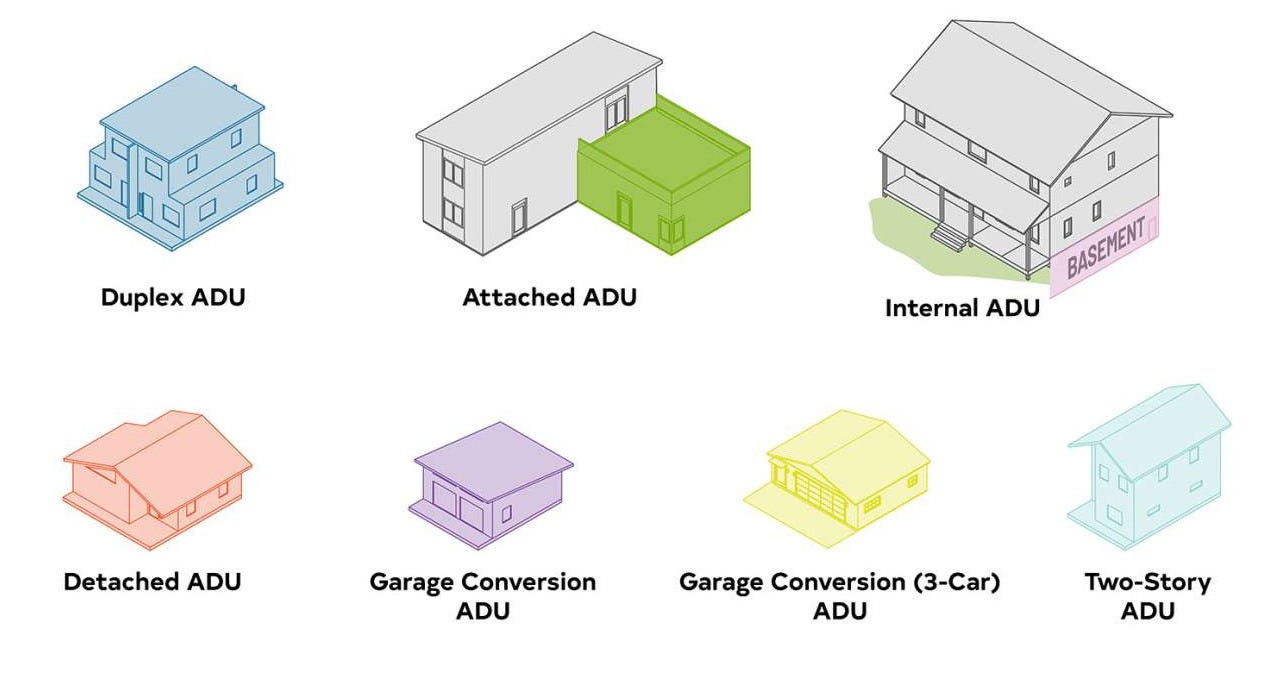
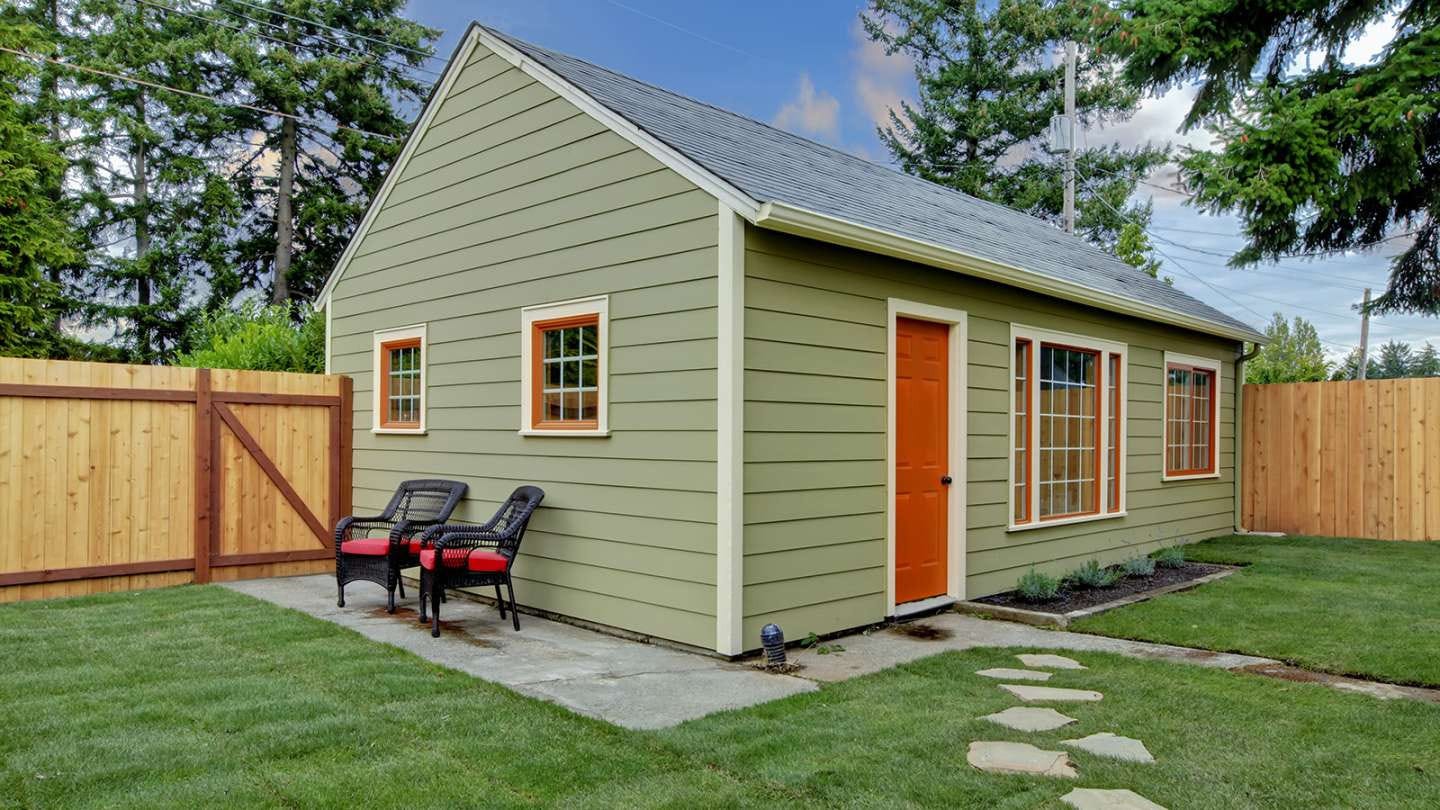
The City of Raleigh defines an ADU as “a small, self-contained home that is located on the same lot as a primary dwelling.” This means that ADUs may be detached, attached, or even internal to the primary dwelling, as shown in the figure above. ADUs must include a living room, a sleeping area, a kitchen, a bathroom, and a lockable entrance.
An ADU’s use extends beyond generating supplementary income; they also provide the possibility of building generational wealth and supporting intergenerational living within families. This in turn creates opportunities for aging parents to maintain independence in a separate residence while remaining close in case of an emergency. On top of this, ADUs can offer a more affordable approach to aging in place than traditional retirement homes.
Current Progress
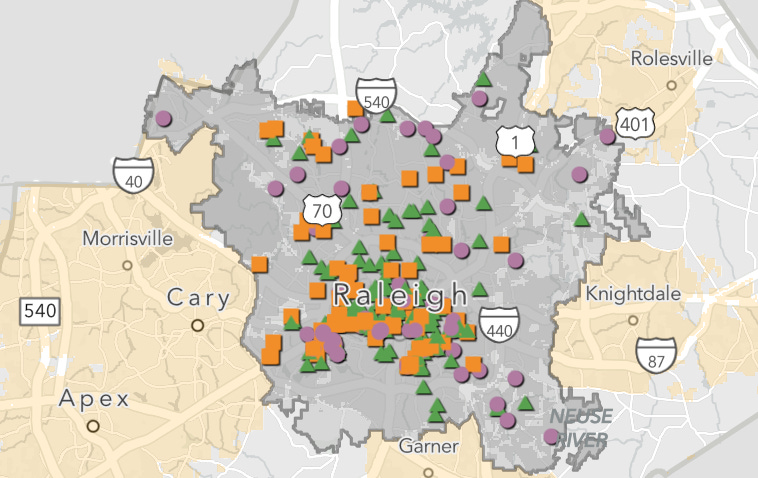
Since the policy’s inception in 2020, Raleigh has demonstrated its excitement for ADU development by implementing an ADU dashboard that tracks the number of residents who have applied for permits, are in the process of building, or have constructed an ADU. As of March 2026, a solid 162 ADUs have been built, 247 permits have been issued, and 72 applications are under review.
These numbers reflect real progress in Raleigh’s approach to developing alternative homes. This upward shift in building demonstrates that Raleighites want diverse housing choices, but leads us to ask: how can the city make ADUs work for even more homeowners?
Read more of our pieces on ADUs:
Boosting ADU Growth
As it stands, if a homeowner builds an ADU without a contractor, the ADU cannot be rented. Licensed contractors are required on all projects with a total valuation of $40,000 or more. Though this contractor requirement was written with the goal of protecting future renters, it drives up construction costs, and thus creates a barrier to who can build ADUs. This in turn reduces the number of ADUs that can be built in Raleigh.
Aside from reforming the contractor requirement, there’s further room for improvement in Raleigh’s policies for encouraging ADU growth. Cities such as Boston, MA, and Santa Cruz, CA, offer ADU financing to help fund construction. The Boston Home Center offers ‘income-eligible’ homeowners an opportunity to apply to the city’s ADU Financial Assistance program. Qualified applicants receive both a grant and a loan to aid in the design, permitting process, and building of an ADU.
The City of Santa Cruz offers an even more extensive financial program that provides forgivable loans of up to $40,000 to homeowners who rent their ADUs to low-income households at affordable rents for up to 20 years. This policy not only offsets construction costs, but aims to address affordable housing needs as well.
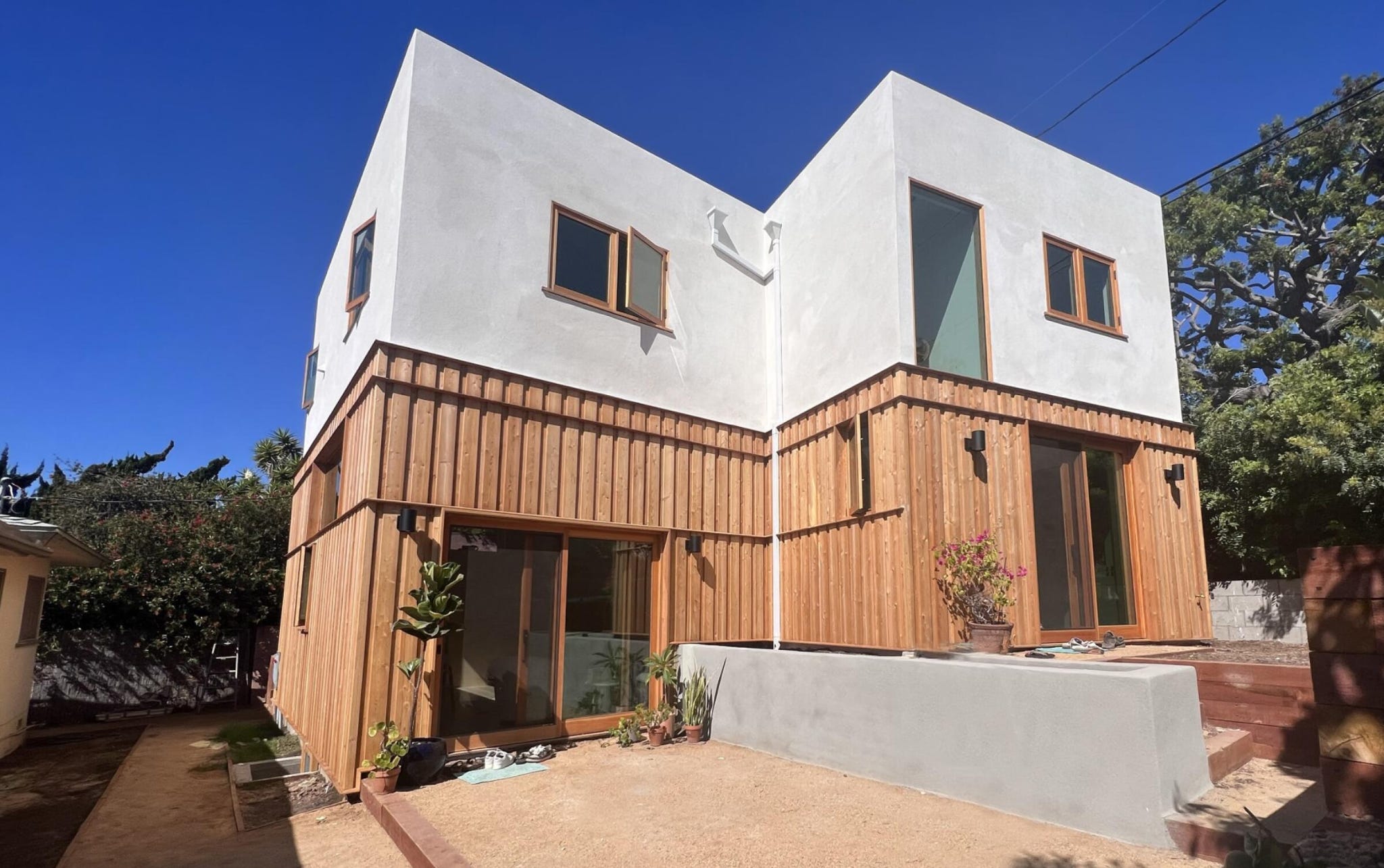
Though both the Boston and Santa Cruz programs intend to stimulate more ADU construction, questions remain regarding best practices. For example, when NGOs, researchers, and public officials in Greater Los Angeles were interviewed about municipal ADU incentives, several suggested that income restrictions (such as those in Santa Cruz’s program) reduced tenant turnover, citing this as a positive for homeowners. Yet, other interviewees noted that most homeowners did not want to voluntarily restrict their rental income for a decade or more. Refining ADU funding policies to reflect the willingness of homeowner participants is crucial to building a successful municipal program.
If the City of Raleigh implements a program that incentivizes residents to build ADUs, it could not only add more units to the rental market, but also promote the construction of intentionally affordable units. Learning from existing setups, such as those in Santa Cruz and Boston, and tailoring them to better suit Raleigh residents could result in a solution that produces even more ADUs while addressing the affordability crisis.
Overall, Raleigh is headed in the right direction by streamlining ADU construction while evaluating regulations to protect future renters. From here, the city can expand upon its existing policy and draw inspiration from other municipalities that are actively creating opportunities for more homeowners through financial assistance programs.
This piece was written by Emily Carnevale, a CITYBUILDER student fellow. Each semester, CITYBUILDER provides fellowship opportunities for aspiring student urbanists in the Triangle.
Emily is a graduate student in the Department of City and Regional Planning at the University of North Carolina with a focus on conservation at the intersection of land-use and transportation planning.